For Reformation Sunday 2013: “My Favourite Reformer”

The purpose of good religion is to help people live in ways that bring them closer to God. A life lived closer to God, with awareness that God is mixed in with all the everyday details of life, is not a life that leads to great wealth, or power, or fame. It does not make us invulnerable to pain, or loss, or confusion, or sadness. It does not protect us from sickness or death, no matter how much we may wish it could.

A life lived in partnership with God, with the awareness that God is with us for every breath, every step, every choice we make, is a life that can be lived with meaning, and generally with a sense of peace. It is a life that can be lived in such a way as to have a good effect on people around us.

Good religion can help us to forgive ourselves, and to show grace and kindness to the people in our lives. It can help us make sense of hard things that happen, and can help protect us from the pain we are capable of causing ourselves, and each other, through poor choices, through selfishness and greed, through our pride, and through the futile attempts to satisfy the appetites of our egos.

A life lived in the light that shines through good religion is not a perfect life. We can be faithful and religious in this good way, and still be human, still make mistakes, still need to try again, with the recognition that we are works in progress, and that God is still helping us.

Good religion can offer us hope in hard times, help for living, and show us the way to peace, at least enough peace to help us through the days, and make it possible to sleep at night, and not be haunted by fear or regret, or guilt.

Good religion can be a very powerful force for justice and compassion in people’s lives, and in our world. Unfortunately, bad religion can also be a very powerful force. Bad religion can be used to frighten, and control, and manipulate people. It can be, and is, used to get rich, and to wield power.

Not all religion is good, and that not everything that gets said and done in the name of religion- any religion, is good.

This morning we join with churches all around the world who are celebrating Reformation Sunday. The Reformation was a movement to bring about change in the western European Church that began in the early 1500’s. At that time, most people in western countries that professed the Christian faith were part of the Roman Catholic Church. If you lived in Asia, or Eastern Europe, you were likely part of the Orthodox Church, which still has, its own traditions, history, theology, and hierarchy distinct from the Roman Catholic Church.

In 1517, a Catholic monk named Martin Luther, who was a scholar at the University of Wittenberg in Saxony, nailed what he called 95 Theses to the door of a church. His purpose was to open debate and discussion about what he saw as abuses of power, and religious malpractice, on the part of the leadership of the Roman Catholic Church.

Luther particularly objected to the Roman Catholic practice of selling indulgences. An indulgence was essentially forgiveness for sin, which could be purchased from an authorized agent of the Pope. The revenue stream from these sales was enormous, and was used to finance church- sponsored armies that fought in the Crusades, and to pay for huge building projects like the Cistine Chapel at the Vatican. Luther did not believe forgiveness could be bought and sold.

Luther is the best known of the Reformers, but he was not the only one. Movements to repair the church began all over western Europe.

Historians view the Reformation as a triumph of literacy, and of the printing press. Moveable type made it possible for relatively inexpensive documents to be printed for mass consumption. Martin Luther fed the revolution of thought by translating the Bible into German. Other scholars began the work of making the Bible available in their own languages. The Bible became an important tool of faith for many more people. In the past, when every book had to be hand-copied, and most people never learned to read, Bible were only the hands of the very wealthy, which included the hierarchy of the church. Even local priests were often illiterate, and relied on stories and teachings they had memorized.

Access to the Bible made it more possible for priests lower down the power structure, and lay people, to get another perspective about their religion, and to ask questions. It was not long before there were breakaway churches, led by preachers who had become alienated from the Roman Catholic Church, and moved from trying reform it, to founding their own “protesting” or Protestant churches. There are now literally thousands of Christian denominations, distinct from each for reasons of theology, of biblical interpretation, or lifestyle.

I want to tell you about my favourite Reformer. George Fox was born in 1624, in a village called Fenny Drayton outside of Leicester in England. He was born into an England whose churches had already broken away from Roman Catholicism. In 1534, Henry the Eighth by royal decree had made himself the Supreme Head of the church in England. This break from Rome helped foster a sense of religious questioning, which was helped by the growing availability of the Bible in English, and by the social unrest and breakdown of institutions that came with the English Civil War.

From a young age, George Fox voraciously devoured the Scriptures, and thrived on conversations about faith. He sought, from about age eleven, to live a simple and pure life. He grew increasingly disillusioned with teachers of religion who seemed to him to be too enamoured of a life of luxury. He was particularly critical of their use of alcohol.

As a young adult, he left his home village, and travelled around England. He spent time with many different religious thinkers and preachers. He formed and tested his own beliefs in conversations, and increasingly, listened to an inner voice, which he experienced as the Spirit of Christ at work within him.

He eventually became a preacher himself, with some pretty radical things to say, for his time, and for ours. He called for a return to what he called a “primitive Christianity”, more like the first followers of Jesus. He had little or no use for the institutions of the church as he saw them.

He taught that outward rituals such as baptism and communion could be safely ignored, as long as a person had experienced a true spiritual conversion, that is, they had become convinced that following the Spirit was the only way for them to live.

Fox taught that the only real qualification to be Christian minister was the work of God’s Spirit within a person and in their life. No amount of academic study could take the place of the Spirit. This also meant that anyone, including women and children could be ministers. This was radical in mid-seventeenth century, and in some circles, is still radical today.
Fox taught that God dwells in the hearts of obedient people, and is not confined to a particular church building. He believed that you could experience God’s presence anywhere, and was content to gather to worship in fields and orchards. He found great value in believers gathering together for worship- he just did not think they needed a special building in which to do it.

Perhaps the most significant impact, and challenge of George Fox has to do with his understanding of authority. How do we know we are following God, and God’s ways?

In Roman Catholic theology, the institution of the church and its hierarchy, and its traditions represent religious authority- the idea is that the correct teaching is preserved and passed along within the church. The visible head of the church, the Pope, is the spokesperson for that authority.

With the Protestant Reformation, thinkers like Martin Luther gave that authority to Scripture, saying that God’s will for our lives is revealed in the Bible. The Reformers used the Bible as their test, and their ammunition, when challenging the teachings of Roman Catholic Church. Many Christians still get caught up in this kind of dialogue, pitting their interpretation of scripture against people who see things differently from them.

Although Fox was an avid reader of the Bible, he taught that believers could follow their own inner guide, the light of the living Christ within. In the beginning, those that followed Fox’s teaching called themselves “Children of the Light”, or “Friends of the Truth”. Eventually they became known as the Society of Friends of Jesus Christ. They are also known as the Quakers- that name began as a kind of a putdown, followers of Fox were mocked because he often preached about trembling at the word of the Lord.

The Quaker teaching that the Spirit is at work in every person continues to be an important message. If God is at work in every person, each person is of immeasurable value, but no one person is more important than another. God can, and does, offer wisdom, and truth, and direction to each of us, if we are able to quiet ourselves, and to direct our lives to listening, and following that direction. Amen

Sermon from Thanksgiving 2013 “Dayenu- It is enough!”

Show the video “Holiday Dinner”.

http://www.worshiphousemedia.com/mini-movies/8327/Holiday-Dinner

For what do we truly give thanks? The father in the video seems to sense that this practice of gratitude should be about more than possessions, but he does not seem able to quite name it.

The daughter seems able to go more to the heart, and to name her gratitude for the life she has. Of everyone at the table, she seems to be the one who recognizes that all that she has in life,  that is worth having, comes from God. I hear in her words, an echo of what Jesus was teaching when he gave his followers the Lord’s Prayer. “Give us this day our daily bread”

The subtle teaching in that prayer is that whether or not we realize it on a daily basis, we are dependent upon God, each day, for all that we need to live.

Part of why giving thanks is such an important spiritual practice, is it is about slowing down, and paying attention in the present. A good word for this is mindfulness, to be aware, in the present.

The Buddhist teacher and writer, Jon Kabat Zinn in his book “Coming to Our Senses” offered an exercise used to each mindfulness. It is now used all over the world, and is popularly known as the “raisin meditation”- although I learned yesterday that my kids learned a version of it at camp this summer called the “muffin meditation”.

RAISIN MEDITATION

Pass out boxes of raisins. Ask everyone to take one out the box, but not to eat it.

Take a few conscious breaths and invite the group to do so with me. Remaining grounded in my breathing, I offer a little explanation, how this is a miniature mindfulness meditation.

When everyone has their raisins, I invite people to hold up one raisin in their fingers. (If people have already eaten one or both of their raisins, I say, “That’s part of the meditation too!”)

I invite the community look deeply at their raisin. Pinching it lightly between our fingers, we can sense its juice. Looking deeper, we can see in that wateriness in the cloud that rained upon it: the raisin even looks like a miniature cloud.

Put it to your nose and see what it tells you. It smells sweet, but also with a musty, earthy smell. Indeed, looking at it again, we can sense the soil from which it grew. Put it in your palm and heft its weight: slight but palpable.

Consider that it was once a grape, now dried by the sun. Indeed, we can see the sun in the raisin, in its wrinkles. And the sun is present in its atoms thanks to the process of photosynthesis that nourished it. So eating a raisin, we are eating the earth and the sun.

By now, we might notice we’re breathing. We can consider how the raisin too has been breathing. Plants inhale our carbon dioxide, and we inhale their oxygen. So we can also see air in the raisin.

Earth, fire, water, air — all four elements of the universe have come together in this one raisin. The entire cosmos is present in the palm of our hand.

Holding the raisin now up to our ear and crinkling it in our fingers, we can hear its seeds rubbing against each other. Once it was a grape, now it’s a raisin, and the seeds can give rise to future grapes : all part of an unbroken, eternal cycle of transformation.

Invite the community to prepare to eat the raisin. Holding it up to our mouth and looking at it without eating, notice our anticipation. This too is part of the raisin, for our minds. So we notice our appetite without actually acting upon it, like noting an itch without scratching it.

When we’re ready, we watch our fingers placing the raisin to our lips. If we like, we might roll it around a little in our lips, before passing it into our mouth. (Still, we aren’t biting into the raisin just yet.)

Inside our mouth, the raisin meets our tongue. Probe the raisin with our tongue. Please notice how sensitive an organ our tongue is.

Move the raisin around in our mouth. Notice how sensitive our mouths can be. Place the raisin at the roof of our mouth, and suck on it for a few breaths, in final preparation.

Now, take a preliminary bite. Notice how it squishes forth a burst of raisin juice in our mouth.

Our job now is to stay with our breath, and slowly chew. Without swallowing. Notice the impulse to swallow before food is fully chewed. Keeping the raisin in our mouth, still chewing, notice how it transforms in taste as it mixes with our saliva. This way, we’re beginning the digestive process in our mouths (and taking a load off our stomach). Our goal is keep chewing until it is completely liquid.

When we’re thoroughly done chewing, we swallow the raisin. Then we enjoy a few breaths as we notice a kind of aftertaste of the raisin comes back to us. If we could enjoy this moment in between each mouthful of meal, we might know better when we’ve had enough.

Later, on your own, you can eat the rest of the raisins. If you give each one the kind of attention you gave this one, you might marvel at how each experience was unique.

No two raisins are alike. No two snowflakes are alike. No two moments are alike. No two people are alike. Yet we all share in the present moment. If we’re present, and aware of the present moment, we can continually appreciate the wonders of just being alive. Indeed, the present moment is a wonder-full moment. The present moment can be enough, and cause to give thanks.

The choir sang some verses from Daiyenu, a traditional Jewish song at the beginning of this morning’s service. It is a song sung at Passover, in gratitude for all that God has done for the Jewish people, as they remember their escape from Egypt, and their journey to a promised land of their own.

Daiyenu  means, “It is enough.”    God has done enough.  When we recognize what God has done, we can be freed from the persistent desire for more, more, more.

If we could slow down, and savour, and really taste each moment of our lives, we might grow in gratitude, and realize that this moment, this now, this is enough.

We might recall the taste of that raisin, and say, Daiyenu, it is enough.

We might think of a moment when we experienced the love and compassion of another human being, and say, Daiyenu, it is enough.

We might see the brilliant colours of the leaves turning, and say, Daiyenu, it is enough.

We might think of a bird or animal we have seen this week, that reminded us of the goodness of creation, and say, Daiyenu, it is enough.

There may be an event you are looking forward to, like a good meal, or the dessert after the meal. You can find pleasure in every bite, every morsel, and when you are done, put down your fork and say, Daiyenu, it is enough.

There may be the memory of a special moment of friendship or relationship, that still lives in your heart, and when you recall it, you may feel moved to say, Daiyenu, it is enough..

It may be that a piece of music, or the words of a poem, or a piece of art has touched you, deep inside, and that the sensations, the emotions, the thoughts that are evoked have brought such richness in that moment that you can say, Daiyenu, it is enough.

There may be a moment today, or this week, when the sheer wonder, and gift of being alive, and able to taste, and see, and smell, and hear, and touch, and feel, and think, and remember, and sing, and pray will seem so amazing and wonderful, that you will quietly say, thank you God, Daiyenu, it is enough. Amen

Sermon for a Service where we bless animals

I am trying to catch up on a back-log of unblogged material-– this is from September 29, 2013

My wife and I were out for a walk this week, and met a neighbor out training his English bulldog puppy. He’s 6 months old, and already about as wide and heavy as a lawn mower. Our neighbor was trying to get him to walk with him. Morris is quite cute, but either very bright, or not very bright. No amount of talking seems to get him going. He just looks up with those sad puppy eyes, and waits for his next training treat, and doesn’t take a step. When we met our neighbor on the sidewalk, Morris, the dog, not the neighbor, turned toward us. We petted him and fussed over him, but when he realized we had no treats, he turned his pleading eyes to his owner, and plopped his rear-end back on the sidewalk.

I say Morris realized we had no treats. I have no idea what was going on in his puppy mind. I spoke a couple of weeks ago about the tendency to attach human qualities to non-human creatures. I think we do that because we are trying to understand- we are trying in our own way to make connection with another creature. There is built in to all, or most of us, the desire to connect. When those puppy eyes look up at you, it is easier to believe such a connection is possible, that the love that lives in us, and flows through us, can also flow through all of God’s creatures.

We began our service with words from a sermon preached to birds, by Francesco Bernardone.

“My brother and sister birds, you should greatly praise your Creator and love God always. God gave you feathers to wear, and wings to fly, and whatever you need.  God made you noble among the creatures and gave you a home in the purity of the air, so that, though you do not sow nor reap, God nevertheless protects and governs you without your least care.”

Bernardone is better known as Saint Francis of Asissi. He lived in Italy during the eleventh and twelfth centuries. The new Pope, Cardinal Jorge Mario Bergoglio of Argentina chose his new name in honour of the saint. He is the first pope to be called Francis. There is a famous photo taken of the Pope in May, in St. Peter’s Square, looking joyful as a dove lights on his hand.

The story of Saint Francis preaching to the birds is often linked to the Gospel lesson we heard this morning. Jesus said,

“Look at the birds of the air; they do not sow or reap or store away in barns, and yet your heavenly Father feeds them. Are you not much more valuable than they?  Can any one of you by worrying add a single hour to your life?”

Jesus pointed to the birds of the air, including doves, as creatures who receive what they need from the bounty of God’s world. They are not trying to get ahead, or put away wealth for the future- their present, and their future are in God’s hands.

Perhaps part of the reason no previous Pope picked the name Francis is that Saint Francis represents a Christ-like reliance, and trust in, God’s providence, rather than on the human tendency to gather and hoard wealth and power. Saint Francis believed it was best to live in total dependence upon God. For Saint Francis, and the members of the religious order he founded, that meant embracing poverty. If he and his religious brothers had no wealth, no possessions to rely upon, or to protect, there would be nothing to distract them from sense of loving connection to God.

In a 14th century account of his life called “The little flowers of St. Francis”, it says when he finished his sermon to the birds, the Saint made the sign of the cross as a signal it was okay for them to fly away. The legend says the birds divided themselves into four companies, that flew off in the four directions, so the message of Jesus could be carried to the four corners of the earth, and so that the “humble friars, like little birds, should possess nothing in this world, but should cast all the care of their lives on the providence of God.”

Saint Francis seemed to understand that in his utter dependence upon God for all things, he was also deeply connected to all the other creatures who share that dependence. In our reliance upon God, and the whole of creation for what we need to live, we are humbled to realize and embrace our poverty, and also to change the way we think about our relationship with the world.

I read some good words from a rabbi named Arthur Green, who was commenting on how Jews in today’s “modern” world read the story of Creation as found in Genesis. He said,

“The most urgent item on our collective human agenda in this century is changing the way we relate to the natural world of which we are a part. Unless we transform our rapacious patterns of interacting with the environment, we humans will simply not survive.“

We are not separate from, or free to use or misuse, or abuse at will, the gifts of life that are all around us. Today, as we have made prayers asking God to bless the animals closest to us in our lives, we can also give thanks for the blessing they offer us. Like the birds that gathered around Saint Francis, the animals in our lives are living reminders of our deep connection and dependence upon God’s creation. Amen


The Music of the Spheres-from Cosmos Sunday in the Season of Creation September 22, 2013

We sang one of my favourite hymns today. When I was growing up it was “This is My Father’s World”. The hymn book editors updated the language, but they did not change my favourite line, which is “All nature sings and round me rings, the music of the spheres.” It is an ancient idea, which we can see traces of in the Book of Psalms. All parts of God’s creation, the animals, the winds and the waters, the land itself, sing out their own songs of praise to God.

For the last few weeks we have been celebrating the season of Creation, which encourages us to look deeply at our relationship with the world in which we live. A recurring theme has been joining our voices to the great chorus of praise.

Another theme has been that we can gain a deeper understanding of God by paying attention to Creation- in the way that we gain a deeper appreciation for, and connection to an artist, by spending time experiencing their work. When we look upon God’s artistry, we get a glimpse of the love that inspires and energizes it all.

That is the spirit of the hymn I was talking about. It was actually written not far from here, by a Presbyterian minister named Maltbie Davenport Babcock. He served a congregation in Lockport, New York.

Babcock wrote a sixteen stanza poem called “My Father’s World”. The poem was included in a collection of his writing called “Thoughts for Every Day Living”, which his wife had published, after his early death, at age 42, in 1901. In 1916, Babcock’s friend, a man named Franklin L. Sheppard set three of the sixteen stanzas to music, using a traditional English melody he learned from his mother as a child. The tune as he used it is called “Terra Beata”, latin for “Blessed Earth”.

When Maltbie Davenport Babcock lived in Lockport, he took frequent walks along the Niagara Escarpment.  That terrain is very similar to what we have north and west of here. He enjoyed the hills, the rocks, the water, and the trees. As he headed out the door he would tell his wife he was “going out to see the Father’s world”.

My favourite line, about “the music of the spheres” has always felt to me to be a poetic way of saying not just that the moons and planets, and stars are singing their praises, but that maybe there is a kind of underlying pattern or meaning in how the heavenly bodies have been arrayed- like they are notes in a musical score.


Alex Parker, the astrophysicist who created the “Starry Night” mosaic from deep space images of stars and galaxies, also has musical projects. I want to play a clip from a piece he created called “Supernova Sonata”. A supernova is a star that has exploded, and the explosion results in tremendous amounts of energy and light being released outward.

Parker used sound from a grand piano and an upright bass to make music in which the volume and pitch are based on information gathered about these bright, dying stars. The volume of each note is determined by the distance of the supernova from Earth. The pitch of each note is determined by the supernova’s stretch, a measurement of how the start brightens and fades over time. If the galaxy where the star is located is larger than the Milky Way the note is played by the upright bass and if the galaxy is smaller than the Milky Way it’s played by a grand piano.

http://vimeo.com/23927216

The music is beautiful and eerie. It reinforces my sense that there is, underlying all that God has made, a structure, a logic. The cosmos, and all that is in it, including our little planet, in our little corner of the solar system, in the Milky Way Galaxy, has been made, and is being made, on purpose.

God is at work. We are part of God’s great work, along with all other things that are made, and being made.

In the last few decades there has emerged a movement called Creation Spirituality, which seeks to help people live in response to the idea that we are all part of this greater, beautiful whole. This not a new idea, maybe more of a re-discovery of what many indigenous cultures have always taught- that we are not separate from the world we live in.

Saint Francis of Asissi, who lived in the 12th century, talked about being a brother to the moon, the sun, to the animals and the trees. We will look more closely at him next Sunday during our Blessing of the Animals Service. The traditional feast day for Saint Francis falls right at the end of the season of Creation, and he is kind of an iconic figure in the developing Creation Spirituality movement.

There are different expressions of Creation Spirituality. Not everyone that uses the term agrees on everything- but there are some common elements:

The universe is basically a blessing, that is, something to be experienced as good. We can think of the Universe, and all life, including ourselves, as part of an Original Blessing. This is a different starting place than the religions that place such emphasis on Original Sin. What God makes is made for Good.

We can relate to the universe, and understand ourselves as part of the whole. This may change how we behave, and how we treat other parts of creation- including the land, water, other living things.

Creation Spirituality begins with a sense of wonder about life and about everything around us- we can recover our child-like enthusiasm for beauty, for the sweetness of living. I think this connects to teachings that encourage us to live from gratitude, to look for reasons to feel grateful each day, for this life we are given.

The deeper sense of connection to cosmos has a mystical element to it. It runs deeper than thought or feeling- it is a different kind of awareness. It is a way of prayer.

This mystical view, this sense of connection to the cosmos can tug and poke at our understanding of ourselves. If we are part of God’s ongoing Original Blessing, then we are certainly much more than what we have, or what power we wield, or who we can tell what to do. This growing awareness may push/encourage us to look more deeply at ourselves.

The journey of self-discovery, of being more true to what God has made us to be, may take us on a new spiritual journey. We may begin with a renewed sense of awe, of wonder at Creation. Think about looking up at a starry night sky.

Awe and wonder at creation, and our place in it, does not insulate us from the pain of life. The joy and beauty we experience sometimes also make us even more aware of the suffering in the world- our own, and that of others. As we age, and learn, and grow, there is also the pain that comes with letting go of former ways, and embracing life in the present. Life is always changing, and all living creatures are going through loss and growth, and letting go, all the time.

 I used an example of this at the Queen’s Senior’s Apartment communion service this week. We can try it here. Look around at the people around you, and give them your best pout, or mean look. While you’re doing that, pay attention to how it feels to be looking that way, and to see that look on the faces around you.

 Now, turn that frown upside down, and try smiling at everyone around you. How does that feel? It feels good to end that out into the universe, and also to receive it.

From our awareness of how it feels, both to receive, and offer those different signals, we can be more in touch with the effect we have on the world around us. We can also be more compassionate, more aware of the hearts of the people in our lives, and what life is like for them.

 From compassion may come the deep desire to offer beauty and love to the world that God is making. When we live that way, we are more like God, and more like God is creating us to be. Amen

God is with us in the storm- from Storm Sunday in the Season of Creation, Sept 15, 2013


 I grew up in Thunder Bay, on the shore of Lake Superior. The city is nestled around a large natural harbour, and ringed in behind by the remnants of a once mighty mountain range, the Cambrian Shield. The mountains are apparently not what they once were, geological ages ago, but they are still high enough to contribute to the creation of amazing weather systems.  The moisture laden air over the lake is pushed towards the mountains, and then upward. Warm air and cold air meet, and clouds are formed, and great energies are gathered. Especially in the heat of summer, the result is spectacular rain storms, with incredible lightning and thunder- hence the name, Thunder Bay.

I think we have some of the same elements at work here in this area, with the air over Lake Ontario pushed up over the edge of the Niagara Escarpment, meeting the colder air, and forming storms. I have seen some pretty amazing lightning around here, and over the lake- but I have to say that these storms still pale in comparison to those of childhood memory. I used to love watching and listening to those summer storms, and feeling them, when the thunder was so loud that it shook our house.

It is no wonder that the First Nations people around Thunder Bay, who are Anishinabe, have many legends about Animiki, the Thunderbird, who formed storm clouds by flapping its great wings, and shot lightning from its eyes.

Is the weather really is more spectacular over Thunder Bay, or is it something about everything looking bigger when you are a child? Wherever we have lived, I have enjoyed watching storms. It has been relatively easy for me to admire nature’s raw power at a safe and comfortable distance. I could talk for quite a while about how awesome it is to see nature at work, and about how there are both psychological and spiritual benefits to being in the presence of forces larger than ourselves, that remind us of our place in the universe, and of just how much about life is beyond our understanding and control.

But storms also represent destructive power. Every year hurricanes, tornadoes, lightning storms wreak havoc. Homes are destroyed, people are injured or killed.

 We also use the idea of storm metaphorically, to represent all the disasters and difficulties, natural and human-made, that can shake up our lives.

You don’t have to live through a tsunami to have questions in your heart and mind about why people have to endure and suffer such hardships. There are many kinds of storms.

Economic upheaval. Political turmoil. Famine. Drought. War. The loss of a job. The end of a relationship. Betrayal. Serious illness. The death of a loved one. These are just a few examples of things that can happen in our lives, that can leave us feeling like things are in chaos. These times can strip away from us any illusion that we are in control, or that we understand any of the mysteries of life.

For some of us, these storms are times of profound challenge to our faith. It is common for people in these times to wonder about God, and God’s purposes and methods.

 I think that the Gospel story for this morning can be read in at least two different ways. The first, most typical way is to read it as a miracle story. It depicts Jesus as a wonder worker who can calm a storm with a verbal command. In the story, Jesus is actually asleep in the boat when it becomes engulfed in a storm. His friends are afraid that they will drown, so they wake him up.

Getting to his feet, he told the wind, “Silence!” and the waves, “Quiet down!” They did it. The lake became smooth as glass.

25 Then he said to his disciples, “Why can’t you trust me?”

They were in absolute awe, staggered and stammering, “Who is this, anyway? He calls out to the winds and sea, and they do what he tells them!”

To my mind, this miracle story raises at least as many questions as it seems to answer. If Jesus can calm this storm, what about all the other ones? What about all the good people who pray and ask for shelter or relief or rescue from their storms?

 Thankfully, this is not the only way to interpret this story, and not the only way to think about God. I think we can also read this story as a kind of parable. Jesus and his friends set out on calm seas, and Jesus falls asleep. The storm comes up, but it does not seem to bother him. Is it likely that a person laying in the bottom of an open boat in the middle of storm could actually sleep? What is the story-teller suggesting?

 Maybe we are being given an image of another way that God is with us, in the midst of our everyday storms. Sometimes, maybe most of the time, God is not so much the powerful rescuer, but more the calm, the quiet, the peace in the middle of chaos. We can perhaps dwell a little less on the image of Jesus commanding the wind and the waves, and allow ourselves to remember that whatever else happened to the disciples, Jesus was in the boat with them. He was with them.

 My wife told me that when she was a little girl, growing up in a small town not far from Lake Erie, if there was a thunderstorm, her mother would wake up her and her two sisters. They would cuddle together under a blanket on the couch in the front room, and watch the storm, and listen to the thunder. When she was young, Lexie believed that her mom did this for the benefit of the children. Looking back, she realizes that there was more to the story- that her mother was actually afraid of the storms, and needed comfort as much as she wanted to offer it.

 Something about that story made me think about the old country song, “Storms Never Last”. It was written by Jessi Colter, who was married to Waylon Jennings. The most famous version of it is a recording by that couple. It’s a love song, written by a wife to a husband who created his own share of storms, with bad choices and wild outlaw living.

 Love songs, like poetry and parables, can point us in the direction of truth. I heard a preacher say once that almost any romantic song can be turned into a hymn. Songs about love between people can be sung as prayers, or praises. Jessi Colter wrote:

Storms never last do they, baby
Bad times all pass with the winds
Your hand in mine steals the thunder
You make the sun want to shine

I think she was saying that when there is love present, it is more possible to trust that even the worst storm will pass. I love these lines:

Your hand in mine steals the thunder
You make the sun want to shine

My prayer for any of us who lives in the midst of a storm is that we can feel the touch of a hand that steals the thunder. That God’s presence, and God’s love can relieve our hearts of fear and despair, and allow us to live with courage and confidence, knowing that we are not alone, and that somehow, eventually, the storm will pass. Amen

Love is a mystery

My daughter and I recently attended a local production of a broadway musical. It is a special delight to go with her. She is a talented actor and singer in her own right, and a student of the American musical. By student, I mean someone who follows her passion for this art form, and who watches and listens, and reads as much as she can about it. Her deep interest, and growing knowledge fuel our conversations about the plays we see.

During our post-play analysis, we noted the production lacked a certain spark. Sets, costumes, lighting, and musical accompaniment were all top-notch. So what was missing?

The actors were technically competent, and without exception, talented singers. But there was an absence of believable romantic tension between the actors cast as the young couple destined to fall in love, despite their differences. It is a common device in this genre, to have an unlikely romance emerge, that gradually bridges the apparent large gap between two lead characters.  Often this romance, and the efforts to further or hinder it, provide energy that drives much of the larger drama.

We agreed there did not seem to be any “spark” or “chemistry” between the young couple. Our critical dissection led me to thinking, a day or two later, about times when I met someone who seemed a potential new friend, or even a romantic interest, only to notice later that we were comfortable with each other, but not all that drawn to each other.

Have you had the experience of meeting someone and wondering why the acquaintance does not blossom into something more? The “chemistry” between people can be mysterious!

 What is the spark? Why do we grow to love certain people in a deeper, different way, and not others? We can’t make love happen. We don’t have a clinical, scientific way to predict when it will grow into something life-changing. But we can usually see when it does!

Jesus is quoted as saying that you can know a tree by its fruits. The presence of love has an effect on what grows between people. Absence of love also has recognizable results.

The story in Luke 19:1-10 is about an encounter between Jesus and a tax-collector named Zacchaeus. It is not a romance, but it demonstrates what is possible when love is present.

 Jesus entered Jericho and was passing through it. A man was there named Zacchaeus; he was a chief tax collector and was rich. He was trying to see who Jesus was, but on account of the crowd he could not, because he was short in stature. So he ran ahead and climbed a sycamore tree to see him, because he was going to pass that way.

When Jesus came to the place, he looked up and said to him, “Zacchaeus, hurry and come down; for I must stay at your house today.”

So he hurried down and was happy to welcome him. All who saw it began to grumble and said, “He has gone to be the guest of one who is a sinner.”

Zacchaeus stood there and said to the Lord, “Look, half of my possessions, Lord, I will give to the poor; and if I have defrauded anyone of anything, I will pay back four times as much.”

Then Jesus said to him, “Today salvation has come to this house, because he too is a son of Abraham. For the Son of Man came to seek out and to save the lost.”


Wild and Wonderful (Sept 8, 2013)

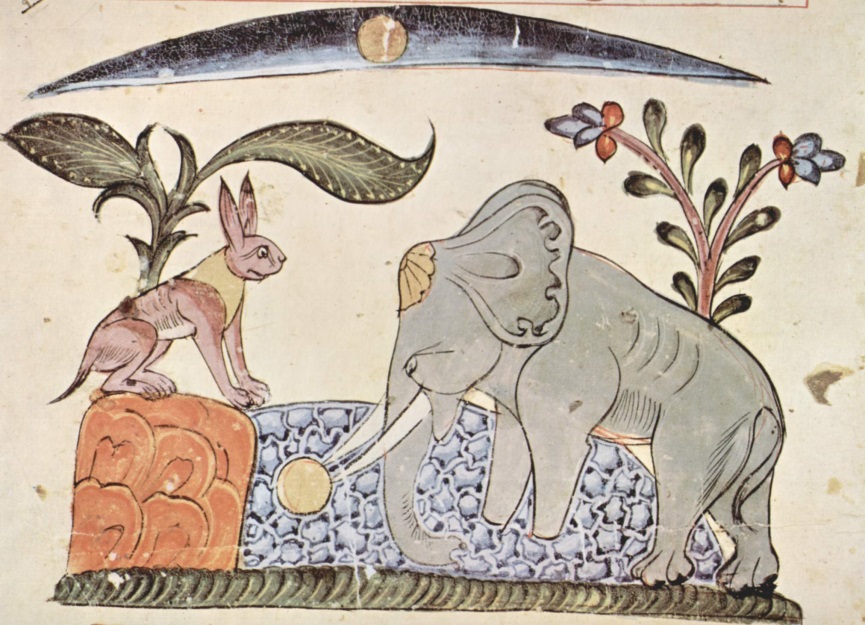
bugs bunny Is there anyone here who does not know the name of this “wascally wabbit”? Bugs Bunny! Bugs is just one more in a long line of cartoon characters who bear little resemblance to the real life animals on which they are based. Bugs has a long torso, and arms and legs, and is most often seen standing upright, like a person. He wields his carrot in the way an old time stand-up comedian would handle a cigar, and he talks and acts like a wise guy from Brooklyn. Humans have long practiced what is called Anthropomorphism, or personification. This is attribution of human form or other characteristics to anything other than a human being. Examples include ascribing human emotions or motives to forces of nature. There are echoes of this whenever hear the weather reports describing Hurricane Rhonda, or Tropical Storm Louise. I wonder why we don’t give names to earthquakes and forest fires. Anthropomorphism has ancient roots as a literary device in storytelling, and in art. Most cultures have traditional fables with animals which act, and think, and feel emotions, and talk like humans. Aesop’s fables are well-known, but there are even more ancient examples. Here is an illustration from a Syrian edition of the Panchatantra, printed in 1354.   rabbit fools elephantThe original story is dated at least 3 centuries before the time of Jesus.  Rabbit fools Elephant by showing him the reflection of the moon.

Not long ago I had an experience with a real live, non-talking rabbit. On a quiet spring evening I lay in our backyard hammock, a medieval murder mystery in my lap. The sun’s warmth had lulled me into closing my eyes, just for a moment. I awoke to bear witness to a moment of commonplace wonder.

brown backyard bunny

Just a few feet from where I lay suspended, a rabbit munched peacefully on grass and clover. This rabbit seemed less furtive than some we see skitting about our yard. Its ears were relaxed. Its head only occasionally swivel-scanned the area. I admired the mottled blend of browns- real earth tones- of its fur. Even at rest, I could see the lean outline of muscle and sinew beneath, ready to twitch into untamed speed.

There was nothing cute about this creature. In the light glinting off the dark, round disk of its eye, I glimpsed “otherness”- an intelligence nothing like my own. This was a moment in which I realized that we do not always see what is really there. We see what we have been conditioned to see, and we see what we want to see.

We filter out the wildness, and focus on the cuteness, the fuzzy resemblance to cartoon characters and stuffed animals. Even the cutest, most domesticated rabbit is still a wild animal.

fluffy persons parkes

My friends who have had their lamp cords, tv cable, and stereo wires chewed up every time Fluffy gets loose can attest to the untameable, unteachable nature of their pet rabbit. Fluffy does not like carrots, he does not talk like Bugs, and he definitely does not understand the word “No!”.

Today we are celebrating Flora and Fauna Sunday. Flora is represented by the plants at the front of the sanctuary. They are reminders of all that grows out of the soil. It is good to have those signs of life in our midst. It is so easy for us to lead air-conditioned, sanitized lives in which we see more nature on television than we do in person, even though it is all literally outside of our doors.

Fauna is the word we use for all the animals, birds, and water creatures, and insects, that according to the Book of Genesis, emerged from the clay of the earth, and were given life by the creator. In our call to worship we expressed our kinship with the animal world. We are, in fact, a family of fauna—both biologically and spiritually. The creatures of Earth are our kin. We have all emerged from Earth and return to Earth. All living things are animated by the very breath/spirit of God.

Wednesday, at sundown, marked the beginning of the Jewish holiday Rosh Hashanah. Rosh Hashanah, in Hebrew roughly means “beginning, or head of the year”. This is the beginning of the Jewish new year. This religious and cultural tradition has been around for thousands of years, much longer than any of our Christian celebrations. There have been many centuries for meaning and beauty to be added, in the same way a pearl is created layer by layer, over time.

As the beginning of a new year, it is a time to reflect on the past, and look forward to the future, and perhaps make resolutions, or to seek the forgiveness of those who have been wronged. The day is also believed to be the anniversary of the creation of the world, and of Adam and Eve, named in the Genesis stories as the  first man and woman. The story sets them in the midst of, not separate from the rest of creation. The setting for everyday of our lives is within God’s creation. As one commentator has said, it is good to remember the Divine in the soul and honor the sacred water, soil, air and fire, because, “there is no place that God is not.”

Everything is blessed, and God is in all things. Although we in North America are moving into the fall season, in the Middle East it is time for the planting of seeds and the first rain. For people of a farming culture, the soil was central to human life. The Hebrew word for soil is Adamah, which starts with the first Hebrew letter, and is made of the Hebrew words for human being, and blood, or lifeline. The word for soil reminds us of Adam, who in the Genesis story was formed of the soil, after God formed all the animals and birds of the air, and the fishes and all creatures that dwell in the water.

We are not rural, agricultural people anymore, and even that way of life as been infected deeply by the taming, the commodification of the created order. We don’t do well, as a species, with the job of steward of creation that the agricultural people of Israel accepted as their role. We are more like consumers than caretakers.

We seem to value the natural world for what it can give us. This is different from seeing ourselves as part of a wondrous ongoing creation, filled with strangeness and beauty. This is different from remembering that life, all life is a precious gift- a divine and mysterious gift. As mysterious as the creator sculpting creatures from the soil and breathing life into them. Amen  

Diving Deep: Ocean Sunday 2013 Season of Creation (Sept 1)


One day as Jesus was standing by the Lake of Gennesaret the people were crowding around him and listening to the word of God. He saw at the water’s edge two boats, left there by the fishermen, who were washing their nets. He got into one of the boats, the one belonging to Simon, and asked him to put out a little from shore. Then he sat down and taught the people from the boat.


When he had finished speaking, he said to Simon, “Put out into deep water, and let down the nets for a catch.”

Simon answered, “Master, we’ve worked hard all night and haven’t caught anything. But because you say so, I will let down the nets.”

When they had done so, they caught such a large number of fish that their nets began to break. So they signaled their partners in the other boat to come and help them, and they came and filled both boats so full that they began to sink.

When Simon Peter saw this, he fell at Jesus’ knees and said, “Go away from me, Lord; I am a sinful man!” For he and all his companions were astonished at the catch of fish they had taken, 10 and so were James and John, the sons of Zebedee, Simon’s partners.

Then Jesus said to Simon, “Don’t be afraid; from now on you will fish for people.” 11 So they pulled their boats up on shore, left everything and followed him.

My first time in the ocean was at the beach at Panama City, Florida. I remember tasting salt water for the first time, and my amazement at being a bit more buoyant than in the lake water to which I was accustomed. I grew up in Thunder Bay, on the shore of Lake Superior, and spent a lot of time in those cool waters, and in other northern lakes. Those childhood experiences did not prepare me for waves powerful enough that we could body surf. Even in the relative calm of the Gulf of Mexico, the waves could carry us quite far. It was all new for me, being picked up and carried by this fluid force. These days you can experience this in a wave pool at almost any indoor water park, but back in my early twenties, the real waves, in the real ocean, felt miraculous. My body was lifted up and carried by the water, and my soul was at the same time expanded, and safely held, in a primal force, larger, more powerful than I, and definitely not in my control. This was a bodily, visceral experience of life and energy beyond my previous small knowing.

I had just a little, dog-paddling dip into the big sea of all life, perhaps a splash of what real surfers know about- especially the ones who approach riding the waves as a form of meditation, or prayer, of oneness with the universe.

Memories of swimming, and floating, and being moved by the waters of the Gulf of Mexico flooded back when the news began telling us the horrible story, and showing us the ugly pictures of the BP oil spill that began in April of 2010. More than 200,000 gallons of crude oil poured into those waters. By recent reports, even after 3 years of containment, dispersal, use of oil eating microbes and controlled burns, half the oil is still in the water. Some of the methods used have had their own deadly side effects.

The damage to the sea-bed, to the water quality, to the creatures that live in or on or near the water, including humans, to the beaches, and the fisheries, has not been accurately measured or documented. It may never be, because of the legal questions of liability and compensation. Even if there was a true financial accounting- no amount of money can undo what has been done. I don’t say this just to point fingers at big oil companies, because I know I have a role in this, every time I start my car, or fill my tank. We take part in, and enjoy the comforts of an economy that is wreaking havoc on the natural world. Can we confess complicity in these sins against creation?

A more recent memory is of the ocean experience my family enjoyed last summer, at Cavendish Beach on PEI. Does the Gulf of Saint Lawrence count as ocean? The water was definitely salty. I did not venture far enough out to discover if I could body surf. We found the water cold, even though the sun was warm. The red beach sand was the wonder of that day, and the kids and I sculpted a big turtle, including flat sandstone rocks for flippers. Something about the wind, the lapping waves, and the big blue sky encouraged the making of things. Creation seems an active reality in places even only slightly removed from the civility of human-tamed streets. It is good for us to get away from things people have constructed, and anchored to the earth, and go to places where we can see, and hear, and touch, and deeply appreciate what God makes.

In the shelter of our homes, or here in the sanctuary, it is possible to think of creation as a one-time act. Some philosophers imagine God as cosmic clock-maker, who designed and fashioned the big machine, got it all working, but who has now stepped away, to passively observe as it all winds down. I doubt any of these thinkers came to this conclusion while sitting on a beach.

On the beach, between the glories of sunrise and sunset, the constant motion of waves and wind are a wordless song of praise. They witness to the truth that creation, rather than a singular, long ago act of a distant God, is an ongoing, meticulous preoccupation of a hands-on Creator, in passionate love with their works in progress.

My most profound ocean experience was off the shore of Belize, formerly called British Honduras. I was traveling with a student group from a Quaker seminary. We went there to help with, and learn about mission work amongst very poor people in that small Caribbean nation’s capital.

Sadie, our wise and loving host, had been at the mission for many years. She’d had many groups of visitors in her time, and knew that all work and no play was hard on tender middle class North American souls. She arranged an excursion for us at a resort run by friends of the mission. Part of the adventure was cruising over a coral reef aboard a small glass bottom boat. Below us there appeared a fantastic marine world, home to the grown up cousins of sea creatures many of us have seen in aquariums, and these days, in those tropical fish screensavers.

I had never seen anything like it in my life. The glass bottom boat was literally a window into a different world below the surface of the water. Julian, our boat captain surprised us with the opportunity, if we were up for it, to step off the boat and take a dip in the warm water near the coral reef. There was even a kind of a gate cut into the hull. Using a snorkel, I was able to swim closer to the reef, and the mask became my own personal window. That was even more marvelous than looking through the boat’s glass bottom.

Like my soul-expanding experience of being buoyed up by warm salt water in the Gulf of Mexico, seeing the eco-system of the coral reef was a revelation- literally. An aspect of God’s creation whose beauty and complexity I could not have begun to imagine, was revealed. Seeing the way the light touched the reef, and lit up the fish, brightening all those colours and shapes, and all the activity under the water, I learned something about God. I learned about God the way that we learn about an artist when we study a painting and maybe say to ourselves- this is from a person’s heart.

The Irish poet and philosopher John O’Donahue wrote that “Beauty is the illumination of your soul.” (Anam Cara: A Book of Celtic Wisdom). A few years ago in a radio interview he also said that beauty ennobles the heart and reminds us of the infinity that is within us.

The oceans and their beautiful, mysterious depths can leave us in awe. They can also point us toward, and be a sign of the mystery and immensity of God. Even a glimpse of God at work can make a claim on us. We are changed by the experience, and if we open ourselves to the call of God, our lives may never be the same.

That happened to some of Jesus’ friends on the sea of Galilee.  They said yes to his strange request that they put out into deep water, and let down their nets for a catch, even though they had already fished all night, and caught nothing.

They did not know what they were in for, or what would be in their nets. The sea gave up a tremendous catch. It was a moment of surprise, of unexpected and mysterious bounty. For these fishermen, the world was suddenly bigger, and more wondrous than they had known.  Amen

Hungry Hearts and Cracked Bells

Let’s listen to a song performed by the Irish actress and singer Minnie Driver. When it’s over, I will ask if anyone recognizes it, and knows who wrote it.

Got a wife and kids in Baltimore jack
I went out for a ride and I never went back
Like a river that don’t know where it’s flowing
I took a wrong turn and I just kept going

Everybodys got a hungry heart
Lay down your money and you play your part
Everybodys got a hungry heart

I met her in a kingstown bar
We fell in love I knew it had to end
We took what we had and we ripped it apart
Now here I am down in kingstone again

Everybodys got a hungry heart…

Everybody needs a place to rest
Everybody wants to have a home
Don’t make no difference what nobody says
Aint nobody like to be alone

Everybodys got a hungry heart…

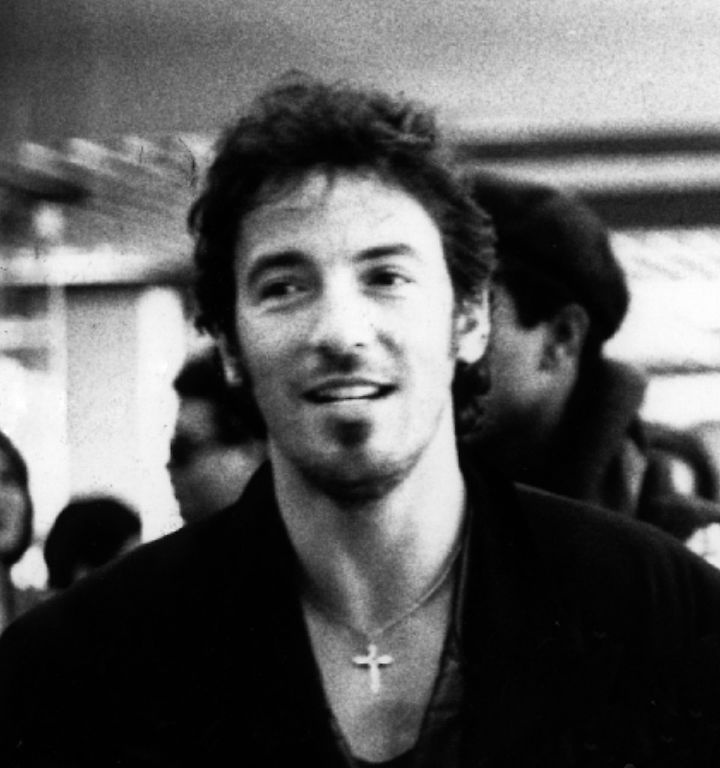
(This is Bruce Springsteen)
720px-Bruce_Springsteen_1988

Bruce Springsteen wrote that song in 1979. He wrote for The Ramones, (can you imagine them singing this?)

(This is The Ramones)

A 1981 portrait of The Ramones

Springsteen ended up keeping it for himself, because his producer and manager advised him to stop giving away his good songs. The title is drawn from a line in Alfred, Lord Tennyson’s famous poem “Ulysses”: “For always roaming with a hungry heart”.

Because this is a rock and roll song, it may be easy to dismiss it as shallow in its meaning. If the problem of the hungry heart is strictly about romance, the standard solution to the problem is for the hero in the song to just find the right person, fall in love, and then everything will be all better.

But as we grow and mature, and pay attention to life, we may realize the idea that another person can be the solution to our problems, that our hungry heart will be satisfied if we just meet our soul mate- this is an illusion. Each of us is a unique creation of God, and no other person is exactly like us. There is a moment as an infant when we notice that we are a separate being from our mother and father, and the other big people around us. From that moment on, we are always going to feel at least a little bit separate, different, isolated from others. We begin to notice that there is a hunger in our hearts- an empty place.

Some of us would do, and have done, almost anything to avoid feeling that void. Springsteen’s song begins with a verse about a man who walked out the door on his wife and kids in Baltimore. He went out for a ride and never went back.

“Like a river that don’t know where it’s flowing
I took a wrong turn and I just kept going”

Life is hard, and we don’t always know what we need in order to feel whole, to not feel empty, to not feel alone. Some of us are able to hide our brokenness, our sadness, our emptiness. For others, it is written all over their face, or even in the way they carry themselves.

In our gospel story this morning, Jesus was teaching in one of the synagogues on the Sabbath, the Jewish day of worship and rest. There was a woman there who had been crippled by a spirit for eighteen years. She was bent over and could not straighten up at all.

Even though Luke’s gospel gives a fairly detailed picture of the woman’s ailment, we don’t know the cause of her suffering. She was crippled by a spirit. That phrase hints to us that whatever was afflicting her was not merely physical. With our 21st century awareness we might look for physical, emotional, psychological, social, even spiritual reasons why she had lived the last 18 years bent over.

Because we have each experienced our own suffering, as we imagine this woman and her situation, we can feel compassion for her. When it comes to a hurting human being there rarely simple problems or simple solutions. The origin of her ailment may have been a physical injury or illness, that developed into a habit of walking hunched over. It might be that she had experienced some great sadness that weighed upon her, or some shame that caused her to duck down, to hide herself from the world, from the gaze of onlookers.
Jesus saw the woman, and called her over. He said, “Woman, you are set free from your infirmity.” Then he put his hands on her, and immediately she straightened up and praised God.

One of the commentators I read this week pointed out that in the four Gospels, Matthew, Mark, Luke, and John, there are at least 138 times when Jesus “sees”. This seems like an important distinction. He does not just look, or worse, look down, on the woman. He sees her.

How many people go through life feeling like people look at them without really seeing them? Jesus took the time, and opened his heart to see this woman more deeply. In contrast with the people in the next part of the story, Jesus sees the woman as a person, rather than as a problem. How would our day to day encounters with people be different if we remembered more often to see each person as a unique created gift of God, rather than as problems to be endured or managed.

Because Jesus viewed the woman with compassion, he could see her need for healing. But was that all that he saw? How would our encounters with people be different if we could remember to look not only at the person’s present condition and situation, but to also open our imagination to their potential? Can we see a person not only for what they are now, but for what they can become, as God keeps working with them? We are, all of us, works in progress.

We are all in need of healing. We may not know exactly what we need. We may find it difficult to look as closely into ourselves as Jesus does when he sees the bent over woman. We may prefer not to be face to face with the broken parts. It may be hard for us to maintain the mask that we are strong and self-sufficient, and not in need of help, or change, or growth, or healing, if we look honestly into our own hungry hearts.

One of Canada’s best known poets, Leonard Cohen, in his song “Anthem” encourages us not only to be honest about the healing we need, but to embrace the truth that it is the hunger in our hearts that can lead us towards love. He says:

Every heart, every heart
to love will come
but like a refugee.

Ring the bells that still can ring
Forget your perfect offering
There is a crack, a crack in everything
That’s how the light gets in.

Let’s take a moment now in quiet, to look into our own hearts. Where are the cracks, the holes, that really can only be filled, healed, helped God’s love. This is not a purely self-centred exercise. The healing we need may help us to be better at loving others, at seeing others, and finding ways to be of help to them.

The healing of the cracks in our own lives can become a way for more of God’s light to shine into this world. Amen

Words for David Walker

I bring greetings, and condolences, as well as the heart-felt best wishes of the people of Trinity United in Oakville. They share in your sense of loss, and in the joy of celebrating the life of our friend David Walker. David provided a calming, healing presence, and sensitive pastoral care and worship leadership to Trinity during a difficult transition time, and that has not been forgotten.

Of all those here that respect, and love David Walker, it may be that I have known him for the shortest time. Five years ago, during my first month as the new minister at Trinity, David dropped in to meet me, and offered, in his kind, non-intrusive way, to be of help and support. That was the beginning of our friendship.

One of the first things we did together was lead a 6 week class combining spiritual practices with drawing and painting. This gave us a chance to work on connections between creativity and spirituality, and making art as a way of prayer. David’s open heart, and generous spirit sought, and found, beauty in people, in situations, and in the natural world around us.

It was breath-taking to watch David make a picture appear on sketch paper, with deft strokes of a pencil, or water-colour brush. It was heart-warming to observe as he worked with the students in the class. He encouraged them to be daring, to try something, and not worry so much about the outcome. Under his gentle tutelage, it was okay to not exactly know what you were doing. He helped them move into territory that was both new, and risky for them- to venture into a world of art-making. David knew that every time we do that- push through the fear and discomfort, and risk moving into a new place, there is the holy possibility that we will be transformed.

When we planned the art and the spirit classes, we took inspiration from a woman named Christine Valters Paintner, who is an artist, and a spiritual director. Christine wrote,  “By giving attention to the process of art-making we may begin to notice stirrings within ourselves- resistance, insight, joy, sadness- all of which are food for self-insight and spiritual growth.”

David had a way of listening to people that helped them know it was okay to delve into those deeper places- even the places of confusion, and pain. David listened to me, a lot, and as we grew in our friendship, I was privileged to return the favour.

Not long after we met, David and I began having lunch together once a week, except when I was on vacation, or he and Ann were away. We spent a lot of time at CJ’s Café, at Bronte fish and chips on Lakeshore, at Swiss Chalet. Actually, our most frequent destination for lunch was the food court at Oakville Place- a great place for different food choices, and for people watching.

David was a student of people. His training as a counselor complimented his innate love for, and curiosity about people, how they lived, and how they made sense of their lives.

We had other adventures together. Afternoon movies, and outings at Lowville Park to spend time with the trees and birds. One of my favourite David days was our trip to the McMichael Gallery in Kleinburg. It was revelatory to look at paintings with a painter- an artist who knew what he was doing, and more profoundly, what they were doing, when they took up their brushes and paints. He told me stories from the lives of some of the group of seven, that shed light on their work.

Our little day trips, and lunch conversations were a small part of David’s larger journey. It was good to travel, even for a short time, with this spiritual pilgrim. He was on a journey with the Divine, towards greater oneness with the Divine. In recent years, an important part of that journey was coming to terms with what it meant to be a retired minister. He had so much to offer, and was sometimes frustrated about not being able find opportunities to exercise his gifts. He was always game to take part in classes or experiments I was trying at Trinity, and his presence always made those events more meaningful.

We served together on the Worship Team for Halton Presbytery and helped to plan and lead worship for the monthly meetings.

One evening we drove together to a presbytery meeting at Hillcrest United Church, way north of Oakville on Trafalgar Road. It became very foggy on the drive. I missed the turn for the church parking lot, because the fog was so thick. We had to pass the church, get turned around, and find our way back- being more vigilant as the fog seemed to be getting thicker. There was something profound about that shared experience of cautiously proceeding, able to see only a short distance ahead, but going on anyway.

In our last conversation, just 3 days before he died, David and I talked about life being a journey through many foggy places, places in which there is much meaning and joy, but also pain and confusion, fear and doubt, and mystery. David lived his way through so many of these times.

Serving in the Navy. Working in the corporate world as an advertising artist. Entering Knox College as a mature student. Caring for those closest to him in all the ups and downs of family life as a husband and father. Being a pastor during times of great upheaval and change in Canadian culture, and in the church. Migrating from the Presbyterian Church to the United Church. Undertaking further study and training in psychology and therapy to be better equipped to help hurting people. In our last conversation we reflected on the journey of life- and a definition of hope we had often discussed in the last couple years.

Real hope is born of having passed through challenging times, and come out the other side- perhaps not intact, certainly effected by the experience, but nonetheless, present and able to carry on.

We talked about death as a passage into mystery, with the hope of emerging into a new place, having been transformed.

David, my friend the painter pilgrim understood the journey is about being open to what is coming, open to the mystery of it all, even when we feel unsure, and perhaps a bit afraid.

Like many, I am proud to say that I have some of David’s art to remember him by. My favourite is a water colour I purchased as an anniversary gift for my wife. It is one he painted up north, of a road winding through a forest in the fall. There is sunlight illuminating the scene, making brilliant the leaves that have begun to turn colour. What I love about this picture is that the sunlight, IMAG0769the warmth and hope in the scene, comes from further up the road. I now look at David’s painting as a prayerful expression of faith, and hope, and trust in what lies ahead.