
A locked room mystery- the learning time for April 16 at Harrow United Church

This is the cover  of a book by Carolyn Keene. She also wrote the Nancy Drew stories, published by the same company that made the Hardy Boys books. Anyone here read, or watch the Hardy Boys or Nancy Drew? Those stories are often the gateway drug for people who go on to develop an addiction to mystery fiction.

In the world of mystery fiction, there is a sub-genre called the Locked Room Mystery. In its classic form, a crime has been committed in a locked room, and there is no obvious way to tell how it happened, or who did it. It’s usually a murder.

A corpse is found in a room that was locked from the inside, and there is no explanation of how it could have happened, or who did it.

The detective comes in to gather clues, interview witnesses and suspects, and develop a theory. 

Scholars of mystery fiction, and yes, that really is a field of study, generally agree the first locked room mystery was written in 1841 by Edgar Allan Poe. It was called the Murders in the Rue Morgue, and is also considered by many to be the first detective story. 

1841 is a long time ago, but I was thinking this week about the Gospel story we just heard, that was written down around 100 years after the earthly life of Jesus. It’s over 1900 years old, and is a kind of locked room mystery.

We can cast Thomas, the one called the Twin, in the role of the reluctant sleuth. He is faced with a most bothersome mystery.

What the story reveals is Jesus’ closest companions, the disciples, were gathered together behind locked doors. This was just after Jesus had been crucified, and the disciples had locked all the doors. The story says they were afraid. Perhaps they worried they might be next. 

Somehow, Jesus entered, and stood among them. They were awestruck. 

Jesus said to them, “Peace to you.”

But Thomas was not with them when Jesus came. The other disciples told him, “We saw the Master.”

But he said, “Unless I see the nail holes in his hands, put my finger in the nail holes, and stick my hand in his side, I won’t believe it.”

Some translations of the Bible give this story the heading: Doubting Thomas.

Many preachers over the centuries have used this story as a launching pad from which to send out sermons extolling the virtues of faith, and encouraging their listeners to simply believe. It’s a pretty powerful line of argument. Don’t be a doubting Thomas. You don’t need proof, just believe. 

But I like Thomas. I like people who question assumptions, who want to investigate, to try to understand, who look at available evidence, before reaching a conclusion.

There is always a temptation to not make waves, or upset apple carts, swim against the current, or challenge the group thought. But the Good Friday story is a good example of why it’s not always good to go along with the crowd. Pilate found no reason to condemn Jesus, and offered to set him free.

The people in the gathered crowd called out for Jesus to be crucified. Popular opinion can’t always be relied upon.

The disciples told Thomas Jesus had appeared to them in a locked room. The same Jesus they knew had been crucified. 

It makes perfect sense to me that Thomas wanted evidence. Good for him, for thinking for himself.

The story jumps ahead 8 days. The disciples were in the same locked room. Had they gone out at all, or had they stayed hidden away all that time?

Thomas was with them this time, when Jesus somehow came through the locked doors to appear in their midst, and say,  “Peace to you.”

Jesus then turned specifically to Thomas. He said,  “Take your finger and examine my hands. Take your hand and stick it in my side. Don’t be unbelieving. Believe.”

Thomas said, “My Master! My God!”

It’s a good story. Often, when I read a good mystery, the main question- who did the crime, is solved, but I am left with other questions. I may want to know more about the character of the detective. Many of the mysteries I read, like those old Nancy Drew and Hardy Boys books, are written as series, so I can go on to the next, and learn more. 

Honestly, the crimes they solve are often just a vehicle to move the book along, so I can spend more time with the detective, and learn how they think and what matters to them.

In the case of Detective Thomas, there are some things I’d like to know. The first being, what was he doing, while all the other disciples were together, behind the locked doors? Where was he?

I like to imagine that he was pursuing other mysteries, that any of us who have had a death in the family, lost a loved one, can understand.

Thomas’ good friend, and teacher, and leader, Jesus had been killed. Thomas and the others followed Jesus because they loved the message he brought about how they each mattered to God. Jesus taught them that God loved them, in such a personal way they could think of God as a parent, pray to God calling him Abba, or Daddy.

More than that, Thomas and the disciples saw the way Jesus lit up a room, or a hillside.  People flocked to be close to him, to hear his message,  and experience healing, happiness, peace, and wholeness in Jesus’ presence.

I imagine Thomas was out in the world beyond the locked room, searching for clues about how to go on. What would his life mean, now that Jesus was gone? What would be worth doing? What would his purpose be?

Would Thomas be able to continue to trust that his own life had meaning, worth, or purpose after Jesus was so cruelly taken away and killed?

When we lose someone who matters to us, it can shake us to the core, and have us question everything. It can take a while before we feel like we can feel anything except exhaustion and sadness, and at some stages of grief, anger, fear and hopelessness.

So what was Thomas up to, while the other disciples were locked away in a room, fearful?

The Gospel of John leaves that a mystery. The focus was on Jesus, and the writer says near the end of the Gospel there were so many more stories and signs that could have been written down, that would have filled many more books. We don’t get the next volume in the adventures of Detective Thomas, with a flashback showing us what he was doing during those 8 days while the others were in hiding.

I like to imagine that Thomas was finding his way back to life, after the loss of his friend and teacher, by traveling around, and visiting with others like him, who were grieving the loss of Jesus. I think maybe he was checking in on people to see how they were doing.

I think he may have been looking for clues about how to carry on, by doing what Jesus had taught from the beginning. Take care of people. See to their needs. Remind them they are loved, and not alone.

I think this, because when I read about Jesus appearing in the locked room, that’s essentially what Jesus told the other disciples.

After Jesus said, “Peace to you,” he said, “Just as the Father sent me, I send you.”

Jesus sent them back out into the world, in the same way God had sent him. Get out and there and be with the hurting, the lonely, the worried. Help people. Let them know they are known, and remembered, and that they matter. Amen

Here is a link to the YouTube video of the whole worship service. My learning time about the Locked Room Mystery starts at 35:02.
Learning Time for July 3, 2022

Audio recording of Scripture reading and Learning Time

Gospel Reading:  Luke 10:1-11, 16-20 (The Inclusive Bible) 

Jesus appointed seventy-two others, and sent them on ahead in pairs to every town and place he intended to visit.  He said to them, “The harvest is rich, but the workers are few; therefore, ask the overseer to send workers to the harvest.

 “Be on your way, and remember: I am sending you as lambs in the midst of wolves.  Don’t carry a walking stick or knapsack; wear no sandals and greet no one along the way.  And whatever house you enter, first say, ‘Peace be upon this house!’  If the people live peaceably there, your peace will rest on them; if not, it will come back to you.  Stay in that house, eating and drinking what they give you, for the laborer is worth a wage. Don’t keep moving from house to house.

“And whatever city you enter, after they welcome you, eat what they set before you and heal those who are sick in that town. Say to them, ‘The reign of God has drawn near to you.’  If the people of any town you enter don’t welcome you, go into its streets and say,  ‘We shake the dust of this town from our feet as testimony against you. But know that the reign of God has drawn near.’

“Anyone who listens to you, listens to me. Anyone who rejects you, rejects me; and those who reject me, reject the One who sent me.”  The seventy-two disciples returned with joy, saying, “Rabbi, even the demons obey us in your name!”  Jesus replied, “I watched Satan fall from the sky like lightning.  Look: I’ve given you the power to tread on snakes and scorpions—even all the forces of the enemy—and nothing will ever injure you.  Nevertheless, don’t rejoice in the fact that the spirits obey you so much as that your names are inscribed in heaven.”

Learning Time: “What is our Mission?”

Our daughter Naomi just graduated from her Master’s program in Library and Information Sciences from Western. She was not able to attend the ceremony since she’s moved to Halifax for a job at their new central library.

Our family had a Zoom celebration in her honour. Naomi and her partner Max, and Joel in Waterloo, and his girlfriend in Vaughn, and Lexie and I in Kingsville all ordered sushi, and we ate together, with purple and white decorations all around us.

Lexie reached out to some of Naomi’s friends, relatives, and co-workers, and asked them to send memories, best wishes, and words of advice. Here are some of my favourites:

Take the opportunity to travel (or maybe even live) internationally if you can. That was from a family friend who currently lives in Egypt.

Be sure to find room for joy. Invest in loving relationships. Seek out genuine community.

Know that you are amazing.

Let happiness be the great surprise of your life, rather than a daily goal.

If you ever have leftover cake, try making French toast out of it!

Lexie reminded me of advice I have always given our kids, and almost anyone else who asks, which is “make your world big”. By that I mean stretch beyond convention, push boundaries, take risks, and work to have a wide range of interests and relationships in your life. That way if one area in your life is not going well, you have other sources of confidence, affirmation, meaning for your life.

What we heard in the gospel story was Jesus giving the 72 he sent out, some words of advice before they hit the road.

They were sent out in pairs to every town and place Jesus intended to visit. It’s a good strategy. Send out advance scouts so you know what kind of reception your larger group may expect. They could also cultivate relationships, so when Jesus and his whole group arrived, they would have an idea about what kind of hospitality, and support might be there.

Jesus encouraged his missionaries to embrace the adventure but be smart about how they travelled. He told them he was sending them out as lambs in the midst of wolves. I am grateful no one said that to Naomi!

Jesus told them to travel in pairs, which was safer than going alone. They were to carry nothing of value, like a walking stick or a bag, or even sandals. The roads they walked were hunting grounds for bandits. Remember the situation described in the parable of the Good Samaritan?

Jesus encouraged them to make friends and accept hospitality when they arrived at a village or town. He specifically told them to eat or drink what they were offered. It could be that a host would offer something outside of what was normal for Jesus’ followers. They were to open their minds, their hearts, and their mouths. Set aside scrupulous adherence to the dietary laws of their faith, just be grateful. Set aside their misgivings about new foods, and just dig in.

Right after the first mention of food, Jesus told his missionaries not to keep moving from house to house. I wonder if that was a way of saying- don’t go looking for meals you are used to, just accept what is given. Don’t worry so much about doing things the way you’ve always done them.

Jesus also said to tell the people in each new place the reign of God has drawn near to them, and to heal those who are sick. 

They had real work to do, helping people along the way. They weren’t only advance scouts, they were part of the Jesus movement.

They were to teach people, by word and deed, about God’s love, and how love could change how they connected to God, what they believed about themselves, and how they treated one another.

Did the missionaries ever wonder how they could live up to the role, of representing the love of God? Did they feel up to it? Did they see themselves as part of the reign of God, the Jesus movement spreading from town to town?

Even so, and likely because they were the real deal, Jesus warned them they would face opposition. He said,

“If the people of any town you enter don’t welcome you, go into its streets and say,  ‘We shake the dust of this town from our feet as testimony against you. But know that the reign of God has drawn near.’

It’s beautiful language, that may inspire each of us to remember moments when we have felt drawn near to the reign of God, when God, and God’s love have felt real in our lives, and that has made a difference.

We are all gathered here this morning because in some way, we have heard the call of God’s love, through the message of Jesus. Someone in our life first brought us to this church, or another one, or taught us about the love of God, maybe at their house, or out on a tractor, or beside a lake, or out in a backyard under a blanket of stars. Somehow, we got the message, and we joined the movement.

It matters enough to us that we come here, even on a hot, sunny Sunday on a holiday weekend. Maybe we come out of habit. Maybe we come because we crave community. Maybe we come to get our spiritual batteries recharged. Maybe we come to be reminded that we are part of something bigger than ourselves.

We are part of the Jesus movement, that has the job of loving the world in God’s name. Jesus keeps inviting us in, and sending us out again, to spread the word. Amen

Feb 7, 2021 Worship Video

Worship Service for Sunday, February 7, 2021

Prelude

Announcements

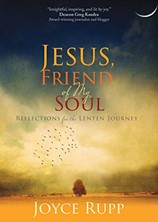
I am happy to offer a Lenten study based on Jesus, Friend of My Soul, which offers short readings for each day of Lent. Sr. Joyce Rupp is a popular author, and speaker, whose work has nurtured the spiritual lives of thousands. 

Her writing conveys ideas about faith that are easy for ordinary people to understand and work toward in our own lives. 

The book is available through Kobo, Indigo/Chapters, as well as Amazon/Kindle, for about $15.00

We will meet for online discussion each Wednesday, starting with Ash Wednesday, February 17. 

If we get enough folks registered, we will meet at from 10-11:30 am, and/or 7-8:30 pm. 

The dates are: Feb 17, 24, Mar 3,10,17,24,31

Let me know if a day time or evening session is best for you. 

Our team is working on our next set of Sunday School videos, based on some Dr. Seuss stories: Horton Hears a Who; Yertle the Turtle, and possibly The Lorax.

Lari Sabbe and her crew are hard at work getting the videos made.

We also want to make up “book bags” that will contain the craft materials your kids would need, to take part.

Like last time, we will post the lessons on YouTube, so that your kids can watch them at a time that works for you. We know that some kids watched them again and again, which is great!

Please let me know if you want your kids to be part of this new set of lessons. We need to know how many bags to deliver, and the first lesson will be posted for February 14.

Our worship video today takes the place of our Annual Meeting. We will hear reports about the work of our congregation, all the ways we live out or mission. We will also celebrate a virtual communion, so you may want to stop the video for a moment, and get your own bread and juice ready for later.

Here is the link to the worship video:

Mission Statement:

The mission of Harrow United Church is to offer nurturing experiences of God’s live through worship, learning and sharing. In thankful response, we will reach out as disciples and stewards of Jesus Christ in God’s world.

Sharing Virtual Communion

I have been reflecting on the idea of virtual communion. On one level, it’s the best we can do right now. On another level, it goes against our United Church sense of community- it is something we are meant to do together. That is generally true, but ministers have also been known to offer private communion, in hospital rooms and in homes, when there is a pastoral necessity. 

Watching communion on a worship video may be a bit like watching a cooking show, and trying to make the dish yourself at home. That can be very rewarding, but it can also be a little underwhelming. For most of us, what we cook at home does not look as good as what the chefs on the Food Channel can do, with their team of assistants.

It seems to me that watching other people cook, and other people eat is always something less than doing it ourselves, and in the case of what is meant to be a shared experience, less than being part of a community. 

It may be that virtual communion will ultimately be less than satisfying- and leave us hungry for the real thing. I’d like to think that hunger is a sign that we still long for community, and for God’s presence with us.

Jesus spent a lot of his time at tables, at gatherings at which sharing food was a focus. 

Last week I made a quick reference to his desert retreat. One of the temptations he faced was a moment when the tempter challenged him to turn stones into bread. Jesus responded that humans do not live by bread alone, but by every word from the mouth of God. I don’t know whether Jesus could actually have turned stones into bread- the idea that he could may have been part of the tempters’s lie. The fact remains that he didn’t do it.

Actually, in all the stories when Jesus is involved in sharing food, he never actually makes it appear magically. The meal always begins with sharing. People are asked to make their contribution. In the stories where crowds are fed, before food was blessed, divided, and shared, it was first gathered. In the very last feeding story, when the Risen Christ appears to some of the disciples who were fishing, they are asked to contribute some of what they caught, to the food that was already cooking on the fire.

I think that’s important to notice, that Jesus’ follwers are not just passive receivers of gifts, they are active contributors- they, and what they can offer, are absolutely necessary.

So maybe it’s okay, as we do this virtual communion thing, that you have to provide your own bread, and your own cup of juice. I think its also okay that you have to hold up your own hands, and say your own prayers, and ask God, in your own way, for a blessing.

Let us give thanks to God!  Let us pray!  

We thank you for sending us Jesus,

Who came as a baby, and grew to show 

Your love with all kinds of people.

We thank you that his light shines in our world.

Jesus came to live with us,

                    to bring hope in times of fear,

          to bring peace in times of danger,

          to bring joy in times of darkness,

          to bring love – your love – in every time.

 Though poor, Jesus was rich in you, 

          and taught us to share our wealth.

          Though often without a home,

          Jesus always lived in you, and taught us

          to welcome everyone to every table.

          Though living in a time when many people 

          felt lost and confused, 

          Jesus showed us all the way to your realm.

Even when people did not understand 

          Jesus words of life and light,

          Jesus loved us.

          When people in ignorance put Jesus to death

          on the cross, you in your love

          broke open the tomb

          and gave new life to everyone.

  On the night before he died, 

          Jesus had supper with friends,

          and took bread, saying,

          “Blessed are you, Holy God,

          Maker of all, 

          for you bring forth bread from the earth.”

          Jesus broke the bread and gave it to all saying,

 “This is my body which I give for you.”

Jesus took the cup, saying,

          “Blessed are you, Holy God, Maker of all,

          for you give us wine to gladden our hearts.” 

          Jesus gave it to them saying,

          “This is my blood, which I give for you.

          Whenever you eat this bread and drink this cup,

          do it in memory of me.”

          With this bread and this cup,

          we remember the life, and death, and resurrection of Jesus,

          and we offer ourselves to you in him.

Send your Holy Spirit on us and on these gifts,

          and make them holy, so that we, your people,

          being fed by holy things,

          may share hope and peace, joy and love with the world;  

May the light of the world live in and through us.

 We pray together, with the words of the Lord’s Prayer:

Our father, who art in heaven,

hallowed be thy name.

Thy kingdom come, thy will be done,

on earth as it is in heaven.

Give us this day our daily bread,

and forgive us our trespasses,

as we forgive those 

who trespass against us.

And lead us not into temptation,

but deliver us from evil.

For thine is the kingdom, 

the power and the glory,

for ever and ever. Amen

Commissioning and Blessing:

Jesus responded to God’s call, to live a life of witness and service.

We are invited to follow his path.

We are called to offer love, and hope, caring and light.

We know there are many who need God’s love.

God blesses us, and desires we be a blessing to others.

Jesus shows us the Way.

The Spirit guides us and inspires us to move forward.

We are blessed, and we bless. Amen

Postlude