
 T is for theology. The first half of the word, “Theo” refers to God. The second half, “logia” (study) is connected to the word-family that includes “logos”, which means “word”, and “logic”, which suggests a system or method. We are doing theological reflection when we think about God, and the activity, the identity, the purposes of God. “What is God doing?” “Who (or what) is God?” “Can we understand God’s will, or plan?” “What does God have to do with me, or I with God?”
Saint Francis of Asissi famously spent whole nights praying two questions, “Who are you, God, and who am I?”
We do theology when we read the Bible stories about Jesus’ birth. We seek to understand something about God, and our relationship with God. This is good for us, and even better if we do with it with humble awareness it is not a simple task. We bring a lot more “baggage” with us than we may realize.
I remember a lecture from my time as a philosophy under-grad, about the distinction between “Event” and “Event Meaning”. The professor said:
” Two groups of people, wearing clothing that identified them as members of opposing sides, faced each other across a wide expanse. There was a loud noise, and then a fairly large projectile was seen flying through the air, from an area dominated by one group, towards an area dominated by the other group. Then there was a lot of confused movement, and more loud noise, and it appeared that members of both groups were quite agitated.”
The professor asked, “Can anyone tell me what I was describing?”
One student made a convincing argument the scene was a battlefield. Another said it was a football game. A cynical soul at the back of the room wondered if there was a difference.
We needed more information to interpret the story. If that information was not available, we might “fill in the blanks” using our own memories, creativity, or biases. The result might say more about ourselves, than the author’s intended meaning.
An author brings their culture, and beliefs, and language, and biases into their work. We as readers are on alert to sift through and get a sense of the meaning. We may be hampered, or helped, by our own education, experience, and attitudes. In an earlier letter I mentioned how important it is to read what is in the text, and not what we expect to be there. (Can you find an inn-keeper or cattle in the nativity story?)
This issue of interpretation can crop up with relatively simple documents, like a shopping list or a sales receipt. (I have never learned to read a baseball box score in the newspaper.) When the subject matter is much more complex, there is even greater need for humility.
I believe we are meant to use our minds, and ask questions, and think carefully about matters of faith. I don’t mean to suggest it is a purely intellectual exercise- we definitely need to listen to our hearts, and pay attention to our experience in life.
John Wesley, one of the founders of the Methodist movement, drew upon scripture, tradition, reason, and experience when he sought theological understanding. He encouraged all followers of Jesus to do the same.
The Advent Alphabet is a ministry offering from Rev. Darrow Woods, minister at Trinity United Church in Oakville, Ontario.
 S is for So what? (It’s also the title of my favourite track on the classic Miles Davis jazz album, Kind of Blue.)
 At our house on Christmas morning we have a tradition of reading about the birth of Jesus, usually from the Gospel of Luke, before we do anything else. At times it is enough to hear the story again, listen with the heart, and open our spirit to receive God’s gifts. (Then we move on to exploring our stockings, and tearing away at wrapping paper!)
 Q is for questions. I asked in an earlier letter if it was possible to have faith, and also have questions, even doubts about what we have been taught about God, and Jesus. I quoted a friend who makes the distinction between having faith in God, and believing everything put forward in our religious tradition. (His name is Rev. Del Stewart, and I had his book “Thinking About Christmas” with me as I wrote some of these letters.)
 P is for Palestine. That’s the name the Romans used to refer to the area between the Mediterranean Sea, and the Jordan River, that included Judea (land of the Jews), and Samaria (home of the famous Good Samaritan), and Galilee, the area that includes Nazareth, the town where Jesus grew up. The name Palestine may have origin with the Philistine people (Remember David and Goliath? Goliath was a Philistine.)
 O is for Oakville, a town in Ontario. If you don’t live in Oakville, think about the place where you live. At Christmas time, whatever our theology, whatever our reading of the biblical stories, we celebrate God’s intimate engagement and involvement with the human race, in the places where we live. We are both comforted and challenged by the message of universal love, extended to all people.
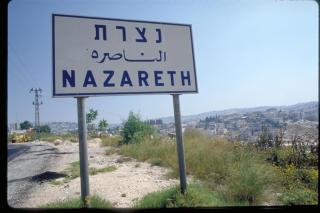 N is for Nazareth, Jesus’ home town in Galilee. But wait, what about that other little town? Why did the gospel writers make a point of telling us he was born in Bethlehem?
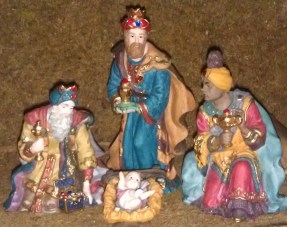 M is for Magi. I want to talk about the wise ones, but have other plans for W! I have always thought they were fascinating characters. Despite the beloved “We Three Kings”, they are magi. If you read Matthew’s Gospel , it says clearly they were wise men, not kings from the East who came to pay their respects. (Incidentally, the only reason we think of there being three is because that’s how many gifts they brought. In some streams of the Christian tradition, they talk about as many as twelve visitors.)
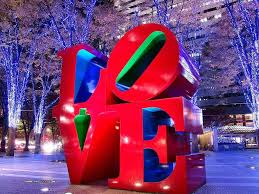 L is for love. Here are my favourite lines of scripture on the subject, from Eugene Peterson’s contemporary paraphrase, The Message:
 Darrow Woods: Writer of Things