I am a United Church of Canada minister who lives and works in Essex County, in Southwestern Ontario. I use this site to make my writing available to those who may find it interesting or even useful.
A few years ago I travelled with my son to Iceland. One of our excursions was a trip down into, and through cave-like underground lava tubes, formed when a conduit of still-flowing lava moved under the surface layer, which had cooled enough to crust and harden.
We were advised to wear clothing that would survive rough treatment, and issued helmets and lights before we descended.
There were places at which the tunnel was like a massive high-ceilinged underground cathedral.
There were also progressively narrow and low sections, that required us first to duck, then crawl, then slide our bellies on wet stone to get through.
Several times I had to remind myself we were being guided on by trained and experienced folks, who knew the way.
Alexa Gilmour, today’s “Good Courage” contributor shared a heart-rending story of the loss of her unborn child, and a significant conversation with her mother.
Alexa said to her mother, “I have a child to take care of. I need to get up, but I just don’t know how.”
It seems to me her mother’s response gave Alexa the permission she needed.
“Yes, you do,” she said, “You’re doing it now. The only way back is by way of grief.”
Then her mother sat with her and they cried together.
In your own life, has there been a person who offered you a gift like Alexa’s mother did for her?
Have you experienced grief as a healing process?
I worried it would feel disrespectful to Alexa’s story to include the Youtube video, but her very personal disclosure reminded me of this old nursery rhyme. Especially the verse about the deep, dark cave.
We’re Going On A Bear Hunt
We’re goin’ on a bear hunt, We’re going to catch a big one, I’m not scared What a beautiful day! Oh look! It’s some long, wavy grass! Can’t go over it, Can’t go under it, Can’t go around it, Got to go through it!
We’re goin’ on a bear hunt, We’re going to catch a big one, I’m not scared What a beautiful day! Oh look! It’s a mushroom patch. Can’t go over it, Can’t go under it, Can’t go around it, Got to go through it!
We’re goin’ on a bear hunt, We’re going to catch a big one, I’m not scared What a beautiful day! Oh look! It’s a wide river. Can’t go over it, Can’t go under it, Can’t go through it, Got to swim across it.
We’re goin’ on a bear hunt, We’re going to catch a big one, I’m not scared What a beautiful day! Oh look! A deep, dark cave. Can’t go over it, Can’t go under it, Can’t go through it, Got to go in it.
Uh, oh! It’s dark in here. I feel something, It has lots of hair! It has sharp teeth! It’s a bear!
Hurry back through the river, Back through the mushroom patch, Back through the long grass Run in the house and lock the door. Phew! That was close!
Lent is the church’s annual journey towards the moment on Good Friday when we remember the death of Jesus. Does this season prepare us?
Are we ever actually ready to face death? The death of Jesus? The death of a loved one? Our own?
Today’s Good Courage author digs into their own experience of grief over the death of a relationship, as a way to remind us of a pattern we recognize.
There is a movement from loss and grief towards new possibility, and new life. We see that cycle repeated daily with rise of the sun, and its setting in the evening. We’ve learned to trust it will rise again tomorrow.
We see it in the cycle of the seasons. (Although here in Essex County, lately it’s felt like we can have all the seasons in one week.) Generally, at this time of year, we watch for the retreat of winter, and the signs that spring is emerging. New growth, the greening of the fields and trees, the return of birds we said goodbye to the past fall.
The writer also reminds that the smaller deaths, the changes and losses we experience, have the benefit, not always apparent or appreciated at the time, of making space in our lives for the “new”.
As long as we live, this can be true. Relationships, occupations, interests, activities, busy-ness which claimed much of our time, fascination, resources and energy may wind down, or fade away, die.
Can we remember that, in those times of pain and loss? Can we tell ourselves, ” I grieve what is now missing, but I trust that there will be something new.”?
In the Good Courage devotion for today, writer Amy Panton confessed when her psychiatrist asked if she ever heard Jesus talking to her, she panicked, and out of fear she’d end up on even more medications, said “No.”
Amy’s hesitation and fear are understandable. As much as we may crave clear messages from God, and follow a religion that claims such revelations are possible, we don’t really know what to make of it, when someone says they hear the voice of God.
In 1986 I was a student intern at Koinonia Farm, a Christian intentional community in Sumter County, Georgia. Koinonia is about 10 miles from Plains, home to former U.S. President Jimmy Carter.
Fran, the farm’s volunteer librarian, invited the interns to join her early on Sunday mornings for silent worship, under a big tree. This was my first experience with Quakers.
We would gather shortly after sunrise. Early enough to not be sitting out in the heat of the day, and before the mosquitoes were up.
Worship was simple. We sat. Fran would welcome us, invite us to get comfortable. She might read a short passage from the New Testament, or from a Quaker author. Then we would relax into the quiet.
Quakers talk about a “gathered meeting”, at which the presence of God is experienced. Philosopher and author Thomas Kelly described it this way:
“In the Quaker practice of group worship on the basis of silence come special times when an electric hush and solemnity and depth of power steals over the worshippers. A blanket of divine covering comes over the room, and a quickening Presence pervades us, breaking down some part of the special privacy and isolation of our individual lives and bonding our spirits within a super-individual Life and Power—an objective, dynamic Presence which enfolds us all, nourishes our souls, speaks glad, unutterable comfort within us, and quickens in us depths that had before been slumbering. The Burning Bush has been kindled in our midst, and we stand together on holy ground.”
I remember moments under the tree that seemed something like what Kelly was trying to describe. A sense there is “more” than what we normally see and hear.
The founder of the Quaker movement, George Fox, rejected the need for educated priests and an organized religion to mediate between the individual and God. This got him in a lot of trouble in 17th England, which was already rife with rebellion against established authorities of all kinds.
Organized religion, and civil authorities are often quick to write off people who claim to hear God’s voice.
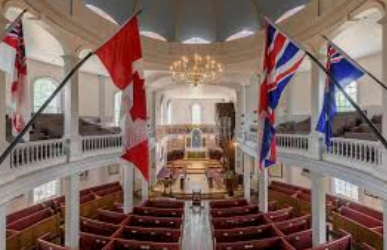
This past fall I was out to Halifax for a weekend, and decided to worship at the historic “round” church, St. Paul’s Anglican. I was warmly welcomed, and since I was a guest in someone else’s house, I behaved myself.
But, I was sorely tempted! At the front of the sanctuary, on the right side, there is a “Royal Pew”.
This is a church that was built originally with money granted by royalty. When most of it burned down, members of the British monarchy supported the rebuilding efforts, and made significant contributions.
Trip Advisor’s piece about the church notes that many “royals” have used this pew, and it had even seated Elizabeth the Second.
I noticed there were no “royals” using the pew the Sunday I was there.
No one used it. It looked like a great place to sit. I wondered if it always sits empty, just in case. I also wondered what would happen if I sat there.
The Good Courage devotion for today includes the story of two of Jesus’ closest friends and followers, James and John. The writer notes that even after having seen and heard Jesus bringing his message of God’s love for all people, no matter their circumstances, these two seem to seek special status.
“And they [James and John] said to him, “Grant us to sit, one at your right hand and one at your left, in your glory.” (Mark 10:37)
The writer suggests that not all implications of Jesus’ message of self-giving, serving, love has sunk in. Even so, these were members of Jesus’ inner circle, amongst those he would trust, and commission, to go forth and continue his work after he was gone.
The Jesus movement is made up, for the most part, of ordinary people, like you and me.
In 30 plus years working in churches, I’ve met some very saintly people, who shone with God’s love and compassion, and had deep and profound prayer lives. I’ve also met a lot of people who are more like me- mostly interested, most of the time, in doing the right thing, and being kind.
We don’t always want to do the right thing, and we don’t always know what the right things are. We muddle, and fumble along. We have unreasonable, or poorly considered expectations, like James and John. Our feelings can get hurt, when we don’t get the recognition we thought we were due.
We can circle back, again and again, to two of the lessons in the story about James and John seeking special status.
The first is that even though they didn’t “get” Jesus and his message, all the time, he loved them, and accepted them, and did not give up on them.
The second is that knowing that they (James and John) did not always get it right, reminds us that we don’t either. That’s a reminder to stay humble, even, and maybe especially about the things about which we feel the most certain.
Today’s Good Courage reading is a meditation on courage rooted in hope. It describes a family’s long and arduous journey from Eritrea, via a refugee camp in Sudan, to Northern Saskatchewan.
A little over 25 years ago my wife and I were a freshly married couple. We we wanted to start our married life, and hopefully, a family, in a place as close to her folks as we could manage. She was called to a full-time position at a church in Windsor, and I found a part-time job at another. We packed up and moved from the prairies to Southwestern Ontario. (A lovely place, but still two hours from my wife’s parents.)
This was the late 1990’s. The nightly news was all about the conflict in the aftermath of the dissolution of the former Yugoslavia. Many people fled their homes, and sought new places to live, and raise their families.
The Windsor Multi-Cultural Association connected us with a family who’d made their way from Bosnia to Canada, via Germany. A husband and wife, and two young boys. He’d been raised Muslim, and she Catholic. They wanted a life for their children safe from the ethnic and religious and political tensions, violence and war into which they had been born.
They became our friends, and our extended family. They helped us move into, and renovate our first home, including the nursery for our first child.
Their courage, and undefeatable hope that life could be better, and that their sons could have opportunities not available to them, still inspires me.
The writers in Good Courage, the 2023 United Church daily devotion book for Lent have taken their readers on journeys to places that for many of us, are outside our experience. I think that’s good. Lent is a season for self-examination and growth.
To visit, even briefly, the hard places where people dwell, and struggle, and look for meaning and hope, is a good thing.
A few years ago I was on the writing team for one of these Lenten books. It was an honour to be asked. It’s humbling now, to see how much deeper into places of vulnerability and pain this year’s writers have gone, than I went with my writing. They have shown such, well, Good Courage.
Amy Panton’s pieces have been particularly challenging. Today she asked how we might respond if someone in our life revealed they practised self-harm. The character she creates for us to meet wants to be accepted for who they are.
I could not tell, from the brief sketch, if this person wants to be accepted as someone who has found in self-harm a necessary coping mechanism that they have no desire to stop, or if the person wants to be accepted as someone who is struggling to find healthier ways to cope.
I’m not sure my question would matter all that much, in the moment the person revealed the scars on their arms from cutting. I think they might just want to know that the person they chose to hear their story, would listen.
Amy Panton, the writer of today’s devotion is doing important work. Check out her website, podcast, and The Canadian Journal of Thelology, Mental Health and Disability.
The dashboard for this blog shows me that a surprising number of people follow and read what I post.
I am very grateful for all of you! I really, really am.
I am also branching out.
This blog tends to be a place for things I write that are connected to church- preaching, teaching, and that kind of thing.
I’ve started another project using a platform called Substack, which is more like an email newsletter. My plan is it will be the place for writing that is more in the mystery and detective fiction vein.
The two “worlds” do intersect, and inform each other. That’s inevitable. I look at mystery fiction with the heart of a spiritual seeker, and I look at sermons with the critical eye of a fiction writer.
If you are interested in the “mystery” end of things, I would love it if you were to click on the link below and check it out, and perhaps even take a free subscription to my Substack, which is called “reluctant sleuth”.
One of my ideas for “reluctant sleuth” is to serialize my first novel as I revise it. My writing mentor gave me some constructive criticism about how to make it better, and I was thinking I could let people read it, chapter by chapter, and get your reactions.
Not everyone imagines God the way I do. Many people use different words and concepts to form their prayers, and to “name” the God to which? to whom? to what? they pray.
Today’s devotion from Good Courage included a story about a brave and kind, committed and compassionate doctor, who set aside worries about their own well-being, to care for worried and desperate people at a huge, over-crowded, and under-resourced hospital in India.
It’s an inspiring story. When I meet people like this physician, I wonder how they do what they do. If I get to know them well enough to ask, I say something like “Where do you find the energy, or strength to keep on?”
Often the answer is they derive their sense of self, purpose, and connection to others, to the universe, from the faith in which they have been nurtured.
The doctor in today’s devotion said, “Every day I said a prayer to the ancestors to keep us safe and give me the courage to face whatever adversity. That’s how I got through.”
The doctor is of the Kodova faith. Kodovas worship ancestors and nature. Their deity is the river, Kaveri. The photo below is of that river.
According to Wikipedia, the Kaveri is a sacred river to the people of South India and is worshipped as the Goddess Kaveriamma (Mother Cauvery). It is considered to be among the seven holy rivers of India.
I had to look those things up, because I’d never heard of any of it before.
But I recognize faith, and the fruit of faith, when I see it.
When my kids were growing up we lived in Oakville. My wife Lexie and I both worked as ministers, always in different churches. For part of that time she was a minister of Education and Pastoral Care, so it was natural our kids went to her church. It was also natural, that because our kids and their mother were very involved in the life of that congregation, that I would help when I was available.
I did a lot of gathering craft materials, and cutting out bits and bobs, gluing, and painting, and generally getting stuff ready. I also helped set up Sunday School rooms, and lay out costumes. A lot of this would happen on Saturday nights.
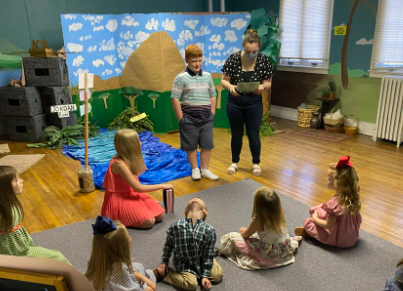
The best years of that Sunday School were when they worked on the Rotation Model. The kids were gathered in groups according to age or grade level, and the groups would take turns at a series of stations that brought a Bible story to life in different ways. There was often a kitchen unit that involved making or baking something good to eat. There might be song time, a story time, a time to act out the story, or a craft time to make something connected to the story.
The kids would explore and learn the story in several different ways, over the course of a few weeks. I know a lot of those kids as adults, including our own, and they remember their time in Sunday School.
Learning the stories provides a great foundation for when the child grows up. They can think about the stories, and the stories may help them develop their own ideas about faith, and life, and God. Beyond the stories, the kids have this experience of being loved, and cared for, fed and played with, and feeling at home. That’s a feeling that can be important in later years, when life becomes more complicated for them, and the questions get bigger and more confusing.
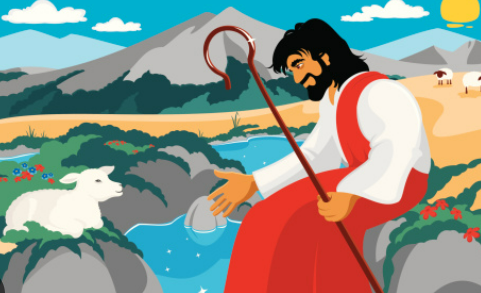
Something I thought was absolute genius, that my wife did with the Sunday School, was create a role she called “Shepherd”. A shepherd was a person responsible to help a group of kids make their way from one activity area to the next.
It was a big church building, with music happening in the auditorium, cooking in the kitchen, woodworking in the basement, puppet show in the library, science lab on the stage in the gym. Groups of kids needed to be escorted from one exciting venue to another, perhaps with a bathroom break along the way.
The shepherds were more than tour guides. They really had to shepherd the kids. Make sure they didn’t get distracted or lost along the way. Kind of like what actual shepherds do with actual sheep, except they did not have those big staffs to help them herd the little lambs.
My wife, the genius, recruited shepherds from that group of people who’d say, “You’re doing such great work with the children. I would love to help, but I’m not a teacher, I don’t know the bible and I can’t sing, draw or do crafts.”
Every church seems to have people who cheer from the sidelines, or have ideas about what programs a church needs to offer, but don’t necessarily step up to make them happen. Some may feel they aren’t qualified.
From this large pool of people who claimed they had nothing to contribute, Lexie and her Sunday School Superintendent recruited a whole crew of shepherds. There was no age limit to who could be a shepherd, and no particular skill set required. She’d sign them up on a big sheet where they could each commit to a certain block of weeks. They weren’t signing on to be there always and forever. They could take turns.
I noticed over the years that some of the shepherds became repeat customers. They’d come back and help again and again. Some would also volunteer to be shepherds, or serve snack and juice at Vacation Bible School in the summertime.
Some also discovered they liked being around the kids, got over some of their anxiety and inhibitions, and realized they did have talents, gifts, and skills to offer. They could demonstrate a craft they enjoyed, or talk about one of their hobbies. Almost everybody could read a story book out loud. Even those who didn’t like to read, could just be there, as another friendly face.
I saw some older folks become transformed by the experience of helping out. It was a reminder that the mission of a church should include the ongoing education of people of all ages.
It’s not just the kids in Sunday School who learn and grow. We are all works in progress. We can all learn by doing, and by growing into new roles, and accepting new challenges. As long as we are alive, we can learn, and grow, and we can help. We can find ways to contribute.
The people my wife recruited had opportunities to learn through lived experience what it means to be a shepherd. It gave them glimpses of how God loves and shepherds us.
They were reminded that we all get to be God’s sheep, and also be a shepherd to others at the same time.
Today we baptized the amazing, delightful Mia. I had the folks stand up as a congregation, and promise to be there for her, as a community of faith.
We stood in support of Mia and her family, her god-parents and grandparents and in-laws and out-laws and neighbours and friends of her family. We did that because we know that none of us can do well on our own, at the awesome, huge, and wonderful, overwhelming job of raising, guiding, teaching, inspiring a child.
It’s a cliche’ to say it takes a village to raise a child. During the land acknowledgment today I talked about the Wendat people. In their tradition, all the children were the shared responsibility of all members of the community, not just the biological parents.
There was a shared understanding that everyone has a stake in instilling the knowledge, values, survival skills, and spirituality that sustain each child, and also help ensure the long-term survival of the people.
It’s common sense. We should take care of everyone in the community, so there can be a community.
I take my wisdom where I can find it. I enjoy mystery novels, and one of my current favourite writers is Michael Connelly.
Connelly has a character called Harry Bosch, who is a homicide detective. I like characters who, although they are basically broken and faulted human beings, like everyone I know in real life, also have a strong sense of purpose, or a moral code that guides them.
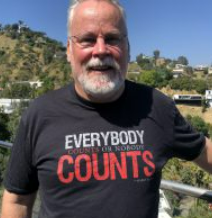
The fictional Detective Harry Bosch, who is relentless in his pursuit of truth, and never gives up until he finds the killer, has a good motto. He says, “Everybody counts, or nobody counts.”
It’s simple, and to the point, and I think, very much like Jesus. Everyone counts. No one should be left out. We treat everyone with equal love and respect, because each child, each person matters.
The flip side of that is that everyone can be counted, and counted on, to have something they can contribute, to add to the life of the faith community. To be the community God dreams we can be, everyone has something to contribute. We actually need everyone. Everyone counts. Amen
Here is a link to the Youtube video of this week’s worship service, which includes this learning time:








 Darrow Woods: Writer of Things