Giving Thanks (from October 11, 2015)

Wouldn’t it be great, if at the end of our lives all we had left to say was “Thank You”?

That is not to suggest we would have lived lives free from challenge or difficulty or sadness, or pain.

Everyone faces hardships,

Everyone lives with disappointments,

Everyone goes through experiences that break our hearts,

Everyone has times that leave us soaked in tears.

There is a way to live, that wise people know about,

and which all major spiritual traditions, including ours, teach.

The way to live,

that has been proven to result in reaching the end of life with a thank you on our lips,

is the way of gratitude.

A wise teacher named Timothy Miller, in his book “How to Want What You Have” wrote:

“ Gratitude is the intention to count-your-blessings every day, every minute,

while avoiding, whenever possible,

the belief that you need or deserve different circumstances.”

It is easy to get out of the habit of gratitude, if I get caught up in the soul-killing habits of entitlement, greed, and envy. Another wise teacher, Edward Hays wrote:

“It is important not only to be grateful to others but also to be grateful for others. We need to cultivate a gratitude for others’ giftedness in the same way that we appreciate a beautiful sunset or a smile from a loved one. Others always seem to have been given gifts in life that we desire, and so it’s easy to be envious. Riding sidesaddle with envy is a dangerous practice: I would be happy if I had what he or she possesses. By contrast, giving thanks constantly and in all circumstances liberates us from envy.”
We are, each of us here, alive.

We have memories of times, and places, and people, for whom we are grateful.

We may also have feelings of grief and sadness, for the absence or the end,

or the loss of some of those times, places, and people.

We can feel grief, but that need not overpower or wash away our basic gratitude for all we have cherished.

Even when we are feeling sad, or lost, or afraid, or alone,

at least we are alive to feel these things.

At the heart of the present moment we are in, is the gift of being alive.

A gift that is made up of many more gifts.

The gift of memories. The gift of being here and now. The gift of sharing in the human experience of being alive.

Thomas Merton, another of my favourite spiritual teachers wrote: “To be grateful is to recognize the Love of God in everything He has given us — and He has given us everything. Every breath we draw is a gift of His love, every moment of existence is a grace, for it brings with it immense graces from Him. Gratitude therefore takes nothing for granted, is never unresponsive, is constantly awakening to new wonder and to praise of the goodness of God. For the grateful person knows that God is good, not by hearsay but by experience. And that is what makes all the difference.”

Earlier in the service I suggested 3 g’s we might use with our family and friends, to open up conversation during this Thanksgiving holiday weekend. I think they are worth coming back to:

Gratitude: name something in your life you deeply appreciate, and would not want to live without.

Make a quiet prayer of thanks for that gift.

Grief: name something, someone in your life that you remember with fondness,that is no longer physically with you.

Make a quiet prayer of thanks, for that gift, and for the experience of cherishing a person, or place, or something, so deeply.

Grace: name something in your life you have appreciated, and you are now willing to pass along for the good of others.

Make a prayer for thanks for being in a place in life in which you have gifts to offer to others.

Take another moment to think about how you might give this thing away.

There may be times when we don’t feel like feeling grateful. We may need to practice gratitude, even if we are not feeling it, to wake ourselves up again to the fullness of life, which includes the experience of gratitude.

These three simple g- questions may help us.

Returning to the practice of gratitude can re-awaken joy and help it stay alive in our hearts.

Joy is not the same as temporary happiness.

Joy is the capacity, I think, to see the goodness in life, to rest in the awareness that God is the source of that goodness, and to look for ways to pass the goodness along.

Wouldn’t it be great, if at the end of our lives all we had left to say was “Thank You”?

Caring for Creation (from Sept 27, 2015)

I was asked by the Five Oaks retreat centre to gather together some friends who like to create liturgy, and music, and prayers. The idea was to offer worship services for use in the United Church across Canada, for the season of Creation, that would also celebrate the beautiful place where Five Oaks sits. I spend a lot of time at the retreat centre, and know that it is a real gift. In May, I went there for an overnight retreat, we called it a sleepover, with 3 friends. We spent the afternoon walking around the grounds of the centre. We chatted, and prayed, and began to gather ideas about what we could write. Then we ate supper together, and attended a funky concert by a woman who plays the Japanese flute called a shakuhachi.

The next day was spent on writing, and laughing, and singing together. For me, the whole experience was a good reminder of the beauty of the created world we live in, that I don’t always see when I spend my time in cars and offices and churches, and houses, and stores. It was good to slow down, to be outside, to go for a walk, to sit under a big tree and pray.

It is harder, living as most of us do in this large urban area, to retain the sense that we live in God’s garden, and are charged with its care. There was a time when most of the best farm land in Canada was all around us. More and more of it is being plowed under and paved over for new housing and roads.

There is something truly wonderful about planting seeds, or seedlings, and watching them grow, tending them, and anticipating the results. There is a special awareness of our dependence on things out of our control, when we grow things, or try to grow things.

I remember living on the prairies, serving churches in farm communities. Those folks knew they were connected, not just to the land, but to the weather. They watched the sky, and waited, and prayed for rain in the spring, and for clear days during harvest time.

I love eating the tomatoes and lettuce we have grown for ourselves in our little backyard plot. This week I have also been enjoying kale grown by a good friend. The vegetables taste that much better for never having been packaged in plastic, trucked hundreds or thousands of miles, and then had the flavour chilled out of them in a huge grocery store.

We were made to tend the earth, the bible story tells us. We were also made to eat well, of good things that we can watch grow. These are practical, basic things, and they are deeply spiritual.

This is something that churches are beginning to re-discover. A church may not have a lot of money, or big crowds of people, or flashy programs to attract attention. But a lot of churches, like ours, have land. Land that can be put to use, to grow things, to bring people together, to help them re-connect with the sacredness of creation.

There is a “growing movement” of churches that set aside some of their land to make space for community gardens.

We could do something like that. I spent time walking the grounds around the church this week. What I noticed is that even after we sub-divide the property, and sell off part of it to be developed as housing lots, we will still have space enough left to do other things.

There is a great section between the back end of the fellowship hall and the parking lot where we could easily put in some nice raised beds.

We could grow vegetables. We could offer the space to other people in the area, some of whom might want to garden, but live in an apartment or senior’s building, and don’t have their own land to work with. We could grow vegetables to give to the food bank, or to use in community meals here at Trinity.

It might be a very small thing at first, that could grow, inch by inch, row by row, into something beautiful. Amen

The One-ness of Creation (from Sept 20, 2016)

One evening, an elderly Cherokee brave told his grandson about a battle that goes on inside people. He said “My son, the battle is between two ‘wolves’ inside us all. One is is anger, envy, jealousy, sorrow, regret, greed, arrogance, self-pity, guilt, resentment, inferiority, lies, false pride, superiority, and ego. The other is good. It is joy, peace love, hope serenity, humility, kindness, benevolence, empathy, generosity, truth, compassion and faith.” The grandson though about it for a minute and then asked his grandfather: “which wolf wins?…” Grandfather answered, “the one that you feed”


I used that story last weekend at a wedding. It seemed to me that it could be useful thing for the couple to ponder, as they continue sorting out how to make their life together.

The story points to two basic human urges- the one that is all about our survival, and putting our own needs first, and the one that is about love, the mystical one-ness, and connection to all things.

Has anyone here heard of Dr. Jill Bolte Taylor? She is a neuro-anatomist, a brain scientist, who worked at Harvard. She got interested in the structure of the human brain, and in looking at what the different parts actually do, how they function, how they relate to each other, and how they help us relate to the world. She has a brother who was diagnosed with the brain disorder schizophrenia, and she wanted to understand what that meant and look for ways to be of help to him.

In 1996 she had a stroke, a massive brain hemmhorage that interrupted the supply of blood to the left side of her brain. She wrote a book called “My Stroke of Insight”, which describes her memories of the actual stroke event, and then what she experienced as she lost the function of the left half of her brain, and relied on the right hemisphere.

Dr. Taylor has also done a TED Talk, in which she describes her understanding of how each half of the brain works.

It seems like we are made, the our brains are actually hard wired to do the things the Cherokee grandfather was telling the little boy about. Part of us needs to take of ourselves, and make sense of the world, and make rules, and think of ourselves as separate from everyone, and everything else. Part of us contains the mystical view of things, and knows that we are all connected, and that your existence and my existence are inter-dependent, that we need each other.

I think the mystical loving side of my brain is the part that is activated when I see the photos of the Syrian refugees desperately seeking a safe place to live. It is the part of me that collapses in sorrow when I see the photos of children who have died, or who are suffering because of the violence, the warfare, the human cruelty.

The logical, protective, orderly part of my brain is the one that responds to the messages of fear, and protectiveness. How can we help those people? We barely have enough for ourselves! What if some of them are terrorists? Won’t they just come to our country and ruin things here for us? Won’t they take my place in line for health care, or cause my taxes to go up?

If God has made us with these two brain halves, then we obviously need them both. But in the world we live in, which half gets listened to most often?

Jesus came to teach us to not be bound by fear, and to open ourselves to love. To remember that there is more to us, than what we can grasp and hold tightly. That we are mystical, spiritual beings as well as flesh and blood. That the wellbeing of every person is connected to the wellbeing of every other creature, every living thing, every part of God’s amazing creation. That we are all one. Amen

Work in progress (from Sept 13, 2015)

marie howe

In July when I was at a writing conference for clergy I went to a master class taught by a poet named Marie Howe. Marie is a tall, very thin, very dramatic looking woman with wild curly blonde hair that flies in all directions, as if the wind is constantly blowing through it. She looks the way I imagine the female figure of wisdom to look in the eighth chapter of the book of Proverbs, where it says;

“The Lord created me at the beginning of his work,     the first of his acts of long ago. 23 Ages ago I was set up,     at the first, before the beginning of the earth. 24 When there were no depths I was brought forth,     when there were no springs abounding with water. 25 Before the mountains had been shaped,     before the hills, I was brought forth— 26 when he had not yet made earth and fields,     or the world’s first bits of soil.”

This is intriguing to think about, that the Creator made wisdom, before making everything else. Wisdom is described as standing by with the Creator, as a witness to the work of making, well making everything.

The first thing that Wisdom does is watch, observe God at work. The Book of Proverbs is a collection of wise sayings, advice for living. Sometimes it is suggested that King Solomon, remembered as one of the wisest kings of Israel was either the author, or the collector of the wise sayings.

It is a fairly clever literary device, to include a figure that personifies wisdom, in a book of collected wise sayings. Then it becomes the job of the character, not the author, to say, hey, listen, pay attention to these wise words. In this case, the character is saying, “I am wisdom, and I have been around since the Creator began the work of Creation.”

But back to my teacher, the poet Marie Howe. She came to Kenyon College, as part of the planning team, and as a faculty member, to teach writing to ministers, priests, rabbis, spiritual directors and chaplains from many different backgrounds, and from at least 3 different countries.

She began her master class by telling a room full of preachers that a poem is not a poem, if you are already know what you are going to say, before you say it. I was confused and attracted at the same time by this statement. She was saying the work of creation is actually the work of discovery. You create not just to make something that has not been made before, but to grow, to learn, to see in a new way.

I remember going to the Canadian Lakehead Exhibition, that’s the CLE, which is different from that other big end of summer event that happens in Toronto. In the same building as the quilt competition and the flower arranging show, there was a landscape artist. I wish I could remember his name. My parent actually have one of his paintings above the couch in their living room. He was famous in a Thunder Bay kind of way, a commercial artist who would take a commission to make a painting for your house. You could tell him how big, and what the colour scheme of the room was, and he’d make you a landscape to fit. But that was not what made him amazing.

I stood and watched in the arts and crafts building one summer day as he quickly sketched out a scene that showed a bend in a river, and rocks, and trees, and some mountains and clouds and sky in the background. It was a very typical Northern Ontario, Pre-Cambrian Shield kind of scene. What evoked wonder in me was that after the artist established the scene, he began taking it through the seasons of the year. He was working in oils, and he added layer over layer to the scene.

He began with the barrenness of winter, moved to the bright new growth and freshness of spring, showed the glories of summer, and then, with colour, and light, and shadow, brought the scene to fall. If I’d had a video camera back then, focussed on that canvas, I could have captured the progression of a whole year in that scene. It was genius.

I remember the spring that we had an art class here at Trinity, with David Walker. He was showing us how to work with pencils, and watercolors. It was wonderful to watch him work with water colors. It looked to me like he had something of a plan, before he ever touched the brush to the page, but that once there was colour in the brush, and the brush made contact with the page, anything could happen. Because it was water colour and not oil, there were no layers. David had to respect the medium he was working with, and to some degree, follow where the colors took him, as they spread into the sheen of water on the surface of the page.

I am not a painter. I relate far more easily to working with words. Hearing a poet say that she doesn’t know what a poem is going to say, until she is writing, that feels real to me. She is discovering something as she works.

Another one of my teachers this July was another poet, named Rodger Kamenetz. Rodger is actually much better known than Marie. Rodger is a retired professor of Jewish studies and English literature. He used to teach at the University of Louisiana. In 1990 he was part of a group of Jewish leaders and teachers who were invited to India, to meet with the Dalai Lama. The Dalai Lama was interested to hear from Jewish people about how a religious culture survives in exile. Rodger wrote a book about the journey of these Jewish rabbis from the Western world, to the Tibetan compound in Dharamsala, India. It is also a book about his own re-discovery of his Jewish identity.

In one of my favourite passages in the book, Rodger described a conversation with one of his rabbi friends, about the story of Noah and the Flood. Rodger wrote,

“I wanted to know how God could have made such a botch of things that he had to wipe out his creation with a flood. Zalman (one of the rabbis) answered with a midrash (Imaginative Torah commentary) on the phrase of Abraham’s, “God of my youth.” It so happens the Hebrew can also be read, “God in his youth.”

The midrash says that the flood happened because God used to be younger. When God was younger, he made mistakes.

With that twist, Zalman turned a point of doubt for me into a point of faith. ‘When God was younger’ was a very liberating idea. It meant that God evolves in the Torah—and in our lives. A God who evolves, a God still evolving, a God whose evolution I had a stake in—this was a refreshment.” (p.189, The Jew in the Lotus)

Rodger discovered this was a God that he could believe in, a God who was actively, passionately involved in the making of the world, and is still evolving, still learning.

There is a whole wave of Christian thinking about God called Process Theology, that works with this notion. It kind of rose up as a response to another idea about God that suggested that God the creator is like a clock-maker, who put all the pieces of an enormous mechanism together, wound it up and set it in motion, but really has little to do with it on an ongoing basis. This is an image of a very distant, and almost disinterested creator.

Process Theology suggests God is more like the painter I watched, who is right in there, at every stage, involved in what is happening, in the ongoing process of creation. Creation in this thinking is not just a noun, but a verb. And so is God.

One of the implications of this is that if we are made in God’s image, and God is an active creator, then that is who we are as well, we are being made, to take part in the active work of creating, Our lives, and what we make of each day, are part of the ongoing work of creating the universe. Amen


Decision trees (from Aug 16, 2015)

It seems like every time I go on study leave, something breaks. The worst was a rainy spring 8 years ago. I was at a spiritual direction retreat at Huron College in London, when the family room in our basement flooded. Through the magic of Skype, my wife could show me the indoor pond. It kind of put a damper on my time away.

In July, as I was preparing to go to a writing conference, our dishwasher quit. Fortunately, there was no flood. The dishwasher just stopped. The kind and helpful repair man said he could replace the computer circuit board, and bring the machine back to life, but the fix would cost more than a new dishwasher. There was no guarantee something else wouldn’t break or burst tomorrow.

Do you know what a decision tree looks like? Each question leads to new branches. If no, then what? If yes, then how? Each branch opens up new questions, and each answer leafs out to more choices.

I so hate relegating big hunks of plastic and steel to the landfill. It’s an awful legacy to leave the future. Once we got past that, we had to consider whether we replace the appliance, or do without. Two weeks of washing pots and cups and dishes settled that one. So then we climbed the next decision tree, and started swinging from branch to branch.

What brand? What price range? What features? Which vendor? Do we buy an extended warranty? How do we know we aren’t buying another big box we will end up tossing in a few years? Can we find one actually built in this country, or even on this continent? I resent that everything we buy comes from across at least one ocean. We burn fossil fuel to transport goods around the globe, and live in a place where no one seems to actually make anything anymore. Trying to find a way through this forest of decision trees was kind of paralyzing. It’s the real reason we did nothing about the problem for those two weeks when we were washing and drying everything by hand.

I know how fortunate I am to have these middle class, first world problems. The dishwasher dilemma is just an example of decisions we face all the time. Decisions that matter, and have faith implications- because what I throw away, what I keep, and how I spend money all have ripple effects. Decisions that require careful discernment, and prayer, and a genuine asking of the question, “What should I do?”

Talking about dishwashers is less likely to get me in hot water than talking about the federal election! In either case, we can’t just flip open our Bible, and look up, “What should I buy?” or “How should I vote?”

The Bible mostly doesn’t work that way. Even the parts with rules require interpretation, and many decisions we face are not explicitly covered. On the cover of the manual for our new dishwasher, there is a note about the manufacturer’s website, where you can read answers to frequently asked questions. This can be helpful, to learn from what others have experienced. If that doesn’t help, there is also a 1 800 number that allows you to talk to an actual person.

This morning’s line from The Lord’s Prayer is “Thy will be done”. How do we sort out what God would have us do? In my work as a minister and spiritual director, I am a little different from the person who answers the toll free line. I usually don’t have their answer, but try to help them discern the answer that God is offering.

A person on the verge of retirement may have questions about what will now give their life meaning. What will they do with their time? Are there new opportunities for them to do things to help others? Is it time to down-size, to move?

Someone between jobs may need help remembering there is more to them than paid work. Their question may be “God, who am I?”

A person who has suffered the loss of a loved one, or the end of a marriage, or who has survived serious illness may question God’s role in it all. They may wonder if there is something they must do, in response to recent events.

I often quote the Catholic monk and mystic, Thomas Merton. He believed we can discern things about what God would have us do. He trusted God’s love. He believed that God is with us, even when we feel unsure.

Merton wrote a prayer that offers a good starting place: “My Lord God, I have no idea where I am going. I do not see the road ahead of me. I cannot know for certain where it will end. Nor do I really know myself, and the fact that I think that I am following your will does not mean that I am actually doing so. But I believe that the desire to please you does in fact please you. And I hope I have that desire in all that I am doing. I hope that I will never do anything apart from that desire. And I know that if I do this you will lead me by the right road though I may know nothing about it. Therefore will I trust you always though I may seem to be lost and in the shadow of death. I will not fear, for you are ever with me, and you will never leave me to face my perils alone.” Thomas Merton, Thoughts in Solitude

God loves us, is interested in us, and wants the best for us. Even though God wants only good for us, God does not actually make us do anything. We always have choice. God is giving us hints and clues all the time, about how to be fair, how to be honest, how to take others into consideration, how to care for the earth, how to be generous.

Jewish rabbis say the whole world is Torah, which is another way to say God’s love letters are written everywhere, if we can only take time to read them. God can speak to us through things we see, hear, feel. Through the words in conversations, and through the words we read, in the Bible and other places. Through our day dreams, and night dreams, and in apparently random and idle thoughts. Through almost anything we can experience. Most of the time, the hints and clues we get from God will be subtle, and not literal. We will need to ponder them, to be contemplative

We need to slow ourselves down, breathe, and quiet ourselves down. I was talking with someone this week about how with modern technology, it is so easy to never have quiet. We can have music, or talking, or someone else’s story in a television show coming at us all time. We never have to be alone with our thoughts. This can happen so much we forget we have thoughts, and that our own company is a good thing.

Some people deliberately keep themselves occupied with external distractions, because their own thoughts and feelings make them uncomfortable. But it is actually worth listening to ourselves, and sorting through all the different messages and voices inside. It may be that some of the inner voices we have been trying to ignore or drown out just needed to be heard, and then can quiet down. Once we have heard them, we can be in a better space to listen for God.

When I help with week-long spiritual retreats, we build in at least one 24 hour period of silence. Most people are a little wary of that extended silence, at least the first time. After the first time, many look forward to doing it again. We have a moment of silence as we begin worship, to make room inside, to hear God.

It is good to practice quieting down, even when we don’t have a particular question for God. To take time each day, to just be. To sit quietly, and open ourselves to God’s presence. To let the distractions of the world, and inside of ourselves fall away. To just be, and remember again how good it is, to be alive, and to be loved by God. To know that whatever else may be going on, God is with us.

If we take time each day for even a few minutes of quiet remembering that we are loved by God, and that God is with us, then some of the urgency of getting an answer, of knowing exactly what we should do, may melt away. We can remember that we are not alone in anything God has for us to do. God is in it with us.

We can remember that we will do the best we can, that God will help us, and that the best we can do, is all that is asked. That’s the spirit we need to be in, to get a sense of God’s hopes and dreams for us.

In that spirit, we can use the gifts and tools God has given us. We can use our intellect, to collect information. We can sort out what we actually know, from what we think we know, and from what we fear, or worry about.

We can listen to our own hearts, to hear what love is telling us. What would be the most loving thing to do?

From a calm and loving place, trusting that God is with us, we might ask ourselves:

-does anything I have learned from the Bible or from church help me here?

-what does my own logic and reason tell me? What seems sensible?

-what does my conscience say? Will I regret the choice, one way or another?

-How do I feel if I imagine having made the decision, one way, or another? Do I feel peace, joy, or love? If I feel anxious or angry or joyless, when I imagine a certain decision, what does that tell me?

As people of faith community, we can take comfort in knowing that we are not alone in our efforts to know, and to do God’s will. We can help and encourage each other. We can talk with each other, and if we have an idea about God’s hopes and dreams that we are not sure about, we can seek counsel from each other. We can remind each other that we are not alone, and that God is with us. Amen

The kingdom of small things (from Aug 9, 2015)

Mark’s Gospel begins with John, the wild-eyed prophet who lived in the wilderness, and called the Jewish people to repent, and turn away from their sinful ways. His call to a life of faithfulness, included a ritual washing, a baptism, to clean away the stench of bad living.

John called out, “Prepare the way for the Lord, make straight paths for him.’” He went on, “After me comes the one more powerful than I, the straps of whose sandals I am not worthy to stoop down and untie, “ as if to say, “Wait until the real thing appears, it is going to be huge!”

John expected big things from Jesus. He expected the coming of the Kingdom. He attracted people who were also looking for something big to happen. Landless peasants who lived under Roman rule, and saw no earthly way to a brighter future could be keen for something world-shaking.

When I was 18, I had a powerful conversion experience. It was overwhelming, and emotional, and very confusing. I had grown up in the United Church, and God, and Jesus, and the Bible had always been part of my life. But now these things had a special hold on me, and claimed a large part of my attention.

It was like always knowing there is the possibility of life on other planets. It can be fun to watch a movie about aliens coming to earth, but it doesn’t really matter, unless it actually happens- until an alien lands on the lawn at 24 Sussex Drive, and says, “Hello, Mr. Prime Minister.”

When I had the conversion, and felt touched by a power bigger than me, beyond my little life, it was like having that close encounter. Now what do I do?

At first I didn’t have anyone to talk to about my alien invasion. My parents thought I was going through another weird phase. The minister at our church was not much help. It was almost a year before I connected with Bill, the minister at a neighbouring United Church, who became a mentor, and helped me sort out a lot of things over coffee.

Before I met Bill I spent a lot of time in the local Christian bookstore. A lot of the books, music, posters, and gift items reflected a religious culture concerned about getting people saved, in exactly the right way. I remember a whole shelf of books with titles like, “What’s wrong with the Mormons/Jehovah’s Witnesses/Roman Catholics/Anglicans/United Church of Canada/Buddhists/Hindus/Sikhs/Muslims/fill-in-the-blanks.”

Apparently a lot of faiths were getting it wrong, according to the authors of these nasty little word-bombs. You can find examples of this mean-spirited garbage online, if you really want it.

Before I became more discerning, I read a lot of junk. Sometimes, being seen with a certain kind of book in my hand, and a look of confusion on my face seemed to invite conversation from people in the Christian bookstore. They would ask me to church, or bible study, or to pray with them.

I met a guy named Ken, who worked near the bookstore. Ken talked about how he sensed God was doing big things in our town, and he could just feel something huge was about to happen. There was going to be a holy spirit revival, and hundreds and thousands of people were going to be saved, and we could be part of it! Looking back, I can see Ken was a sad and lonely guy who hated his job, and it would have greatly bolstered his ego to be part of something big.

In the passage we heard from Luke, Jesus compared God’s kingdom to tiny seeds that grow into bushes that provide resting places for birds, or yeast spread into kneaded dough, which causes bread to rise. The kingdom of small things.

In many aboriginal and tribal cultures around the world, each village had keepers of the flame. While others were out tending flocks, or hunting, or fishing, or harvesting crops, there was a small circle of people, often elders, who kept the fire burning. The fire was always needed for warmth, or cooking, or for light, or to mark the gathering place for a time of celebration. The keepers of the flame fed the fire enough to keep it going over time. It did not have to be a big fire, just enough so that it was still there. The kingdom of small things.

I helped with two funerals this week. The first was for Diane Harte, and there were a lot of Trinity folks involved in tending the fire that day. The warmth of God’s love was shared with sandwiches and sweets, with hugs and smiles of welcome, with directions to the bathroom, with prayers, and with many other small and important actions.

At the other funeral I heard great stories about the man who had died. When his first grand-daughter was little, he renovated his back yard. He turned it into a wonderful garden, through which he built a long winding path of inlaid brick. He painted each brick bright yellow. The path took those who walked it on a wandering route through the whole back yard, amongst bushes and flowers, and trees, and bird feeders, over a small bridge, to a little house where the little girl shared tea and cookies with her grandmother.

This man and his grand-daughter shared an enthusiasm for the Wizard of Oz, and she loved her yellow brick road. In the summer time, the grandfather would spend hours meticulously pulling out every weed, every blade of grass that pushed up between the inlaid bricks. He showed his love in hundreds of small ways. The kingdom of small things.

Each little thing matters. Paying attention to the details may not be all that exciting, but can keep us real, and help us live in the present. It can help us find meaning and joy in the right now, rather than focusing our hopes on some time in the future, when the big thing will happen.

Worlds are created one leaf, one branch, one flower at a time. People are shown grace and welcome one cup of tea, one sandwich, one cookie at a time. Cultures and countries are changed one heart a time. God’s kingdom comes. Amen

The Dalai Lama and Change

dalai lamaTenzin Gyatso is recognized as the “tulku” or reincarnation of the 13th Dalai Lama, and is in a lineage going back to at least 1546. My interest in this man of wisdom was renewed after I spent time with someone who has met him, and written extensively about that life-changing encounter.( Rodger Kamenetz, author of The Jew in the Lotus.)

BBC 4 recently aired an interview with the spiritual leader of the Tibetan people, on the occasion of his 80th birthday. The interviewer, Emily Maitlis, asked why he may be the last Dalai Lama. His response:

“Now we are in the 21st century. So this Lama institution, frankly speaking it developed during the feudal system. So society changed, has to change, so some of the institutions, some of them they influence the existing societies, now they are out of date. So therefore as early as 1969, I publicly, officially, I announced that (whether) the very institution of the Dalai Lama should continue or not (is) up to the Tibetan people. If majority of Tibetan people, at the time of my death, feel that this centuries old institution not much relevant, then it automatically cease.”

I appreciate the Dalai Lama’s awareness of the need for institutional change. Like many church people I know, he seems to prefer it happen after he dies!

The denomination I serve, the United Church of Canada, formed in 1925, when Presbyterians, Methodists, and Congregationalists joined together. Congregations of the Evangelical United Brethren Church joined in 1968. We are relatively young, especially when compared to the institution of the Dalai Lama.

gc 42 logoAs I write this, commissioners from across Canada, lay people and clergy, are meeting in Cornerbrook, Newfoundland, for the 42nd General Council. This is our highest “court” or decision making body. Those attending read thousands of pages of reports, work together in small groups to consider recommendations, and vote on matters of policy and governance. They also worship together, renew old acquaintances, and make new friends. I have never attended but hear it is a tiring, inspiring, challenging, and sometimes overwhelming experience. I have friends there right now, including a few who let their names stand for election for the office of moderator, the elected spokesperson for our denomination.

The commissioners have done important work. They decided our church will divest from investments in the 200 largest fossil fuel companies. They passed a motion calling for a government inquiry into missing, murdered indigenous women and girls. They engaged in discussion about changes to the qualifications required of those offering themselves for ordained ministry.  (Here is a link to a site that offers news updates from GC42 General Council 42 News )

The commissioners also have before them documents of the Comprehensive Review Task Force, containing  recommendations that if enacted, would result in sweeping changes to the structure of the United Church. This may be the hardest part of their work. For years people have pointed to shrinking membership, closure of congregations, difficulty filling leadership roles at all levels of the church, and reduced financial resources, as reasons why we must be bold, and wise in making significant changes.

My hope, and prayer is we won’t wait until our current leaders die.

On a quiet, sermon writing afternoon, I am listening to music and making my lunch. I cut into a fresh tomato from our garden as this song played in the background, and realized I want to share the lyrics, and put a question out there- following the example of the singer, Carrie Newcomer, can you make a list of the things in which you believe? (Please know I don’t just mean all that good “churchy” stuff about God and Jesus.) Would you be willing to share your list with me?

I believe there are some debts that we can never repay
And I believe there are some words that we can never unsay
And I don’t know a single soul

Who didn’t get lost along the way

I believe in socks and gloves
Knit out of soft grey wool
And that there’s a place in heaven for those who teach in public schools

And I know I get some things right
But mostly I’m a fool

I believe in a good strong cup of ginger tea and that
All these shoots and roots will become a tree
All I know is I can’t help but see
All of this as so very… holy

I believe in jars of jelly put up by careful hands
And I believe most folks are doing just about the best they can
And I know there are some things that I will never understand

I believe there’s healing in the sound of your voice and that
A summer tomato is a cause to rejoice and that
Following a song was never really a choice, never really…

I believe in a good long letter written on real paper and with real pen
I believe in the ones I love and know I will never see again
I believe in the kindness of strangers and the comfort of old friends
And when I close my eyes to sleep at night that it’s good to say amen (amen)

I believe that life’s comprised of smiles and sniffles and tears
And in an old coat that still has another good year
And I know that I get scared sometimes but all I need is here

I believe in a good strong cup of ginger tea and that
All these shoots and roots will become a tree
All I know is I can’t help but see
All of this as so very… holy

I believe…
I believe…
I believe…
I believe…
I believe…

running deer, a burning bush and other signs (from August 2, 2015)

beyond wallsThree weeks ago I was at Kenyon College in the village of Gambier, Ohio, attending Beyond Walls, a writer’s conference for clergy. There were 84 ministers, priests, chaplains, rabbis, and spiritual directors from Australia, and Canada, and 23 American states. Our teachers were poets, novelists, editors, bloggers, and journalists. It was a celebration of spiritual writing, and a chance to explore possibilities outside the writing we normally do.

It was like summer camp for ministers, without actually having to camp. We stayed in furnished, air-conditioned student apartments, enjoyed meals in the faculty dining room, and had the use of several wonderful libraries, walking trails, bike trails, and the fitness centre.

A path behind the fitness centre leads to the 14 mile Kokosing Gap Trail. This is a repurposed rail line, paved for recreational use, cutting through the forest at the south end of the village.gambier-bridge kokosing trail

rabbi jamie arnold

(This is Rabbi Jamie on the left, cycling in Colorado)

Early one morning I cycled the trail with another “camper’, Rabbi Jamie, who writes children’s stories, and is working on a novel. We talked about writing as a way to connect with people who might never come to a worship service.  Jamie is younger than me, so I kept him chatting, so I could keep up with him. He lives near Denver, Colorado, and I think the altitude gives him an aerobic advantage.

As Jamie and I pedaled along, we saw ahead of us a mother deer and two fawns, using the trail as a kind of forest express route. We hushed our voices, and coasted quietly behind the deer, until they veered off the pavement, and up a hill into the cover of foliage. The deer were a wondrous reminder of the vibrancy and variety, and beauty of life in the world beyond streets and buildings. They emerged ahead of us on the trail two more times that morning. Each time was a blessing.

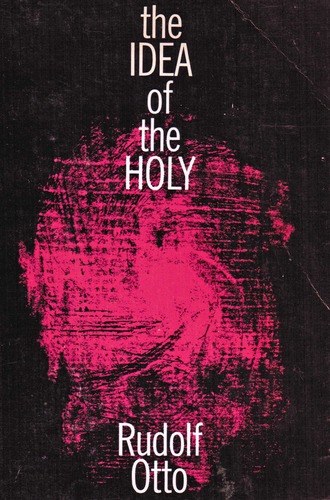
the idea of the holyRabbi Jamie and I are both interested in the experience of the holy, what some call the “numinous”. According to Rudolf Otto, a German Lutheran writer from the early twentieth century, the numinous is the most honest religious feeling. You might call it a sense of the holy, an awareness of something really important that is greater than us.

This is not religious in the sense of the rules or teachings of one religion or another. This is the more basic experience, the gut feeling. We may encounter it during the ritual and solemnity of a worship service. I have felt it in worship here on a Sunday morning. I felt it at a Friday evening Jewish Shabbat Service held in the pub at Kenyon College. I felt it a few years ago in morning prayer with the monks at a Cistercian monastery in South Carolina.

We may sense the holy in a place of worship, even when no one else is there. Some places feel soaked with prayer. I remember sitting on an old wooden bench in the worship room at a Quaker retreat centre in Pennsylvania, and feeling the tension in my back release. It was a good, solid place to rest, in the knowledge that God is there. I remember feeling awe while standing atop a Mayan pyramid in the jungle, in Belize.

Awareness of the holy may come as a gentle tide that brings a deep feeling of tranquility. It may come in a thrilling rush, overwhelming while it lasts. It may burst up from the depths of your soul so powerfully that it actually shakes and moves you physically.

I have read about Sufi masters, whirling dervishes who spin and dance until transported, not so much to a different place, but to a different way of seeing what is around them. They find themselves in the presence of the holy.

Maybe that’s how it was for a lonely shepherd tending to his father-in-law’s sheep. He saw something strange. A bush seemed to be on fire, but was not burning up. As he approached he heard a voice calling, “Moses! Moses!”

“And Moses said, “Here I am.”

“Do not come any closer,” God said. “Take off your sandals, for the place where you are standing is holy ground.”  Then he said, “I am the God of your father, the God of Abraham, the God of Isaac and the God of Jacob.” At this, Moses hid his face, because he was afraid to look at God.”

We are making our way through the Lord’s Prayer. The third line is “Hallowed be thy name”.  We recognize the word “hallowed” from Hallowe’en. It sounds supernatural or frightening. Moses was scared, but not in a bad way, when he approached the burning bush.

Hallowed is an archaic word meaning “to honour as holy”. I am glad we kept the old word in our translation of the Lord’s Prayer. It retains a sense of mystery.  Hallowed means we recognize God is holy, an overwhelming presence, that can surprise us, call us out of our normal way of seeing and being, to awareness there is more to life than we normally see or imagine.

When we repeat the Lord’s Prayer we tend to fly past the word hallowed without savouring what it tells us- that God is big and strange, wild, untameable, like a whirlwind, or a bush that burns without being consumed.

Moses’ encounter with the holy changed his life. He abandoned a largely solitary existence, to start a movement. He organized the people of Israel, who were slaves doing hard labour in Egypt, under the pharoah’s whip. He led them out of Egypt, towards a land where they built new lives. When asked where he got his authority, he said it was from God, known as “I am who I am”.

Life-changing encounters with the holy happen every day, and not always in deserts or lofty places. An historical marker on a street corner in Kentucky has become a pilgrimage site for people from all over the world. It marks the spot where Thomas Merton, perhaps the most famous Western mystic of the twentieth century, experienced a revelation. It did not turn him into a revolutionary in the manner of Moses, but it did crack his heart open to see God in everyone around him. He described it this way;

“In Louisville, at the corner of Fourth and Walnut, in the center of the shopping district, I was suddenly overwhelmed with the realization that I loved all those people, that they were mine and I theirs, that we could not be alien to one another even though we were total strangers. It was like waking from a dream of separateness, of spurious self-isolation in a special world, the world of renunciation and supposed holiness… This sense of liberation from an illusory difference was such a relief and such a joy to me that I almost laughed out loud… I have the immense joy of being man, a member of a race in which God Himself became incarnate. As if the sorrows and stupidities of the human condition could overwhelm me, now I realize what we all are. And if only everybody could realize this! But it cannot be explained. There is no way of telling people that they are all walking around shining like the sun.” (Conjectures of a Guilty Bystander)merton marker

I think every human being is made with a longing to connect to the Holy, and to the Holy within each other. I have heard it described as the God shaped hole in our heart, which yearns for meaning, hope, connection to something beyond ourselves. This is the part of us that most longs for intimacy with God. It is a tender place within ourselves. I think for many people, access to this yearning comes at times of vulnerability rather than at the times when we feel strong and confident.

Moses was alone with the sheep in the wilderness, and saw something mysterious, that made no sense, and should not have been there. It may have jarred him, reminded him that there is more to our existence than what we can understand or control.

Thomas Merton was in downtown Louisville, running errands for the monastery where he trained novice monks, and where he had been living for the previous 15 years. He’d gone to the monastery looking for a place to pray and find God, outside the rush of the world, away from the noise of people. He saw as if in a flash of bright light that there really is no place that is away, and that God is present everywhere, and in and with every person.

God is holy, and all that God has made, and is making is holy. Hallowed.

This past week my friend Sam Persons Parkes passed on a quote from that famous Canadian theologian, Anne of Green Gables, who said,

anne of green gables “Why must people kneel down to pray?” If I really wanted to pray I’ll tell you what I’d do. I’d go out into a great big field all alone or into the deep, deep, woods, and I’d look up into the sky–up–up–up–into that lovely blue sky that looks as if there was no end to its blueness.

And then I’d just feel a prayer. “  Amen

blue marbles, layer cakes and little fish (from July 26, 2015)

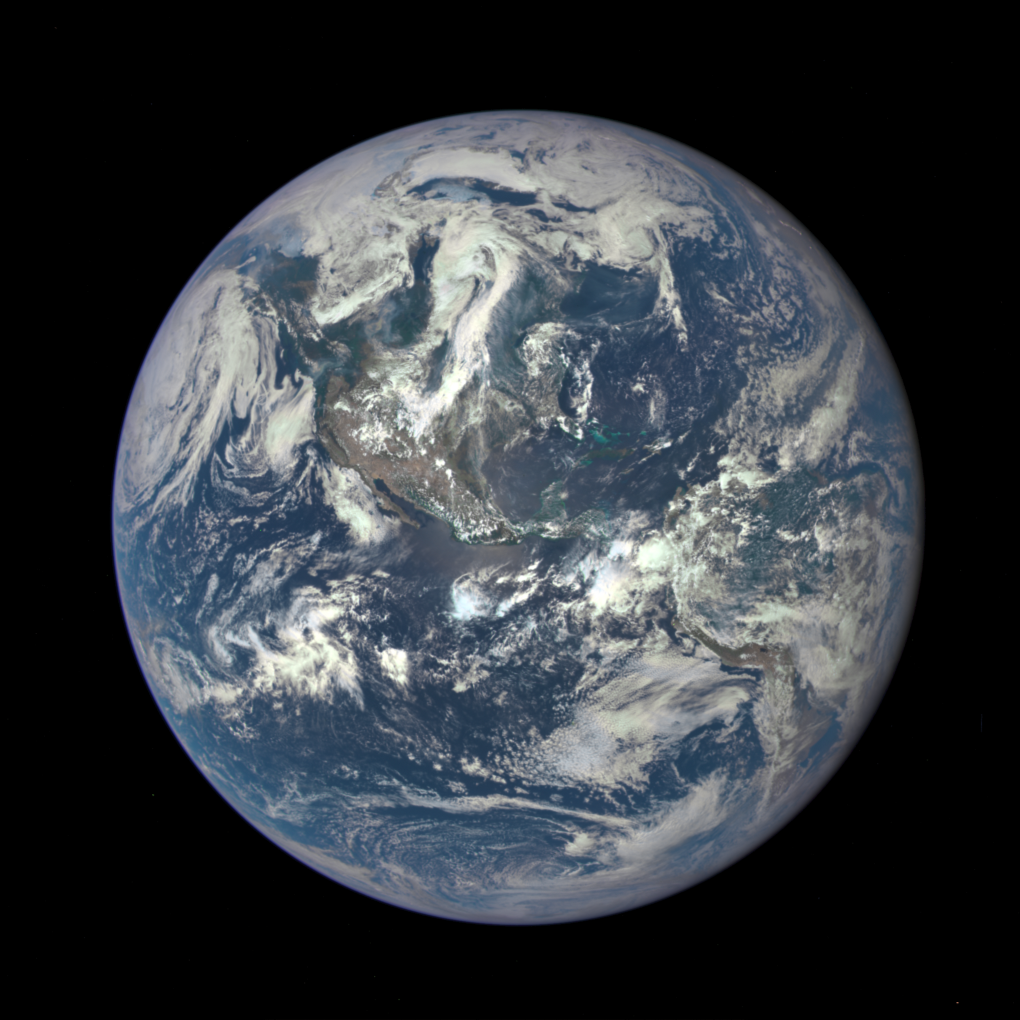
the new big blue marble

NASA recently released this great new picture of the earth from space. It makes me think of scenes we sometimes see on television, video footage from the International Space Station, with our planet in the background.

We live in such a different time from when Jesus walked the earth, and taught his friends about God’s love, and how to pray. Jesus used the images and poetry available to him at that time. In the ancient world, in Jesus’ time, and for centuries after, most people believed the earth was flat and round like a pancake. Below the part we walk on was the underworld, also called the land of the dead. Above was the sky, which was a dome, that separated us from the heavens.

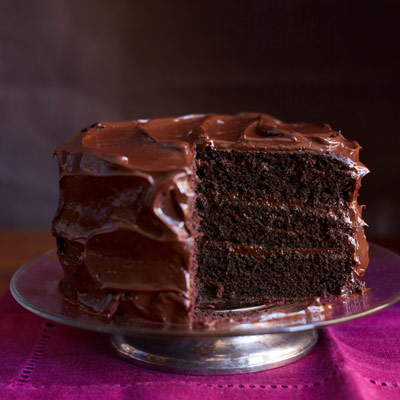
Mortals lived literally in the middle of the sandwich, or layer cake, between the land of the dead, and the heavens above. Depending on what culture or religion you came from, your god or gods was “up there”. This view of things persists, to some degree, in popular thinking.layer cake

I did a funeral yesterday for a lady from another congregation. More than one person who I spoke with before and after the service, when talking about the person who died, tilted their heads slightly upward, when talking about how this woman is now with God, and her husband, and will always be looking down, and watching over her family.

When people say these things at a funeral, the last thing I would ever do is challenge their view. That imagery, that poetry still has meaning for many people. But not for everyone. At the height of the cold war between the USA and the former USSR, Premier Nikita Khrushchev was speaking about the Soviet Union’s anti-religion campaign, and commented that Yuri Gagarin, the Russian cosmonaut, had flown into space, but didn’t see any god there.

Khrushchev had his own reasons for saying what he did, but he also put into words one of the basic existential problems of life in our time. How do we think about God, when the ancient ideas about God’s location are no longer viable?

The question of “where” is God is closely related to the questions about what God is. If God is not the old guy in the throne in the middle of the heavenly city that floats above our heads, then who/where/what is God?

The questions raised by a modern view of the universe, and how religions deal with it or duck it, or push it away, may have as much to with how seriously religion can be taken in our time, as anything else. I don’t think the church is at its best when it rejects science, and puts people in a position of having to choose between faith and reason.

When I was at the writer’s conference earlier this month, I chatted with someone who writes for a journal called The Christian Century. One of her recent assignments was to interview a man named Guy Consolmagno, a Jesuit priest who recently retired from his job as the Vatican’s astronomer. The Vatican has its own observatory in Italy, operates a telescope in Arizona, and has been doing scientific research since 1774.  Fr. Consolmagno recently published a book called “Would You Baptize an Extraterrestrial? . . . and Other Questions from the Astronomers’ In-Box at the Vatican Observatory.”

In the interview, he said, “For me faith has always come first. When you grow up, you don’t learn that everything that you were taught as a child was wrong; rather, you see that you didn’t have a very complete picture. It was right, but not in the way you thought it was. Any religious person has this experience over and over again. “

The astronomer, who also used to be the Vatican’s curator of meteorites, which sounds like a great thing to have on your business card, went on to say, We need the humility to say that we don’t understand it all. I know my science is true, but I also know it is not completely true, so I have to keep improving it. I think my faith is completely true, but I know I don’t understand all of it—my understanding is in constant need of revision.”

We don’t stop trying to sort it all out. That I think is much healthier than saying if your science doesn’t agree with my religion, then you must be wrong, or vice versa.

There is a story I like, from a book called “The Song of the Bird”, by another Jesuit priest named Anthony De Mello. Born nand raised in India, her wrote several books which introduced Western Christians to the spiritual wisdom of the east. This story is called “The Little Fish”.

“Excuse me,” said an ocean fish, “You are older than I so can you tell me where to

find this thing they call the Ocean?”

“The Ocean,” said the older fish, “is the thing you are in now,”

 “Oh, this? But this is water. What I’m seeking is the Ocean,” said the disappointed

fish as he swam away to search elsewhere.


A student came to the Master in sannyasi robes. And he spoke sannyasi language: “For years

I have been seeking God. I have sought Him everywhere that He is said to be: on

mountain peaks, the vastness of the desert, and the silence of the cloister and the

dwellings of the poor.”


“Have you found him?” the Master asked. “No. I have not. Have you?”


What could the Master say? The evening sun was sending shafts of golden light into

the room. Hundreds of sparrows were twittering on a banyan tree. In the distance one

could hear the sound of highway traffic. A mosquito droned a warning that it was going

to strike… And yet this man could sit there and say he had not found Him.

After a white he left, disappointed, to search elsewhere.

Stop searching, little fish. There isn’t anything to look for. All you have to do is look.

One of the effects of the collapse of the layer cake model of the universe is that it pushes, or encourages us to think of God less as a human-like figure that sits on a throne far away from us, and more as a present, if invisible spirit, that pervades everything.

This is a change, and like every change, there is good and bad about it. Part of the bad is it is change, and we do not always welcome change. Another challenge is if God really is everywhere, many of exclusive claims made by religion about how to access god, how to be right with god, where god is, and how god is, and who god likes, all seem pretty petty, and more obviously human constructions- or at least reflective of the limits of human understanding.

How can we claim an exclusive route to heaven, when it turns out that heaven is actually everywhere? If there is no place that god is not, we don’t actually need special permission to be with god. We only need to look, to listen, to breathe, to swim, to be.

This is bad news in a way for the franchise model of religion. It radically undermines fear-based preaching and teaching, that still says, you need to get right with God, the way we tell you, or you will face eternal damnation.

But this is good news in other ways. If our imagination opens to the possibility that God is everywhere, in everything, that we are swimming in God, like the little fish, then we are never really far away from God.

If the world we live in, and all the trees and rocks and lakes and flowers and the soil and animals and bricks and bridges and buildings are all soaked through with God, and heaven really is all around us, then taking care of the earth becomes a holy duty.

This suggests that heaven is not some distant place, far above the dome of the sky, but that heaven is all around us.  I love the idea that those we love who have died, even though they have left their bodies behind, are still very much with us. Amen