
Is God a Cosmic Puppet Master?

This week’s learning time was another in the series on lines from the Lord’s Prayer: “lead us not into temptation…”

Here is the link to the YouTube video of the service:

https://youtu.be/Wc3yY9avk6U

Here is the script of the learning time, and a teaching time about the spiritual practice of Examen.

Opening Prayer:

As we travel through the bad and good,

           keep us travelling the way we should;

                     where we see no way to go

           you’ll be telling us the way, we know:

And it’s from the old we travel to the new;

                     keep us travelling along with you.

(adapted from Verse 3,  Voices United  639 One More Step Along the World I Go)

Learning Time: “Lead us not into temptation”

Last spring, Pope Francis made headlines when he approved a change to the wording of the Lord’s Prayer, as it appears in the Catholic church’s official liturgy books. “lead us not into tempation,” became “do not let us fall into temptation.” The United Church has not adapted that change, but we do occasionally use different versions of the Lord’s Prayer.

Whether or not we change the words, temptation is something worth praying about.

According to Wikipedia, temptation “is a desire to engage in short-term urges for enjoyment that threatens long-term goals. In the context of some religions, temptation is the inclination to sin. Temptation also describes the coaxing or inducing a person into committing such an act… “

The old version of the Lord’s Prayer asked God to not lead us towards these bad decisions, that may result in short-term satisfaction, but have long term negative consequences. I may be tempted to eat the second piece of pie, but I will carry the burden of that choice. I may be tempted to cheat on my spouse, but any short-term excitement or pleasure won’t be worth the pain and damage it would cause, to the people I love.

The Pope’s concern was that the words in the prayer suggest that this is something God does to humans- leads us off the good path, and into trouble. I have wondered about that myself. What do you think? Is God a Trickster? Does God deliberately set up situations to tempt us, make us choose?

Critics of the Pope’s changes to the prayer point to parts of  the Bible that suggest that God either does tempt us, or allows such tests to happen. They talk about Job.

Ever read the Book of Job? I would have Eleanor read it for us this morning, but COVID might be over before she finished. It’s 42 chapters. This long story gets rolling, when Satan, or the Devil, actually tempts God, saying something like, “Yeah, so your guy Job seems to be faithful, but look at his life! He’s got it all. Wife, kids, servants, riches, land, livestock. He’s living the good life. How hard is it for him to be faithful while he’s living in heaven on earth, happy as a pig in whatever makes pigs happy?”

God and Satan enter into a wager. Will Job still be faithful, if all hell breaks loose in his life?

In short order, Job learns all his livestock have been killed or stolen. His family dies, his crops fail, his servants abandon him. When none of this seems to make him turn from his faith in God, Satan afflicts him with sores, all over his body. Job spends his days sitting under a tree, scraping at his sores with the broken shards of a clay pot.

Job is further afflicted, by three friends who come to offer comfort him, but actually spend their time debating with him. They are baffled that even though Job suffers, and cries out, he never loses faith. In the words of the story, he never curses God. That seems to be Ancient World talk for saying, God, if this is what you have for me, I am done with you. Job never does that.

We aren’t exactly like Job, sitting under a tree, scraping at our sores, but we are waiting for the pandemic to be over. We are experiencing hardship, and loss, and grief, and lot of inconvenience. We also know a lot of folks have it worse than us. Businesses have closed, and failed, because of the pandemic. Travel is restricted, and we can’t visit people the way we would like. Mental health is suffering. People are tempted to do desperate, self-destructive things.

All these setbacks could be seen as temptations- thrown in our path to test us, test our faith, to see if as Satan expected to be true about Job, our faith is conditional on things going our way.

The Pope said that when he succumbs to temptation, it is because of his human tendency to fall. It’s not because God pushed him over the edge.

Biblical scholars, at least the ones I favour, look at the Book of Job as a sacred story, that encourages deep thought about our human situation, but not as an historical record about the adventures of an actual person named Job.

Job’s story can be read in the way some folks watch horror movies- to have the vicarious experience, to go through the feelings and thoughts we would have if the actual crap hit the actual fan, but with the comfort of knowing it’s not really happening to us. We can engage in the story as a way of asking ourselves- would I still be faithful, would I still trust God, and place my life and future in God’s hands, if what happened to Job happened to me?

The alternative, that I read Job as literal history, would require me to believe God would rip someone’s life to shreds, just for fun. Just to win a bet. Just to see what would happen.

If we believe the picture of God in the Book of Job is credible, then we can’t help but wonder- if God would do that to Job, just to see how he’d handle it- does that explain the crap flying around in my life?

A few weeks ago I spoke about the image of God as a cosmic clockmaker- who made everything , wound up the clock, set it to running, but leaves it alone. That’s a picture of a distant, totally removed Creator.

The image of God in the Book of Job is more like the Cosmic Puppet-Master, who pulls all the strings. This God could make us do things, make others do things that hurt or help us. This God might change the script in the puppet play at anytime, without warning, just because they can.

But in the puppet theatre of that sort of God, none of the little figures hanging from strings- like you and me, could really make our own choices. There would be no free will. Being tempted, and doing the wrong thing, or being faithful, and staying on the right path, neither would mean much, because it wouldn’t be us choosing, it would be the puppetmaster, pulling our strings.

God has better things in mind for us. God is busy encouraging us to be good to the people in our lives, good to ourselves, and to care for creation, to take care of our earthly home.

God sent us Jesus, and God sends others into our lives, to guide us, inspire us, point us towards the better choices. I don’t think God actually makes us do good things, or bad things. I don’t think God sets up to be tested, to see whether we will pass or fail.

Life can be hard. Life is full of tests, and challenges, and decision moments, but God is always rooting for us to make the best choice we can.

With the Lord’s Prayer, Jesus taught that we could look at God not as a distant clock-maker or a heartless puppet-master, but as a loving parent. Those of us who are parents, grand-parents, aunts, uncles, mentors, or adopted older person in someone’s life, we know that even though we may want only good things for our kids, grand-kids, the younger folks in our lives, we can’t make them want the right things. We can’t make them choose the right things.

What can we do? We do our best to offer our wisdom, our guidance. We do our best to equip those we love to make the best of their freedom to choose. We stand ready to help when they ask, but also learn to hold back, and not interfere, even when it pains us to not dive in and fix things.

We don’t set up evil tests like Satan did in the Job story, causing pain to see how our loved ones will handle it. We don’t lead the people we love into temptation.  Neither does God. Amen

Spiritual Practice: The Examen

This may be a good day to think about a spiritual exercise that originated with Saint Ignatius of Loyola, who founded the Jesuit order. The most famous Jesuit these days is Pope Francis, who I spoke of earlier.

Ignatius was a military man before he became a priest. When he started the Jesuit order, he developed a discipline for training the young monks and priests, that included an exercise called the Examen.

Essentially, it asks us to take time to examine the events of each day, and our responses to those events.

When my daughter Naomi was doing the Shoe Box Sunday School videos, she used a version of Examen with the kids, in which they were asked to name the roses, thorns, and buds in their lives.

The roses are the fragrant, beautiful things for which we are thankful.

The thorns are the stinging, hurtful, or difficult things.

The buds are the things where there is hope, of something good to come.

As we mature in faith, we can learn to see all of these as occasions to pray, to turn to God.

We can see a beautiful rose moment in our day, and thank God.

We can experience the pain of a thorn in our lives, and see it as a reminder to lean into God, and ask God for the strength and courage we need, to carry on.

We can notice the buds of new life and growth, and thank God for the reasons we have to be hopeful.

The exercise of Examen invites to see God in the midst of it all.

Remembrance Sunday: Forgiving Others

(Link to the You Tube video of the service)

https://youtu.be/XTnGRezei8o

Harrow United Church, like many other congregations, honours those of the local community who died while serving in the military during war-time. Worship on the Sunday closest to November 11 has a Remembrance Theme.

We’ve had to adjust the service because of COVID-19. We missed having the cubs, scouts and beavers bring the flags forward in a colour party, lead in by our piper, John Woodbridge.

We had to forego the time in the service when Bill Shea, the only member of the local Legion to serve in World War Two, stands near our memorial display as members of the congregation come forward to place their poppies on a small cenotaph.

Our video producer Dennis Graham worked with our church musicians to put the “Last Post-Silence-Lament-Reveille” sequence on-screen, because of course we could not have a live piper or trumpeter perform.

Our congregation “rolled” with the creative adaptations.

The learning time, entitled “As we forgive those…”? was another in the ongoing series on The Lord’s Prayer, and included a teaching called “Just Like Me,” based on work I have been doing in Cultivating Compassion Training.

For the first time since we have been back to in-person worship, we included hymns in the service, during which we sat and listened while our musician, Larry Anderson, play the melody on the organ, and we silently read, and pondered the lyrics.

Worship Service for Remembrance Sunday, Nov 8, 2020

Prelude

O Canada   VU 524

Lighting the Christ Candle

Jesus came into the world, amongst people like us.

Jesus shone a light of hope, a light of love.

That light still has the power to draw us closer to God.

We light this candle to now, as a sign that God is with us.

Time of Silent Reflection (ringing the prayer bowl marks the beginning, and end of a time of silence)

Opening Prayer

God is with us in our proud and noble moments.

God is with us in our sad and desperate times.

God knows both the good and the evil of which we are capable.

God hears our prayers of thanks, and our cries for help.

God loves us, when we are at our best, and when we are at our worst.

God will always be with us.

We give our thanks and praise to God.

Video: In Flanders Fields, by John McRae, recited in 2015 by veteran Fred Stevenson (he was 104 at the time, he died a few months later in June 2016, at the Veteran’s wing of Sunnybrook Hospital )      

Offertory Prayer

Hymn: 527 VU   “God As With Silent Hearts

1            God! As with silent hearts we bring to mind

              how hate and war diminish humankind,

              we pause, and seek in worship to increase

              our knowledge of the things that make for peace.

2            Hallow our will as humbly we recall

              the lives of those who gave and give their all.

              We thank you, God, for women, children, men

              who seek to serve in love, today as then.

3            Give us deep faith to comfort those who mourn,

              high hope to share with all the newly born,

              strong love in our pursuit of human worth:

              ‘lest we forget’ the future of this earth.

4            So, Prince of Peace, disarm our trust in power,

              teach us to coax the plant of peace to flower.

              May we, impassioned by your living Word,

              remember forward to a world restored.

Matthew 5:38-48 from The Message (read by Bob Lounsbury)

 “Here’s another old saying that deserves a second look: ‘Eye for eye, tooth for tooth.’ Is that going to get us anywhere? Here’s what I propose: ‘Don’t hit back at all.’ If someone strikes you, stand there and take it. If someone drags you into court and sues for the shirt off your back, giftwrap your best coat and make a present of it. And if someone takes unfair advantage of you, use the occasion to practice the servant life. No more tit-for-tat stuff. Live generously.

 “You’re familiar with the old written law, ‘Love your friend,’ and its unwritten companion, ‘Hate your enemy.’ I’m challenging that. I’m telling you to love your enemies. Let them bring out the best in you, not the worst. When someone gives you a hard time, respond with the energies of prayer, for then you are working out of your true selves, your God-created selves. This is what God does. He gives his best—the sun to warm and the rain to nourish—to everyone, regardless: the good and bad, the nice and nasty. If all you do is love the lovable, do you expect a bonus? Anybody can do that. If you simply say hello to those who greet you, do you expect a medal? Any run-of-the-mill sinner does that.

 “In a word, what I’m saying is, Grow up. You’re kingdom subjects. Now live like it. Live out your God-created identity. Live generously and graciously toward others, the way God lives toward you.”

Matthew 6:5-14 (New International Version) (read by Bob Lounsbury)

 “And when you pray, do not be like the hypocrites, for they love to pray standing in the synagogues and on the street corners to be seen by others. Truly I tell you, they have received their reward in full. But when you pray, go into your room, close the door and pray to your Father, who is unseen. Then your Father, who sees what is done in secret, will reward you. And when you pray, do not keep on babbling like pagans, for they think they will be heard because of their many words. Do not be like them, for your Father knows what you need before you ask him.

 “This, then, is how you should pray:

“‘Our Father in heaven,
hallowed be your name,
your kingdom come,
your will be done,
    on earth as it is in heaven.
Give us today our daily bread.
And forgive us our debts,
    as we also have forgiven our debtors.
And lead us not into temptation,
    but deliver us from the evil one.

For if you forgive other people when they sin against you, your heavenly Father will also forgive you.

Learning Time: “As we forgive those…”?

Take a moment, and join me for a short experiment.  It may help, for you to close your eyes, or just keep them slightly open. You can also relax your face, your neck, your shoulders. Unclench any part of you that is tight.

Take a deep belly breath, hold it a second, then let it go. Do that again. Big belly breath, then let it go. Let go of tensions, and worries.

Now, with your eyes closed, or just slightly open, picture the face of someone you feel close to- a friend, relative, loved one.

Remember a time when this person was struggling, or suffering, having difficulty. How do you feel when you think about that?  Do wish you could help them, do or say something to ease their suffering?

Think about the person, and say to yourself:

This person has a body, and a mind just like me.

This person has feelings, emotions, and thoughts just like me.

This person has at times been hurt, or sad, or disappointed, or lonely, or confused, just like me.

This person has known moments of joy, peace, happiness, just like me.

This person wishes to have fulfilling relationships, just like me.

This person wants to be free from suffering, just like me.

This person wants to be healthy, and loved, just like me.

Take a moment to check in how you are feeling about this person.

Take a moment to wish the person well. Perhaps say to yourself, May they be well, may they be happy, may they be free from suffering.

Now think of a person from whom you feel very distant. It might be someone you do not know well. It might be a person with whom you have had conflict. It might even be a person you find it hard to like.

Think about the person, and say to yourself:

This person has a body, and a mind just like me.

This person has feelings, emotions, and thoughts just like me.

This person has at times been hurt, or sad, or disappointed, or lonely, or confused, just like me.

This person has known moments of joy, peace, happiness, just like me.

This person wishes to have fulfilling relationships, just like me.

This person wants to be free from suffering, just like me.

This person wants to be healthy, and loved, just like me.

Take a moment to check in how you are feeling about this person.

Take a moment to wish the person well. Perhaps say to yourself, May they be well, may they be happy, may they be free from suffering.

Focus again for a moment on your own breath. Take in a deep belly breath. Hold it a moment, then feel it release.

Think of a moment in your own life, when you have struggled, or suffered, had difficulty. We all have these times, because we are human.

Take a moment to wish yourself well. Perhaps say to yourself, May I be well, may I be happy, may I be free from suffering.

Take another cleansing breath, in and out, and then, if you have had your eyes closed, blink them open.  Thanks for taking that time with me.

On Wednesday there will be a Remembrance Day Serivce at Veteran’s Park here in Harrow starting at 11 am. We also take time this morning, to remember those who served, those who died, and those who were left behind.

With all that is happening in this world, it is important we pause, and remember the terrible costs incurred, when relations between people and nations, go off the rails.

We can’t help but think, and worry, and pray, about things happening in the nation to the south of us, in the aftermath of an election whose results point to monumental divisions between people.

Since September I have been meeting online once a week with people from Wyoming, Texas, Minnesota, Alabama, Louisiana and Ohio, for meditation, and conversation, and learning in a course called Cultivating Compassion Training. The experiment we just did is based on that work.

This past Wednesday evening, one day after the election, my classmates looked weary, and worried, but several also spoke of their determination to continue the work of compassion. We need to work at knowing, loving, living with each other. I am grateful to these living reminders that there are so many faithful people in the world.

On February 28, 1954 at Second Baptist Church, on Monroe Street, in Detroit, the Rev. Dr. Martin Luther King, Jr., just 25 years old, preached a sermon entitled “Rediscovering Lost Values”. You can listen to it on YouTube. He was such a brilliant thinker, and a powerful preacher. He said,

“The great problem facing modern man is that, the means by which we live, have outdistanced the spiritual ends for which we live. So we find ourselves caught in a messed-up world. The problem is with man himself and man’s soul. We haven’t learned how to be just and honest and kind and true and loving. And that is the basis of our problem.” 

It was 1954, so King said man, but we know he’s talking about the basic human problem- what is in our soul, and what we allow to rule our lives.

King went on to say,

“We, we never doubt that there are physical laws of the universe that we must obey. We never doubt that. And so we just don’t jump out of airplanes or jump off of high buildings for the fun of it—we don’t do that. Because we, we unconsciously know that there is a final law of gravitation, and if you disobey it you’ll suffer the consequences…  so we just don’t jump off the highest building in Detroit for the fun of it…

But I’m not so sure if we know that there are, are moral laws, just as abiding as the physical law. I’m not so sure about that. I’m not so sure we really believe that there is a law of love in this universe, and that if you disobey it you’ll suffer the consequences.”

He was right. We can’t sustain our relationships, our families, our communities, our country, or the relations between countries, unless we abide by the moral laws. When asked about the most important law, the ultimate commandment, Jesus said, in Matthew 28:

“‘Love the Lord your God with all your heart and with all your soul and with all your mind.’This is the first and greatest commandment. And the second is like it: ‘Love your neighbor as yourself.’”

Anyone who tries to love another person knows it is not always easy. We are not always good to each other. We have differences of opinion. We make mistakes. We hurt each other. We put ourselves ahead of others. We break the moral laws of the universe, and the consequences are as real as if we jumped off the highest building in Detroit, or Harrow, for that matter.

It can be hard, hard as the ground we’d land on, if we jumped. Relationships can be hard. Families can be hard. Relations between groups of people can be even more difficult. We get polarized, separated because of our beliefs, our political views, our ethnic backgrounds, our sexual orientation, our gender identity.

Differences of opinion or belief, or attitude can become entrenched. We can become convinced of the correctness of our position, the wrongness of those on the “other side”. Strongly held viewpoints can make it near impossible for people to get past barriers they themselves have erected.

People end up hating each other. When that happens, the most horrible things result. We are gathered here to mourn what happens when humans act on the worst of their impulses, and situations arise when peaceable solutions no longer seem an option.

Jesus offered us a teaching that would help us in these times when we become so hurt, so stuck, so polarized. “Forgive us our trespasses, as we forgive those who trespass against us.”

Forgiving a person does not always mean we forget. We often have good reasons to remember, and to be cautious. When Jesus sent out his followers to do mission work, he warned them there would be trouble, and they would encounter bad behaviours. He told them to “be as shrewd as snakes and innocent as doves.”

If we go into a situation and get hurt, it serves us to remember that, and pay attention. It is a survival skill, to learn to avoid places where we might get hurt, and those who might not have our best interests at heart.

At the same time, living with that kind of vigilance can wear us down. Many a preacher and counselor has made the point that forgiveness is as much for ourselves as it is for the other person. It is important for the health of hearts and souls to not become all crusted inside with bitterness and resentment.

It seems to me that what Jesus was getting at, with the teaching imbedded in the Lord’s Prayer, is the connection between being forgiven, and offering forgiveness to others. Recognizing our own brokenness, our own tendency to fly off course, or miss the mark, we can recognize that in others. If we can accept and forgive ourselves, we are more likely to do the same for others. I think it may also be true, that as we learn to forgive others, to accept their limits and brokenness, we may be less hard on ourselves. These things are steps on the road to peace. Amen

Ministry of Music:

Remembering Harrow’s honoured dead: (read by Brian Ciphery)

1914-1918

Robert Bailey

Carmen Hauser

John Baxter

Robert Martin

Frederick Cookse

A. Murray

Charles Cornwall

W. Mickle

Eli Gerard

1939-1945

Leonard Andrew

Stewart Elford

Ross Baltzer

Francis Hicks

Albert Burling

Ray McCarthy

Ernest Ciphery

Eugene McClellan

Charles Darby

James Monk

Henry Craig

Clifford Robertson

Albert Day

Arthur Stepharnoff

Anthony Deverecker

Max Wright

Prayer for Peace

God of all of us, help us to remember who you are, and who we are meant to be.

Help us to love others, and to see the good in others.

Help us to resist the temptation to label other people and nations,

And to see them only as problems to be overcome, and enemies to be vanquished.

May we remember the costs incurred when we rely only on human solutions.

Help us to work for peace in the world. Amen

Please stand for the Last Post, Silence and Reveille           (video)

Words of Remembrance:

They shall not grow old as we that are left grow old.

Age shall not weary them nor the years condemn.

At the going down of the sun and in the morning,

we will remember them.

At the going down of the sun and in the morning, we will remember them.

Prayer:

Eternal rest grant unto them, O God,

and may perpetual light shine upon them.

May their souls, through your mercy, rest in peace.

Hymn  VU 679 Let there be Light

1         Let there be light,

           let there be understanding,

           let all the nations gather,

           let them be face to face;

2         open our lips,

           open our minds to ponder,

           open the door of concord

           opening into grace;

3         perish the sword,

           perish the angry judgement,

           perish the bombs and hunger,

           perish the fight for gain;

4         hallow our love,

           hallow the deaths of martyrs,

           hallow their holy freedom,

           hallowed be your name;

5         your kingdom come,

           your spirit turn to language,

           your people speak together,

           your spirit never fade;

6         let there be light;

           open our hearts to wonder,

           perish the way of terror,

           hallow the world God made.

Commissioning and Blessing

Jesus challenges us to love, not just our friends, but also our enemies.

Jesus calls us to live beyond our own ego, our own biases, and our fears.

This is a holy calling, to be peacemakers.

We cannot do it on our own. We need God’s help.

We pray together seeking the strength, the peace, the blessing of God.

We give thanks for all the ways we are blessed by God. Amen

Liturgy (Worship) is the Work of the People

I missed our in-person Sunday morning worship on November 1.

A larger church body of which Harrow United Church is a part, the Antler River Watershed Region of the United Church of Canada, was having its fall meeting (by Zoom), and I was obliged to attend the final event of the weekend meeting, an online “celebration of ministries” worship service, at which 2 diaconal ministers were commissioned, and another minister, formerly of another denomination, was welcomed.

The members of the congregation’s worship committee, including Gillian Lamoure, Nancy Colenutt, and Janet Woodbridge stepped up to lead the service and did a great job.

Larry Anderson, Sue Timpson-Mannell, and Lari Sabbe led a modified form of Harrow’s “traditional” music ministry, offered (sanitized) percussion instruments to the congregation, with the invitation “if you’re happy and you know it make some noise!”

Here is a link to the YouTube video of this week’s service:

https://www.youtube.com/watch?v=R_KO3LIOzC0&feature=youtu.be

One word for what we do together at a worship service is “liturgy”. Here is what Wikipedia has to say about that word, as used in a Christian context:

The term “liturgy” literally in Greek means “work for the people”, but a better translation is “public service” or “public work”… The early Christians adopted the word to describe their principal act of worship, the Sunday service ….(re a duty for Christians as a priestly people by their baptism into Christ and participation in His high priestly ministry. It is also God’s ministry or service to the worshippers. It is a reciprocal service. As such, many Christian churches designate one person who participates in the worship service as the liturgist. The liturgist may read announcements, scriptures, and calls to worship, while the minister preaches the sermon, offers prayers, and blesses sacraments. The liturgist may be either an ordained minister or a layman. The entire congregation participates in and offers the liturgy to God.

Gillian read a reflection about what it means to be a disciple of Jesus in the 21st century. The article featured several different voices from across the United Church, each expressing their own ideas about how to live faithfully.

As Gillian mentioned during the service, it worked out that the week we knew I’d be “away” for the Regional meeting, was also a week in which I went to Walsingham and Simcoe, Ontario, to be present with my wife and her family while her father was dying. It was easier to do this knowing that the liturgy, the work of God’s people, carried on.

Here is a link to the Celebration of Ministries service, which was held at Grace United Church in Sarnia.

https://youtu.be/OI0PLnfWfrc

My friend, Christina Crawford, was one of two diaconal ministers commissioned at the service. She is serving as the minister of Forest United Church. We met at the Five Oaks retreat centre near Brantford, while I was part of the staff of the Ontario Jubilee Program, that trains people for the ministry of spiritual direction. It was a joy to share, even “virtually” in the formal recognition of her ministry.

Fixing the Church: “Forgive us our sins…”

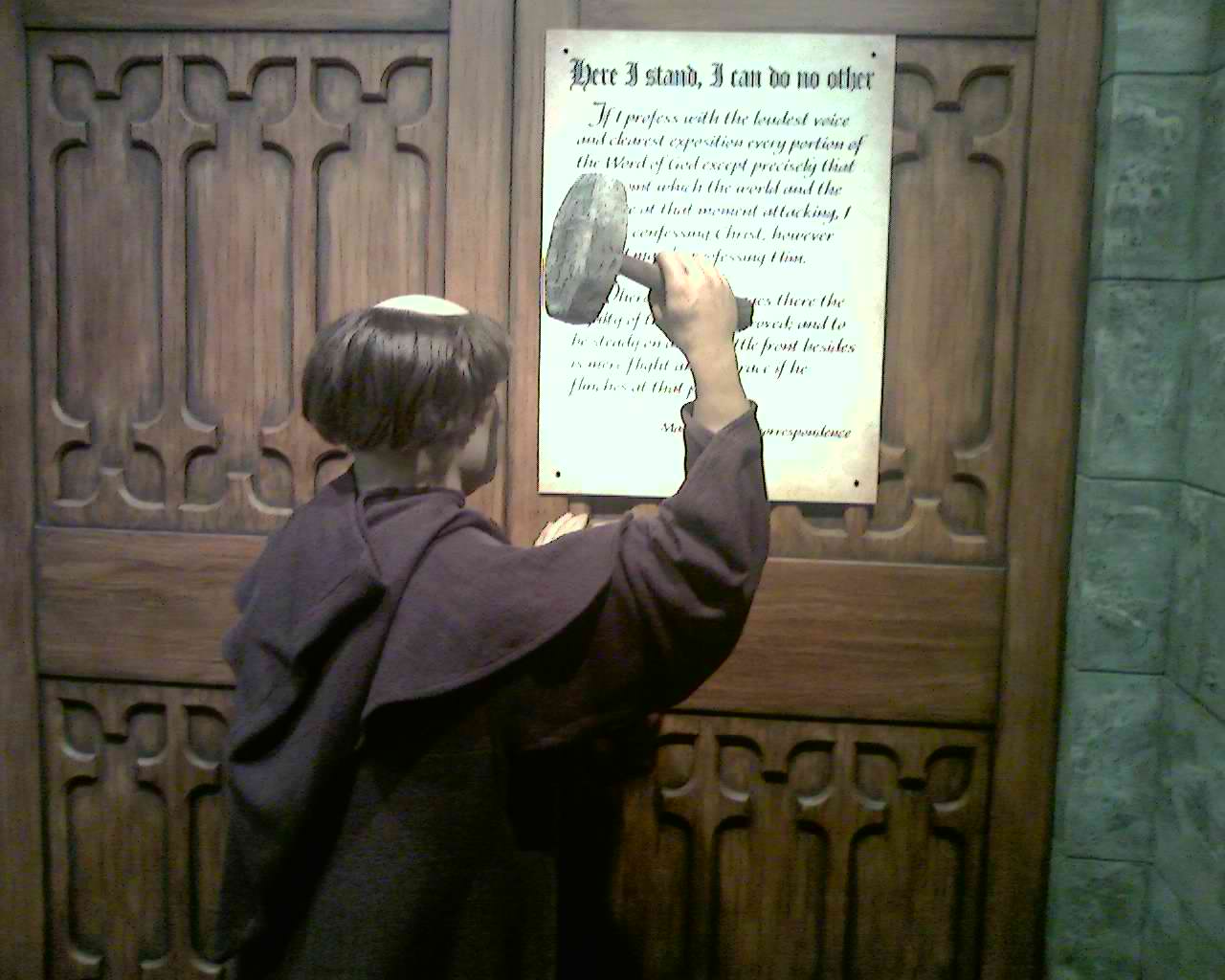
This week’s worship service for Harrow United Church continues my series on lines from The Lord’s Prayer, and also recognizes that this was “Reformation Sunday”, which marks the beginning of the Protestant movements that eventually broke away from the Roman Catholic Church, to form new Christian denominations. Included with the YouTube video of the service is a short video made available in 2017 by National Geographic, marking the 400 year anniversary of Martin Luther’s publication of 95 Theses of contention with the policies and teachings of Rome.

Our worship service also features two organ/bag pipe duets by Larry Anderson and John Woodbridge.

What follows here is the text of the Learning Time, notes from the teaching time about the spiritual practice of humility, and the pastoral prayer.

Learning Time: “Forgive us our sins…”
Jesus and his disciples had few possessions. They travelled from village to village to share the message of direct access to God’s love. It was only after Jesus’ earthly life, his death on the cross, and the first Easter, that the movement got organized. Followers began to meet weekly, outside the local synagogue, or in homes of believers. They were drawn together by the spark Jesus had brought to them, the wild and free spirit of God’s love.

The Jesus followers chose leaders. They appointed visitors to look in on widows, the sick, and the poor. They collected food and money to share with those in need. For these good works, they began to need systems, and rules.

The Jesus movement was, from the beginning, a missionary movement. Local congregations collected money to support travelling preachers, and sent money to other congregations when they were in need.

The movement spread, following the trade routes established by the Roman conquerors.

The Jewish religious leaders began to see the Jesus movement as a rival, which needed to be suppressed. They sent out enforcers with authority to accuse followers of the Jesus Way with blasphemy, a crime punishable by stoning.

The Jesus followers broke ties with mainstream Judaism, and gradually became their own institution, the Christian Church.  After a few hundred years, the fastest growing faith in the Roman Empire was adopted by the Emperor Constantine. He gave Christianity royal approval.

The Emperor imposed a command structure on the church, with arch-bishops (cardinals) rather than generals, bishops rather than colonels, and priests rather than captains. He ordered the hierarchy to define official teachings, choose which documents would be scripture, and establish a headquarters.

With the Emperor’s backing, the church flourished, and spread to every land controlled by Rome, and beyond. Long after the fall of the Holy Roman Empire, the church held power as the official religion of Europe. The church placed the crowns on the heads of kings and queens.

The more powerful, and wealthy, and established the church became, the less it resembled those first gatherings of Jesus followers, excited by the news that God loved each person, regardless of earthly status. The quiet voice of the spirit was at times overwhelmed.

Along with an affection for rules, rigid militaristic structure, and close relationship with kings and queens, the church absorbed the values of the predominant culture. Faithfulness and patriotism, as we see to the south of us, make dangerous partners. The church is co-opted, and has no voice to challenge bad government. It’s hard to have a prophetic voice, to speak for those on the fringes of society, when you’ve chosen to cater to the powerful.

The church moved from being an offshoot of Judaism to an often blatantly anti-semitic organization.

It became less a source of hope for the poor and hungry, and more a chapel for the rich and powerful, who found it useful to have an unending supply of cheap labour.

The church built the largest, most elaborate buildings in every town. They sought the friendship, and money of landowners, government officials, the powerful. The church found itself condoning slavery. It blessed explorers who claimed huge tracts of land for European kings, disregarding the humanity of the original occupants, who were not white or Christian. Even in those cruel times, there were brave voices who would ask, is this really what Jesus would have us do?

The Jesus Way began in the Middle East, but as its command centre moved to Europe, Christianity became, for lack of a better term, a white people’s religion. Look at holy paintings and stained glass from most of the last 1500 years. Up until very recently, Jesus and his friends look more like merchants from Venice than peasants from Palestine. Their brown skin was white-washed, so that even today, people are shocked to learn Jesus did not have blonde hair and blue eyes.

After many centuries, church, government, and business interests were so deeply inter-twined, that when a European country raised an army to fight in Crusades to try to take back the Holy Land from Muslim control, it was hard to tell if this was a king’s idea, or a pope’s idea. Either way, these very expensive wars seem far removed from what Jesus was all about.

There were some prayerful souls, like Saint Francis, who believed he had more in common with faithful Muslims than his religious superiors would admit. There have been in every era of the church, the quiet, mystical types who were lit with the spark that fired Jesus up, the wild and free spirit of God. But often, practical concerns of the institution washed over, and threatened to drown the spark.  

Huge cathedrals and armies to fight Crusades were expensive projects. One massively successful way to raise money was the sale of indulgences. An indulgence was essentially forgiveness for sin, which could be purchased from an authorized agent of the Pope. Those agents carried a license that allowed them to sell indulgences, and collect a commission on each sale.

In 1517, a Catholic monk named Martin Luther, a scholar at the University of Wittenberg in Saxony, nailed 95 Theses to the door of a church. His purpose was to open discussion about what he saw as religious malpractice, on the part of the leadership of the Roman Catholic Church.  
Luther particularly objected to the selling of indulgences. He was all in favour of forgiveness, but did not believe forgiveness could, or should be bought and sold. Jesus taught us the Lord’s Prayer, in which we simply ask God, “forgive us our sins…”  

Luther is only the best known of the Reformers. Movements to fix the church began all over Europe. An important tool was the Bible, reproduced cheaply after the invention of the printing press, and moveable type.  

Martin Luther fed the revolution of thought by translating the Bible into German. Other scholars made the Bible available in their own local languages. Until then, the few copies made were in Latin, the official language of the church.  

When every book had to be hand-copied, and most people never learned to read, Bibles were only in the hands of the very wealthy. Even local priests were often illiterate, and relied on stories and teachings they had memorized.  

Open access to the Bible made it possible for priests lower down the power structure, and lay people, to get another perspective, and to ask questions. It was not long before there were breakaway churches, led by preachers who became alienated from the Roman Catholic Church, and moved from trying reform it, to founding their own “protesting” or Protestant churches.   

The United Church of Canada is a Protestant church, descended from a family tree that includes Methodists, who broke away from the Anglican Church, which had earlier broken away from the Roman Catholic Church. We also have Presbyterian and Congregationalist ancestors, who believed the church is to be run, from the bottom up, not from the top down. When they started their churches, they did not appoint bishops, or archbishops.  

An historian named Phyllis Tickle, used the analogy of “The 500-Year Rummage Sale” to describe changes over the years. Tickle said the church “cleans house” roughly every 500 years, deciding what to dispose of, and what to keep, to make room for new things.  

About 2000 years ago, Jesus appeared on the scene, and offered a way to know God, and live a faithful life without being bogged down by the rules and institution of the Jewish faith.  

After Jesus’ earthly life, his followers began, perhaps inadvertently, to create another huge institution, that thrived as the Holy Roman Empire grew.

When the empire collapsed around 500 years later, the church focused on preserving its teachings, in monasteries and convents with vast libraries.

Around the year 1000, the Christian Churches of the East, the Orthodox Churches split away from Rome, and the two branches went their separate ways. Each half of the split had to decide what was essential for them to keep, and what should go in the rummage sale.  

In the 1500’s, beginning with Martin Luther, the Reformation led to more splits, as groups discarded parts of Catholic teaching and practice that no longer rang true for them.  

We are now into the 21st century, the next 500 years. There have been so many changes in culture, the way economies are organized, and the way information is shared. We have learned so much about how the universe works. People live their lives so differently from 2000 years ago.  

How we do church, and what values we uphold, and which projects we consider important, have always been influenced by what is happening in the world we live in.  

We are living in a strange new time. What new strategies are we going to need, to best serve God’s people? What will we decide we absolutely want to keep doing? What new things will we feel lead to trying, to see if they fit? What will end up in the rummage sale?   This is a time for deep and careful listening to that quiet voice, the wild and free spirit of God, who continues to speak, and who will lead us towards what God has for us to do. Amen  

Spiritual Practice: Humility
I see a relationship between our capacity to accept, and to offer forgiveness, and humility. Humility means not putting yourself either above or below others; it means not thinking about your position on a scale. Some who know the most about the practice of humility are in addiction recovery programs. Here is some wisdom from that world:  

Be Grateful –Be grateful for the gifts you have been given.
Be Unique – Don’t compare yourself with other human beings.
Be Teachable –Many things you believe may be false and you have so much to learn from other people.
Be Kind – Practice kindness. When you practice kindness, you experience the fulfillment of feeling connected to other people.
Be Free – Let go of your expectations. It doesn’t matter how great you are at making plans, predicting outcomes or how adamant you are in your beliefs. Life will always produce results that you did not expect or want.  

Pastoral Prayer

Dear God of Continuing Revelation;  Help us learn, even if by trial and error, what is real, what is meaningful, and what is necessary for life, and for love. Help us to learn to let go of those things that are charming distractions in our lives. Help us to give our hearts and imaginations to worthy things.

Help us keep our minds and hearts open to new insights, and to the ways our assumptions may get in the way of see new truths.

We pray for all who suffer, all who grieve, all who feel lost, and all who are afraid. We pray for people we know, for people we don’t know, and we pray for ourselves. Help us learn how to live with confusion, uncertainty, and unrealized expectations. Help us to see love at work in the world, in spite of our disappointments- the tragic ones, the trivial ones, even the imagined ones.

We pray for people who suffer at the hands of others. Those who are victims of sexual predators. Those who face discrimination because of their ethnic or cultural background, their appearance, their gender, their orientation, or their economic or social status. We pray for vulnerable people everwhere.

We pray for those who are hungry. We pray for those who lonely. We pray for those who are depressed. We pray for those who feel trapped in addictions and compulsions.

We pray for caregivers and volunteers, and good samaritans, and helping hands. We pray for protestors and prophets, for whistle-blowers and others who take a stand for what is right.

We pray for poets and musicians and painters and thinkers and people who make things to improve life for others. We pray for the leaders of our faith communities, and for all others who interest themselves in the spiritual well-being of others.

We pray for this congregation, and its expanding sense of mission. Help us to sort out what you need and want us to do, God.

We pray in the name of Jesus, who also gave us a very good prayer.

The Lord’s Prayer (together)

Our Father, who art in heaven,

hallowed be thy name,

thy kingdom come,

thy will be done,

on earth, as it is in heaven.

Give us this day our daily bread,

And forgive us our trespasses,

as we forgive those who trespass against us.

And lead us not into temptation,

but deliver us from evil:

For thine is the kingdom, the power, and the glory

forever and ever. Amen

Daily Bread- learning time for World Food Sunday

The learning time (formerly known as a sermon, but that’s another story) for Sunday, October 18, 2020 is also part of my ongoing series on the Lord’s Prayer. This week’s line was “give us this day…”.

Here is the transcript for the readings, learning time, teaching about spiritual practice, and pastoral prayer:

Introduction to the First Reading: Exodus 16:1-30: Beth Graham

Our first reading is from Eugene Peterson’s translation of the Bible, called The Message. We will hear a story from the journey of the freed Hebrew slaves, as they make their way from captivity in Egypt, to life in their new land. The travel was hard, and they complained they were hungry, and missed the meals provided by their Egyptian slave-masters.

In the story, God provides manna, which the travelers must rise early with the dawn to gather. There is no stock-piling of food, except on the day before the sabbath, when they are to take a holy rest. On all other days, they work for their sustenance.

Exodus 16:1-30 (The Message)

On the fifteenth day of the second month after they had left Egypt, the whole company of Israel moved on from Elim to the Wilderness of Sin which is between Elim and Sinai. The whole company of Israel complained against Moses and Aaron there in the wilderness. The Israelites said, “Why didn’t God let us die in comfort in Egypt where we had lamb stew and all the bread we could eat? You’ve brought us out into this wilderness to starve us to death, the whole company of Israel!”

God said to Moses, “I’m going to rain bread down from the skies for you. The people will go out and gather each day’s ration. I’m going to test them to see if they’ll live according to my Teaching or not. On the sixth day, when they prepare what they have gathered, it will turn out to be twice as much as their daily ration.”

Moses and Aaron told the People of Israel, “This evening you will know that it is God who brought you out of Egypt; and in the morning you will see the Glory of God. Yes, he’s listened to your complaints against him. You haven’t been complaining against us, you know, but against God.”

 Moses said, “Since it will be God who gives you meat for your meal in the evening and your fill of bread in the morning, it’s God who will have listened to your complaints against him. Who are we in all this? You haven’t been complaining to us—you’ve been complaining to God!”

Moses instructed Aaron: “Tell the whole company of Israel: ‘Come near to God. He’s heard your complaints.’”

When Aaron gave out the instructions to the whole company of Israel, they turned to face the wilderness. And there it was: the Glory of God visible in the Cloud.

God spoke to Moses, “I’ve listened to the complaints of the Israelites. Now tell them: ‘At dusk you will eat meat and at dawn you’ll eat your fill of bread; and you’ll realize that I am God, your God.’”

That evening quail flew in and covered the camp and in the morning there was a layer of dew all over the camp. When the layer of dew had lifted, there on the wilderness ground was a fine flaky something, fine as frost on the ground. The Israelites took one look and said to one another, man-hu (What is it?). They had no idea what it was.

So Moses told them, “It’s the bread God has given you to eat. And these are God’s instructions: ‘Gather enough for each person, about two quarts per person; gather enough for everyone in your tent.’”

The People of Israel went to work and started gathering, some more, some less, but when they measured out what they had gathered, those who gathered more had no extra and those who gathered less weren’t short—each person had gathered as much as was needed.

Moses said to them, “Don’t leave any of it until morning.”

But they didn’t listen to Moses. A few of the men kept back some of it until morning. It got wormy and smelled bad. And Moses lost his temper with them.

They gathered it every morning, each person according to need. Then the sun heated up and it melted. On the sixth day they gathered twice as much bread, about four quarts per person.

Then the leaders of the company came to Moses and reported.

Moses said, “This is what God was talking about: Tomorrow is a day of rest, a holy Sabbath to God. Whatever you plan to bake, bake today; and whatever you plan to boil, boil today. Then set aside the leftovers until morning.” They set aside what was left until morning, as Moses had commanded. It didn’t smell bad and there were no worms in it.

Moses said, “Now eat it; this is the day, a Sabbath for God. You won’t find any of it on the ground today. Gather it every day for six days, but the seventh day is Sabbath; there won’t be any of it on the ground.”

On the seventh day, some of the people went out to gather anyway but they didn’t find anything.

God said to Moses, “How long are you going to disobey my commands and not follow my instructions? Don’t you see that God has given you the Sabbath? So on the sixth day he gives you bread for two days. So, each of you, stay home. Don’t leave home on the seventh day.”

So the people quit working on the seventh day.

Introduction to the Second Scripture Reading: Beth Graham

Our second reading is from Matthew’s Gospel, in the 6th chapter. This morning we are hearing it from a new translation. David Bentley Hart is a philosopher and theologian who was raised Anglican, and converted to Eastern Orthodox Christianity. In his translation, published in 2017, he attempts to present the early Greek texts in English that is as unfiltered and unadorned as possible, while also acknowledging that personal bias is inevitable.

Matthew 6:5-14

And when you pray do not be like those who are playacting; for they love to pray while standing in the synagogues and on the corners of streets, so that they may be visible to men; I tell you truly, they have their recompense in full. But, when you pray, enter into your private room and, having closed your door, pray to your Father who is in secret; and your Father, who watches what is secret, will reward you. And when praying do not babble repetitious phrases as the gentiles do; for they imagine that they will be listened to by virtue of their prolixity. So do not be like them; for your Father knows what you need before you ask him. Therefore, pray in this way:

‘Our Father, who are in the heavens, let your name be held holy;

Let your Kingdom come; let your will come to pass, as in heaven so also upon earth;

Give to us today bread for the day ahead;

And excuse us our debts, just as we have excused our debtors;

And do not bring us to trial, but rescue us from him who is wicked.

[For yours is the Kingdom and the power and the glory unto the ages.]’

For, if you forgive men their offenses, your heavenly Father will also forgive you;

But if you should not forgive men, neither shall your Father forgive your offenses.

Ministry of Music

  Learning Time: “give us each day our daily bread”

That long story Beth read for us from the Book of Exodus came from the adventures of the ancient Hebrew people. With Moses as their leader, they escaped captivity in Egypt, where they had laboured as slaves.   Even though life in Egypt had been brutal and demeaning, there came a point early in their journey through the wilderness when the Hebrews began grumbling: “Why didn’t God let us die in comfort in Egypt where we had lamb stew and all the bread we could eat? You’ve brought us out into this wilderness to starve us to death, the whole company of Israel!”  

Perhaps the thrill of their escape had worn off, and it had sunk in that their problems were far from over. They’d eaten all the food they’d carried away from Egypt, and there wasn’t much in the desert for them to forage or hunt.  

Maybe the Hebrews were getting “hangry”. The combination of hungry and angry is self-explanatory. When I hear it used to describe a crabby spouse, or a child who is acting out, it can sound judgemental, and a bit demeaning.  

“Don’t mind Dad, he’s just hangry. Get him a snack and he’ll be better.”  

On the other hand, I hear a useful truth in it. It is humbling, and also a little liberating, to be reminded that our mood, our capacity to cope with life, and interact with others, is greatly dependent on our physical well-being. If we remember the very real mind-body connection, we may be more compassionate of ourselves, and of others.  

But back to the Hebrews. It’s a commonly held idea that Pharaoh put the Hebrew slaves to work building pyramids, but it’s not true. The age of pyramid building was over long before the Hebrews were in Egypt. The pyramids were built by other, earlier slaves. It’s too bad, because it would have been great to make a connection to the Egyptian pyramids, and the image of a pyramid used to explain the ideas of Abraham Maslow that we saw in the video earlier.  

Maslow was a psychologist who studied human motivation. In 1943 he published his theory of a hierarchy of human needs.  

From the bottom up, each level of a pyramid can represent human needs. We might think of each level as questions that need to be answered, if the person is to thrive.  

The base of the pyramid represents needs of our bodies. Questions such as: Where will we get water to drink, our next meal, exercise, a place and time to rest?  

The next level is about our need to feel safe. Do we have shelter? What is that growling and clawing we hear outside?  Is there law and order where we live? Are there reasons to be afraid?  

The level above that is about connection. Does someone care what happens to us?  Do we have friends? Do we feel accepted? Are we part of a family, a community?  

Above that come questions of esteem and identity. Do we know ourselves? Do we like who we are? Do we have the respect of others?  

Even higher on the pyramid come the needs of our mind. Does our life make sense to us? Does our life have meaning? Is there beauty in our lives?  

At the very top of the pyramid, Maslow placed our need to grow into the best possible version of ourselves. (I would say this is being the person God dreams we can be.) Some call this highest level transcendence, awareness of, and connection to something beyond ourselves.  

Maslow’s theory is that unless the “lower” needs are addressed, it is difficult for a human to thrive, and deal successfully with the questions higher on the pyramid.   It may be hard for me to make a new friend, when I am worried about where the next meal will come from. It can be hard to imagine what I could do to make a better future for my community, if I am not sure about a roof over my own head.  

Think of those poor Hebrews, out there in the desert. Moses wanted them to get up each morning and keep on marching toward a Promised Land they had never seen, but they were hungry, and didn’t know where to find food for their children. 

This is a bit of the scripture we heard earlier: God spoke to Moses, “I’ve listened to the complaints of the Israelites. Now tell them: ‘At dusk you will eat meat and at dawn you’ll eat your fill of bread; and you’ll realize that I am God, your God.’” That evening quail flew in and covered the camp and in the morning there was a layer of dew all over the camp. When the layer of dew had lifted, there on the wilderness ground was a fine flaky something, fine as frost on the ground. The Israelites took one look and said to one another, man-hu (What is it?). They had no idea what it was. So Moses told them, “It’s the bread God has given you to eat. And these are God’s instructions: ‘Gather enough for each person, about two quarts per person; gather enough for everyone in your tent.’”

This is the story that echoes in the words of the Lord’s Prayer, in which Jesus taught his followers to look to God for their basic needs. The translation we heard today phrases it, “Give to us today bread for the day ahead”. 

Our faith teaches us to depend on God for our very lives, and all we need to thrive, but it may be hard to remember that, if our bellies are empty, or the kids are crying and there is no food in the house. If our physical needs are not met, it can be hard to be “spiritually-minded”.  

You may have heard that Donald Trump was really hoping to be awarded the 2020 Nobel Peace Prize. Since the world has not gone completely nuts, that did not happen. I am happy to say that on October 9, the prize was awarded to the United Nations World Food Program, or WFP, which is active in more than 80 countries helping people achieve food security.  

Berit Reiss-Andersen, Chair of the Norwegian Nobel Committee, said the WFP was awarded the prize “for its efforts to combat hunger, for its contribution to bettering conditions for peace in conflict-affected areas and for acting as a driving force in efforts to prevent the use of hunger as a weapon of war and conflict.”  

Peace is more possible, when people do not have to worry about feeding their families. That’s true in developing countries that are still working their way out of the mess of their colonial past. It’s equally where we live.

This congregation, along with other faith and community groups, has a good history of supporting the Harrow Food Bank, which supplements the food needs of many local households. I hope we will continue that important work.  

We have also held several very successful drive thru food drives to gather donations for Windsor’s Downtown Mission. We are doing another one on Friday, October 30, between 11 am and 1 pm. We will also collect blankets and winter clothing.  

These are important ways to help people we may not know, but whose basic needs are real.  This month has also seen a brand new initiative come on the scene, and it’s already making a difference.  

I asked Taylor Gorick, one of the founders of Project Hope: Windsor Essex  to tell us about the Harrow Community Pantry. She made a video for us, that takes us right inside.  Let’s watch!

Video: Taylor Gorick tells us about Project Hope: Windsor Essex and the Harrow Community Pantry  

Spiritual Practice: Charity
The community pantry is an exciting experiment. From what Teri and Taylor have told me, the initial build, and stocking of the shelves has been well supported, and the pantry is being visited, and people are getting things they need.

As Taylor explained in the video, their model is not complicated. Those who have items to spare, or who can afford to buy extra when they go to the grocery store, or make a cash donation, can do that, and those who are in need, can visit the pantry. It’s very biblical.

The 2nd Chapter of Acts describes the early Christian community operating with a similar model. When they met once a week for a common meal, it was also a time to share worldly goods. Listen to these verses, and you will hear again the connection between faith, and daily bread, and physical needs, and spiritual maturity.

42 They devoted themselves to the apostles’ teaching and to fellowship, to the breaking of bread and to prayer. 43 Everyone was filled with awe at the many wonders and signs performed by the apostles. 44 All the believers were together and had everything in common. 45 They sold property and possessions to give to anyone who had need. 46 Every day they continued to meet together in the temple courts. They broke bread in their homes and ate together with glad and sincere hearts, 47 praising God and enjoying the favor of all the people. And the Lord added to their number daily those who were being saved.

This building we meet in had its start as a Methodist Church. John Wesley, the Anglican priest who started the Methodist movement had a simple motto when it came to worldly goods. In one of his most famous sermons, “The Use of Money” his three preaching points were “Earn all you can, save all you can, and give all you can.”

Wesley’s message was not meant to fill the church’s bank account. It was a plea for generosity and a plea for compassion for the poor and needy. He said, “money is an excellent gift of God, answering the noblest ends. In the hands of God’s children it is food for the hungry, drink for the thirsty, raiment for the naked.” During the coming week, in your quiet times, your prayerful times, I invite you to consider your own spiritual practice of charity.  

Pastoral Prayer

Providing God, source of all life,

We often pray “give us this day our daily bread”,

and most of us, most of the time

have no worries in this regard.

You have given us so very, very much.

We have bread, and meat enough,

and vegetables and fruit,

to fill our plates, and our bellies.

We don’t really have to worry, all that much, about our daily bread.

Loving God, forgive us for living as if this were true for all people-

As if in all places there is the abundance,

and often over-indulgence

that is part of our daily reality.

Help us to open our hearts, and minds.

Help us to live with gratitude.

Transform our gratitude into deeper generosity,

so that our prayers, our hopes, our dreams and our actions,

can be focussed less on ourselves, and more on your vision for this world.

We pray that our will can be more like your will.

We pray that we can overcome, or abandon the temptation,

to trespass against others, in our pursuit of riches and status and power we don’t actually need.

We pray also that we can use the good gifts,

and abilities,

and resources you have placed in our hands,

to address the needs of your people.

There are many ways that people need to be fed.

Help us feed our need for meaning and purpose,

as we work for the good of others.

We pray for all those who are hungry.

We pray for all those who are in pain.

We pray for those who feel hopeless.

We pray for those who are lonely, and those who grieve.

We pray for those who thirst for kindness,

for friendship,

for a compassionate listener.

We pray also for our congregation,

that our community of faith can be a place to learn about your love.

We give thanks for all those who have found their way here,

and for the difference they make in the world when they go out from this place.

We give thanks also for the life and work and witness of Jesus,

the One who gave us the Lord’s Prayer, which we now say out loud together:

The Lord’s Prayer (together)

Our Father, who art in heaven,

hallowed be thy name,

thy kingdom come,

thy will be done,

on earth, as it is in heaven.

Give us this day our daily bread,

And forgive us our trespasses,

as we forgive those who trespass against us.

And lead us not into temptation,

but deliver us from evil:

For thine is the kingdom, the power, and the glory

forever and ever. Amen

Commissioning and Blessing:

Jesus responded to God’s call, to live a life of witness and service.

We are invited to follow his path.

We are called to offer love, and hope, caring and light.

We know there are many who need God’s love.

May you be blessed and strengthened

by Almighty God to move gently upon the earth,

to stop when you have done enough,

to rest when you are weary,

and to rejoice in all creation. Amen

Column for The Kingsville Observer

kingsville-observer-02.png

Here in Kingsville we no longer have a print newspaper, but a crew of seasoned journalists has started an online paper. They focus on stories with a local focus. One of the writers, Rob Hornberger, did a piece about me making the short-list last year for a Crime Writers of Canada award for unpublished authors. My mystery novel, The Book of Answers is still a work in progress. I plan to use this year’s NANOWRIMO (National Novel Writing Month) in November to re-work it.

In the mean time, The Kingsville Observer has invited me to contribute a regular column, which I am thinking of calling “LifeCycle”. It may, sometimes, be about being on a bike.

Here is a link to the first column: https://www.kingsvilleobserver.com/post/shaking-the-covid-doldrums-on-essex-county-s-back-roads

I have added the text of my column to this post, to archive it. My “precious” words disappear from the Kingsville Observer site when I submit a newer piece.

I rode my bicycle more in the month of August than in all my previous 58 years. My shiny new bike had only been used a dozen times. It took the “new normal” to get me beyond good intentions.

Disconnected, disappointed over cancelled travel plans, and caught in the low level distress of the pandemic, I felt it was time. I signed on for a month-long challenge, cycling to raise money for children’s cancer research at SickKids Hospital. I dedicated my effort to my cousin Scott, who died young, after a hard struggle with cancer. I’d have pedaled around the world, if it could have saved him that ordeal.

I cycled daily, except for a day to recover from saddle sores, and learn how to avoid them!

My initial goals were 300 kilometres and $100 in donations. As I became more fit, more enthused, I upped the numbers. Two thirds into August, I declared on Facebook that I’d aim to match kilometres to dollars donated. Friends posted encouraging words, and some made strategic donations to inspire me to pedal on. These kindnesses stayed with me.

Blaise Pascal, the 17th century French philosopher said, “In difficult times carry something beautiful in your heart.”

Pascal didn’t live through a pandemic, but understood hardship. He suffered frail health his whole life, before dying at age 39, of untreatable cancer that started in his stomach, and reached his brain.

On August 19, the 338th anniversary of Pascal’s death, I cycled from Kingsville to Point Pelee. The 60 kilometre round trip was the furthest I’d ever gone. It was a gift to realize I was up for it.  

Cycling the backroads of our county, I encountered frogs and toads, garter snakes, hundreds of rabbits, a family of wild turkeys, soaring hawks, an imperious American Bald Eagle, and two varieties of turtles (box, and snapping). I marveled at bright, cloudless skies, and at other times, raced to get out of the rain. I learned to take water and snack stops under trees, for the shade.  I met friends on the bike trails, and paused one afternoon to help search for a stray kitten.

No luck with the kitten. Over the weeks I found coins, the key to a Harley, and a working cellphone. I gave the money to SickKids, and returned the key and phone to relieved owners.

I marked the last day with a “century ride” (cyclist talk for 100 km) from Kingsville to Cottam, then to Essex, on to Amherstburg, through Harrow, (with a pit stop at my church office) and back home for a celebratory, slow cruise around Kingsville.

By the end, I’d traded a bit of belly for stronger legs, raised $1215, and covered 950 kilometres. I’d also learned a little about the power of holding something beautiful in my heart.  

July 26, 2020 “Soft Opening” Worship at Harrow United Church

It’s pretty common for new restaurants to run a “soft opening” ahead of the date when they “officially” open their doors. We had a Sunday morning worship service in the Harrow United Church building on July 26. This was the first time we’d had such a gathering since the 3rd week of March.

We limited attendance to ensure that we could safely seat people with 2 metre safety zone around them. We also provided hand sanitizer, and insisted upon all present wearing masks. We had a supply of masks on hand, in case folks needed one.

Even under the masks, it was good to see people!

This was also our first attempt at livestreaming, using Facebook. (Thank you to Sue Mannell for holding on to my phone, and pointing it in the right direction for 40 minutes!)

We were not sure how the Facebook experiement would go, so the service was also recorded on video, and Dennis Graham, our hard-working volunteer audio-video guy, has edited the video and uploaded it to YouTube. I will include a link to the service here, and below it I will add my script of prayers, readings, and the learning time.

link to July 26, 2020 video

“Soft Opening” Worship Service

Sunday, July 26, 2020

Prelude Music

Welcome: Thank you for being here, for our first worship service back in the building, since mid-March. It feels like it’s been a very long time.

Instructions

  • Please stay in your reserved seat, and keep your mask on. We are not able to socialize in the building. If you take time to visit with folks out in the parking lot, please respect the needed physical distance, and wear your masks.
  • The washroom near the kitchen is available for use, but you have to wipe down all the surfaces you touch, after you use it.

We have not been together this way in the building since March. We are fortunate to have good leaders, and good staff, who have kept things going, during this strange time. As our sign says outside, God is still at work, and working through us. Even though we have not had Sunday worship here, we have had online worship services each weekend, and we’ve offered Sunday School to 27 children. We have also conducted food drives for the Downtown Mission, helped with the Essex County Miracle, and with a Community Drive In worship service at the Soccer Complex  for Canada Day. We have also been working hard to stay in touch with people by phone, email, and Facebook. As the sign outside has said, the building has been closed, but God is still at work.

Time of Silent Reflection (ringing the prayer bowl marks the beginning and end of a time of silence)

Opening Prayer

Loving God; We are grateful you are always with us. We pray with thanks for this opportunity to be a gathered worship community, and we pray also for the members and friends of this congregation who are not able to be with us this morning. We make our prayers as followers of Jesus. Amen


Dedication Prayer

Generous God;

Whether we are of humble means, or have much to spare,

we make our offerings of money, time, creativity, work.

We give as a sign of our gratitude.

We give because we have a duty to help others.

How wonderful it is, that we are able to share these gifts.

God who gave us life, and who blesses us each day,

We pray that you will bless what we give, in Jesus’ name. Amen


Special music: Greg Iler sang “In the bulb there is flower” and Larry Anderson accompanied

Learning Time

How are you doing? Are you surviving, thriving, or just getting by in these weird times? I have heard from some folks who are used to being on their own, that staying home and avoiding crowds, is not that different for them.  I’ve also heard from a lot of folks who miss going to church, going out for a bite or a cup of coffee with friends.

We know it has been challenging for grieving families to figure out how to have a visitation, a funeral.

I think about the folks living at Harrowood, and other senior’s homes.

I think about all the people in hospital, who might like a visit.

I think about all the hard working first responders, and front line health care workers.

I think about people who go to work every day, and live with a heightened level of anxiety, and vigilance. They don’t want to do anything to spread the virus, and they sure don’t want to bring it home to the vulnerable people in their lives.

Things are not as we would like them to be. How long are things going to be this way? We may think its not fair, and then feel frustrated, because it does not matter if it seems fair, it is the way it is.

How many of us are good at waiting? How long are we good at waiting? What is the key, or secret, to being able to wait?

You may know there is a weekly schedule of scripture lessons for Sunday worship, called the lectionary. I don’t always follow it, especially when the stories are hard to work with, but our first lectionary reading is from the book of Genesis.  I have to say from the outset that it’s a hard story to love.

The story is about Jacob, and his future father-in-law Laban, and his daughters Rachel and Leah. It’s from a time and place in which the head of a family could treat his flesh and blood, his daughters, as property. It describes a world in which a man could decide he wants a certain woman, and then make an arrangement, not with her, but with her father. In this time and place, like many others, the hopes, dreams, wishes and desires of the women were not considered.

Genesis 29:16-30 The Message

Now Laban had two daughters; Leah was the older and Rachel the younger. Leah had nice eyes, but Rachel was stunningly beautiful. And it was Rachel that Jacob loved.

So Jacob answered, “I will work for you seven years for your younger daughter Rachel.”

 “It is far better,” said Laban, “that I give her to you than marry her to some outsider. Yes. Stay here with me.”

So Jacob worked seven years for Rachel. But it only seemed like a few days, he loved her so much.

Then Jacob said to Laban, “Give me my wife; I’ve completed what we agreed I’d do. I’m ready to consummate my marriage.” Laban invited everyone around and threw a big feast. At evening, though, he got his daughter Leah and brought her to the marriage bed, and Jacob slept with her. (Laban gave his maid Zilpah to his daughter Leah as her maid.)

Morning came: There was Leah in the marriage bed!

Jacob confronted Laban, “What have you done to me? Didn’t I work all this time for the hand of Rachel? Why did you cheat me?”

 “We don’t do it that way in our country,” said Laban. “We don’t marry off the younger daughter before the older. Enjoy your week of honeymoon, and then we’ll give you the other one also. But it will cost you another seven years of work.”

Jacob agreed. When he’d completed the honeymoon week, Laban gave him his daughter Rachel to be his wife. (Laban gave his maid Bilhah to his daughter Rachel as her maid.) Jacob then slept with her. And he loved Rachel more than Leah. He worked for Laban another seven years.

When the Bible records these human stories, it is telling us, this is how it was. The Bible is not saying, this is how it is meant to be. I don’t believe for a second it was ever God’s hope for humans, that we would treat each other as property, to be bought and sold, or traded off. I’d like to think that part of the reason for preserving these stories in the Bible was to say- see what they were up to? Surely we can do better than this?

No one in the story seemed to have either the will or the power to challenge the way things were, and some, especially the father-in-law, Laban, took advantage, and profited by the set-up.

Jacob was sent by his father, Isaac, to the territory of his mother’s brother, his Uncle Laban, to find a wife, because Isaac did not want him to marry a local woman, a Canaanite.  That’s a wole other story! One night on his journey, Jacob had one of those dreams that characters in the Old Testament seem to have, in which God told him his descendants would be like grains of sand, uncountable, and spread all over the world. Of course, none of that could happen unless he found a wife his father would accept.

The morning after the dream, Jacob awoke, and travelled on, and came upon an open field in which there were three flocks of sheep. The shepherd was Rachel, daughter of Laban. He was immediately taken by her, and knew he’d have to negotiate with her father if he were to have her as his wife.

He began working for Laban, until the day Laban wanted to talk with him about the future. Jacob told him he’d be willing to work for Laban for 7 years, in exchange for permission to marry Rachel. Laban seemed to go along with the plan.

After 7 years passed, Jacob was thrilled that Laban threw a wedding feast, and gave his daughter in marriage. He was less than thrilled the next morning when he woke to realize he’d actually married Rachel’s older sister Leah.

I wonder how that worked. My wife has two older sisters, and I have to tell you, there would be no mistaking one for the other. The same goes the other way. I don’t imagine my wife would have got my brother and I mixed up.

But this was the situation Jacob woke up to that morning after the wedding feast. He’d consummated the marriage, not with Rachel, but with her older sister, Leah.

When Jacob brought his concern to the wily father-in-law, Laban said that in his country it was “not done” to marry off the youngest daughter before the eldest. Laban told him to enjoy his honeymoon with Leah, and afterwards he could also marry Rachel, if he promised to work for him for another 7 years.

As I have mentioned, Laban took advantage of Jacob, and treated both of his daughters more like property than people with thoughts and feelings. Can we see any good in this story, about messed up people in a broken world?

One possibility is to way to raise up as a good example, the fact that Jacob was willing to wait, and to work for 14 years, to marry Rachel. We might say that when something is important to you, it is worth working and waiting for the right time. In our world of overnight shipping and have to have it now, short attention spans, and instant gratification, this is worth hearing.

Another possibility might be to ask what it made possible for Jacob to wait and work for so long? Could we say that God was at work, that love was the invisible force that made it possible to wait?

We are having to do a lot of waiting these days. We need all the help we can get.

The lectionary for today also offered a reading from Matthew’s Gospel, that included this parable from Jesus: “The kingdom of heaven is like yeast that a woman took and mixed into about sixty pounds of flour until it worked all through the dough.”

Imagine the strength of the woman who kneads bread dough made from 60 pounds of flour! In modern terms, that’s six 10 pound bags, or twelve 5 pound bags of flour. That’s a lot of flour. She had no kitchen gadgets to make her life easier. She would have had to work hard.

After she did all that kneading, she’d need to let the dough proof, so the yeast could do its work. I don’t know if that meant the woman would have time to rest, she might had to fill in the time with other work- but she’d at least have to leave the dough alone, and wait for the yeast to do its part.

The reign of God, God’s activity, the work of God, happens, sometimes invisibly, and often when we feel like we have done all that we can do. The woman had worked and pounded that bread dough, and could do no more with it, until time had passed, and the yeast did its part.

This parable speaks to me, in this time, as we collectively wait for a safe and healthy resolution to the pandemic. Part of our work is to be careful, to be good to each other, to be vigilant in our wearing of masks, of washing our hands, of keeping physical distance. Our work is to be loving, and patient, and fair with each other. Our work is to be faithful, to pray, and do acts of mercy, and not lose hope, or abandon our commitments, even though the waiting can be hard. God is with us in this time of working and waiting. Amen


Pastoral Prayers:

What shall we pray about, now that we are here together?

Members of the gathered worship community shared their prayer concerns.

We continue now with the words of the Lord’s Prayer.

The Lord’s Prayer: (together)

Our Father, who art in heaven,

hallowed be thy name,

thy kingdom come,

thy will be done,

on earth, as it is in heaven.

Give us this day our daily bread,

And forgive us our trespasses,

as we forgive those who trespass against us.

And lead us not into temptation,

but deliver us from evil:

For thine is the kingdom, the power, and the glory

forever and ever. Amen

 Blessing:

I pray that in your coming week you have moments of joy, and peace. I pray that you continue to know that you are blessed, and that you find opportunities to be a blessing to other people. I pray that we can each be faithful in working, and in our waiting, and that leave space in our lives, for God to be with us. Amen


Worship for July 12, 2020

link to worship video for July 12, 2020

Worship for July 12, 2020

In our worship video last week, my friend, the Rev. Dr. Sam Parkes mentioned that one of his favourite parts of scripture is Isaiah, chapters 40 to 55. Scholars call it “Second Isaiah”, working from the theory that one of Isaiah’s students followed in the tradition of the prophet, and offered needed words of hope to the people of Israel, when they were living in especially troubling times.

To open our time of worship, I want to read a few lines from Isaiah 55, that talk about the hope we can find in God’s word, the message of God’s love. God is not finished with us yet, and the way things are, is not the way they will always be:

Isaiah 55:10-13 The Message (MSG)

8-11 “I don’t think the way you think.
The way you work isn’t the way I work.”
God’s Decree.
“For as the sky soars high above earth,
so the way I work surpasses the way you work,
and the way I think is beyond the way you think.
Just as rain and snow descend from the skies
and don’t go back until they’ve watered the earth,
Doing their work of making things grow and blossom,
producing seed for farmers and food for the hungry,
So will the words that come out of my mouth
not come back empty-handed.
They’ll do the work I sent them to do,
they’ll complete the assignment I gave them.

12-13 “So you’ll go out in joy,
you’ll be led into a whole and complete life.
The mountains and hills will lead the parade,
bursting with song.
All the trees of the forest will join the procession,
exuberant with applause.
No more thistles, but giant sequoias,
no more thornbushes, but stately pines—
Monuments to me, to God,
living and lasting evidence of God.”

I have another reading for you, from the Book of Genesis, in the 25th chapter. It tells a story I remember well from Sunday School, about two brothers names Jacob and Esau.

Genesis 25:21-34 The Message (MSG)

21-23 Isaac prayed hard to God for his wife because she was barren. God answered his prayer and Rebekah became pregnant. But the children tumbled and kicked inside her so much that she said, “If this is the way it’s going to be, why go on living?” She went to God to find out what was going on. God told her,

Two nations are in your womb,
two peoples butting heads while still in your body.
One people will overpower the other,
and the older will serve the younger.

24-26 When her time to give birth came, sure enough, there were twins in her womb. The first came out reddish, as if snugly wrapped in a hairy blanket; they named him Esau (Hairy). His brother followed, his fist clutched tight to Esau’s heel; they named him Jacob (Heel). Isaac was sixty years old when they were born.

27-28 The boys grew up. Esau became an expert hunter, an outdoorsman. Jacob was a quiet man preferring life indoors among the tents. Isaac loved Esau because he loved his game, but Rebekah loved Jacob.

29-30 One day Jacob was cooking a stew. Esau came in from the field, starved. Esau said to Jacob, “Give me some of that red stew—I’m starved!” That’s how he came to be called Edom (Red).

31 Jacob said, “Make me a trade: my stew for your rights as the firstborn.”

32 Esau said, “I’m starving! What good is a birthright if I’m dead?”

33-34 Jacob said, “First, swear to me.” And he did it. On oath Esau traded away his rights as the firstborn. Jacob gave him bread and the stew of lentils. He ate and drank, got up and left. That’s how Esau shrugged off his rights as the firstborn.

Like many other prospective parents, Isaac and Rebekah despaired of ever having children. When Rebekah did become  pregnant, it was a difficult pregnancy. Rebekah felt like there was a fight going on within her. When it came time for her to give birth, she had fraternal, not identical twins.

Esau, which means “hairy” came out first. Jacob, whose name in Hebrew is related to words that can mean either “heel” or “cheater” comes out after him.

The story says Jacob was grasping his slightly older brother’s heel as he came out. Holding on tight. Was he trying to come out first, or pull his brother back in? It’s an evocative image.

These stories existed in oral, story-telling form, for many generations before they were written down. The ancient poets who wrote down these old stories were known for showing, rather than telling, when it came to their characters. An action, a physical description, even a name, took the place of a long explanation of what the person was like, or how they would eventually behave.

Esau was a hairy, brawny boy who grew up to be a man of the field, who liked to hunt, and bring home wild game. Jacob was the second born son, but only by a matter of seconds, who looked for ways to raise his own status, to get ahead of his older brother.

Jacob and Esau were born into a culture in which their roles were set for them, long before they were even a twinkle in their parent’s eyes. The eldest son would inherit 2/3 of his father’s property. The younger son was entitled to the one third that was left. Daughters and widows were not even in the equation. Custom dictated the eldest son would receive the larger share of the estate, and also assume the larger share of responsibility for the women, children, slaves, animals, and other property.

Much is made of Jacob’s scheming nature. He was home, making lentil stew, when his brother came in from a day out hunting. Esau was famished, and may have said something like, “I’m so hungry I’d do anything for a bowl of that stew!”

Jacob may have asked the leading question, “Would you give up your rights as first-born son?’

Esau, the brawny one, who is not the brainy one, says, “Sure, just make sure you fill it to the brim. I’m really, really hungry!”

Jacob comes across as the wily one, willing to cheat his brother out of his inheritance, and who puts a price on common decency- when someone is hungry, and you have a big pot of stew, you feed them, don’t you?

Esau seems the slightly dim-witted tough guy, who lets his belly do his thinking. He’s hungry now, and that is his consuming concern.

Neither brother looks very good in this story, at least when we only consider the characters and their actions, but do not pause to ask, why, really, are they acting this way?

Like many others, I watched with sadness, horror, and deep concern when cities in the United States boiled over with protests, and sometimes riots, and violence, destruction, and escalating racial tension. These things are nothing new, but rose to fevered heights in the aftermath of what seems like an endless list of racially-motivated crimes against people of colour, such as George Floyd in Minneapolis, and Breonna Taylor, the decorated paramedic in Louisville.

When we look at the individual characters in these stories, we may be baffled as how they could behave so poorly. How could that police officer in Minneapolis ignore the pleas of the dying man he held down with a knee to his neck? How did that officer become so callous, so willing to apply lethal force? Why was he unable to see the man under his knee as another human, instead of as a problem to put down? How do people end up that way?

Similar questions are asked when protests escalate to riots, and looting, and businesses and whole neighbourhoods are ransacked, and left a shambles. What is going on for people that they would destroy the stores where they shop, the businesses where they work, and which provide services needed in their community?

What is going on? How can humans get so twisted up, and do such things? I want to be careful not to equate the looting of a store with the killing of a person. They are not the same thing at all. You can replace a broken storefront window, but you can’t get back a life lost to needless violence.

In first year psychology, as well as in first year philosophy, I remember classroom discussions of about what determines human identity, character, potential. Is it nature, or nurture? In other words, is who we are mostly about what came with our original equipment when we were born, or does how, and where we are raised make a difference?

The tradition that gave 2/3 of the father’s estate to the eldest son would seem to grow out of the “nature” way of thinking. The eldest son has privilege and position solely because of being born first. How different is that from the thinking that says white people are just smarter, more ethical, more entitled to privilege, just because they are white? How many people enjoy relatively easy lives, jut because of the accident of where they happened to be born?

When our kids were growing up we were able to put them in a French Immersion school, and provide good dental care, music lessons, opportunities to play team sports, and to take part in Sunday School, and go to church-run summer camps. These are some of the advantages we were able to provide, that have helped in their formation. We are very fortunate.

nelson-mandela smileAt one of the Black Lives Matter peaceful protests, I saw a whole family wearing t-shirts bearing the slogan “Children are not born racist. That has to be taught.” This reminds me of the quote by Nelson Mandela, who said, “No one is born hating another person because of the color of his skin, or his background, or his religion. People must learn to hate, and if they can learn to hate, they can be taught to love, for love comes more naturally to the human heart than its opposite”.

Most humans are born with the capacity to notice difference. That can be a useful survival tool. Children learn to pick out familiar faces, and they may “make strange” with ones they don’t recognize.

When one of our kids was a baby, we actually had to turn their high-chair away from the dining room table when one of our best friends came over for a meal, or they would howl. It took time, but we were gradually able to let our child see, by how we treated our friend, that there was nothing to fear or worry about. We think she just didn’t like his ginger hair!

Kids may notice difference, and they also take cues from those around them, about the meaning of those differences.

Our gospel reading today is the familiar parable about the sower and the seed.

Matthew 13

1-3 At about that same time Jesus left the house and sat on the beach. In no time at all a crowd gathered along the shoreline, forcing him to get into a boat. Using the boat as a pulpit, he addressed his congregation, telling stories.

3-8 “What do you make of this? A farmer planted seed. As he scattered the seed, some of it fell on the road, and birds ate it. Some fell in the gravel; it sprouted quickly but didn’t put down roots, so when the sun came up it withered just as quickly. Some fell in the weeds; as it came up, it was strangled by the weeds. Some fell on good earth, and produced a harvest beyond his wildest dreams.

“Are you listening to this? Really listening?”

One way to read this story is to say the seed of God’s love takes root and grows in the heart of the receptive person, and does not do as well in the heart of the one who is not ready, or willing ,to change their life, to follow God. There is a strong judgement in this interpretation- that some people are just bad dirt- soil that is not ready to support the new life with God.

But that may not be the only way to read that story. The description of the different places the seed lands is pretty detailed.

There is the well trod path where the seeds get ground into the dirt by foot-falls, the rocky ground with thin soil, where seed springs up quickly, but there isn’t enough depth to support long term growth. There is thorny ground, where the pre-existing weeds choke out the new growth. Finally, there is good soil, where conditions support thriving plants, that yield much grain.

Perhaps we can hear that as a reminder that context, the immediate environment makes a huge difference. What is around me, has a powerful effect on me. Nurture matters at least as much our basic human nature.

A few weeks ago we heard from some of our friends in Oakville, that just down the street from a house we rented during Joel’s last year of high school, there was a drive-by shooting. That does not sound like the sleepy, privileged, suburb where we raised our kids. Although, to be frank, in the last 3 or 4 years, more and more of that kind of violence seemed to making its way out from Toronto, into the middle and upper class neighbourhoods. Even so, it is still mostly safer there, than in some neighbourhoods in the big city. Location, location, location. Another way of saying that immediate context, what is actually around you, makes a big difference.

Context is not just the street you live on, or the community around your home. It’s also the income level, the culture, the language, the educational level of those closest to you. It’s the family stories, and the religion, and the attitudes you learn as you grow up. It’s a million million things that go into informing and shaping your view of the world, of yourself, of other people.

In the past, Christians served their communities by building hospitals, to tend to the physical ailments of the poorest folks, who could not afford proper care. Sunday School was invented in England in the 18th century so that children could be taught to read and write and do simple arithmetic, and learn Bible lessons, on their day off from working in factories. This was long before there were publicly supported schools for all children, regardless of income level.

What can we, as followers of Jesus in the early part of the 21st century, do to make our homes, our communities, our nation, a more nurturing environment in which to raise our kids, our grand-kids, and all the succeeding generations?

A way of praying:

At Harrow United Church we are beginning to look at what it will be like, when we return to meeting in our building for worship. We will have to do some things in new ways, and their will be some things we will not be able to do. It seems to me that one thing we may be doing more, is approaching God together in more contemplative ways, and making more use of shared times of silent prayer.

Let’s take some time in this worship video, to quiet ourselves, and offer up to God our own personal thoughts, feelings, worries, hopes, and dreams.  After a time of silent prayer, I will say out loud the words of the Lord’s Prayer:

The Lord’s Prayer (together)

Our Father, who art in heaven,

hallowed be thy name,

thy kingdom come,

thy will be done,

on earth, as it is in heaven.

Give us this day our daily bread,

And forgive us our trespasses,

as we forgive those who trespass against us.

And lead us not into temptation,

but deliver us from evil:

For thine is the kingdom, the power, and the glory

forever and ever. Amen