“Bless You!”
Last week during the worship service I gave out homework, and people still came back. Thank you! It’s very good that having homework didn’t scare you off.
Actually, if you choose to be part of a church, to spend time with people who value community, and friendship, and are drawn together by common values and common hopes about life, it is inevitable that you will end up with homework, things to do beyond the couple of hours we spend together on the weekend.
I don’t mean you should expect a weekly assignment from me. I can’t possibly know what would be good for each of you to do. I don’t know, specifically, how God has blessed you this week, or what God needs you to be doing, in the coming days.
Every person’s circumstances are different, and the gifts and aptitudes, resources and interests God has given them are different. We have different needs, and we each see the world in our own way, and we may notice different things, and get fired up, or disgusted, or excited, or dismayed by something that others barely seem to notice. That’s okay, because there is plenty for all of us to do, and when we need each other’s help, we can talk.
Did any of you do your homework? For those who weren’t here last week, I gave each person a blank file card, and asked them to make a list of values, or virtues important to them. I gave examples like Trust, Faith, Courage and Honesty.
The idea was to have your file card list handy, and if a “Yes or No” moment came up, when it was necessary to make a decision about what to do, or not do, the list of what you value might help. Would the thing you had to say yes or no to line up with your values? Would it fit with the kind of person you want to be, who you believe God intends for you to be?
We all face moments all the time, in which we get to decide again who we will be. We can decide how we can use the life and abilities and resources with which we’ve been blessed.
The Old Testament lesson is part of the story of Abraham, considered the patriarch of Israel, the beginning of a family line that would prosper, and grow, until they became a great tribe, then a collection of tribes, and eventually a new nation. This is another one of the Bible’s foundational or origin stories, told to answer questions of the Jewish people, “Where do we come from? Who are we? How are we meant to live?”
“Now the Lord said to Abram, “Go from your country and your kindred and your father’s house to the land that I will show you. I will make of you a great nation, and I will bless you, and make your name great, so that you will be a blessing.”
Abraham, or Abram as he was known back then, could have put those words on his own file card, if they’d existed. They could have been a basis for making decisions.
In this story, God told him he was blessed, so he could also be a blessing to others.
The short form Abram could have joted down on his file card might be “Pay it forward.” Recognize and be grateful for all you have in life, and look for ways to pass it along. Like a magic penny, we might say.
Jesus was Jewish, and his family line, whether you trace it back up Mary’s family tree, or Joseph’s, connected him to the thousands of people descended from Abraham and Sarah. He was part of the culture, and steeped in the traditions of Israel.
When he began to preach outside of the synagogues and temples of the Jewish religion, he was challenged by experts in Jewish law. Who was Jesus to be telling good Jews how to live?
Wherever Jesus went, he was pushed, and provoked, and publicly tested by those who questioned his authority, and the rightness of his message. They might have said, “Let me see your index card, Jesus of Nazareth! What values are on your list?”
That’s the essence of what was going on at the moment described in today’s Gospel lesson.
“an expert in the law, tested him with this question: “Teacher, which is the greatest commandment in the Law?”
Jesus replied: “‘Love the Lord your God with all your heart and with all your soul and with all your mind.’ This is the first and greatest commandment. And the second is like it: ‘Love your neighbor as yourself.’ All the Law and the Prophets hang on these two commandments.”
To love God is to be grateful, and deeply aware of how you are blessed. To love your neighbour as yourself is to operate from the desire to pass on the blessings. The Pharisee couldn’t fault Jesus on his answer, because it was totally consistent with the values of their people.
We tell this Jesus story for a number of reasons. One is to show that Jesus was not creating a new religion, he was just reminding people of who they were already meant to be.
This story also depicts Jesus being challenged by the religious authorities. It sets the stage for what comes after Lent, the events we commemorate at Good Friday. It helps us understand how Jesus was perceived as a threat to powerful people in his world.
The third reason we tell this Jesus story is it’s good advice about how we should live. We should love God, and love others as we love ourselves. We should count our blessings, and then bless others without keeping count.
Can you think of a time when you were blessed- helped by someone’s kindness, generosity, presence? It could be from decades back, or a few minutes ago. How did it feel to be blessed?
How about the other part of the deal? Can you think of a time when you offered a blessing to someone else, by your kindness, generosity, or your presence with them? How did that feel?
One of the great things about being part of a faith community like ours is that we can, in some powerful and effective ways, pool our generosity and do more good in the world.
The donations we collect on Sunday, and the withdrawals that come out of my bank account, and many of yours- can do more, and go further, than our individual contributions could on their own.
A large part of that pooled generosity stays in this community, to fund ministry we do here. Some of it, according to what people specify, goes to another larger pool, called the Mission and Service of the United Church. When you give to Mission & Service, you are a blessing to thousands, maybe millions, of people across Canada, a blessing that in some cases actually saves lives.
The United Church is directly involved in areas such as housing, food security, employment training, mental health treatment, advocacy, and pastoral care. We fund chaplains who serve in hospitals and universities. We support theological schools and retreat centres. We also give grants to more than 80 local congregations, some very new ones, who are trying to carry on God’s work in their local communities.
Beyond Canada, we work with global partners in 21 different countries, much of it in economic development, disaster relief, and sustainable agriculture.
Our magic pennies go along way, and do so in ways that match with the values on our little file cards. We are blessed, and we bless others.
I do have more homework for you, for this week. It’s sneaky homework.
I want you to go into blessing stealth mode. Be creative. At least once this week, use something you have been given, something you have been blessed with, to secretly bless someone else. Don’t let them know it was you. It could be a family member. It could be a co-worker. It could be a total stranger. It doesn’t matter who. At least once this week, use something you have been given, something you have been blessed with, to secretly bless someone else. Amen



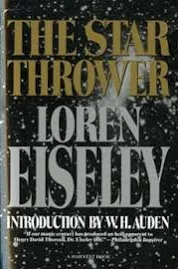

 January 1, 2023. The Night Fire by Michael Connelly. 2019. This is the third novel to focus on LAPD night-shift detective Renee Ballard. It also the 22nd featuring Detective Harry Bosch.
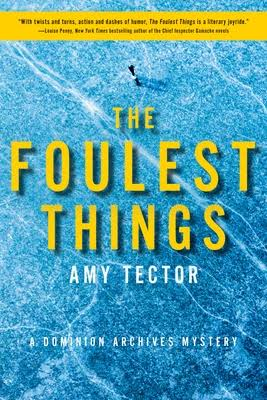 January 4, 2023 The Foulest Things by Amy Tector. I read it because a reviewer mentioned Louise Penny liked it. It was well constructed, with distinct characters, except for 2-3 women who worked with the protagonist at the archives- they all blended together, which was at times confusing. I might read more in this series, just because of the Ottawa setting.
 January 5, 2023. The Recovery Agent, by Janet Evanovich. The first in a new series by the author of the Stephanie Plum novels. Essentially the same style, and patterns of dialogue. Gabriella Rose chases after lost or stolen items. Stephanie Plum finds people who skipped out on bail. The similarity was magnified because I listened to the audio version, which I think has the same narrator as the Plum stories.
 January 17, 2023 The Scarecrow by Michael Connelly. Second in his series featuring reporter Jack McEvoy and FBI agent Rachel Walling. They work together to defeat and capture a serial killer who uses the internet to identify victims and set up others to take the fall for his crimes. McEvoy is the protagonist/narrator. He does not seem to have the depth of Bosch, Ballard, or Haller, but I’ve admittedly read more titles featuring them. I started the first in this series, The Poet, and quickly realized I’d already listened to it, probably the COVID summer I cycled big kilometres every day with a book in my ear.
 January 23, 2023 The Overlook by Michael Connelly. Another Harry Bosch crime story. In his timeline, it follows the events at Echo Park. Harry and his ex-girl friend FBI agent Rachel Walling work together to solve a murder made to look like an attempt by foreign terrorists to acquire medical cesium to build a radioactive dirty bomb. I have never sat down to sort out how many of the Bosch books I’ve read, so it seems like each time, I jump in at a different place in his timeline. Connelly is pretty good at providing enough context to sort it out as I read. Wikipedia says this #13 in the Bosch book series, published in 2007. In it, Bosch can barely work his cell phone.
 January 26, 2023 Cold Storage Alaska by John Straley. Published in 2013. The first I have read by the author laureate of Alaska, who is also a private investigator. Filled with quirky characters, a long slow burn of a plot, and wonderful evocative descriptions of locale. This is part of a series about an isolated village on the Alaskan coast. I will definitely read more. I noted that he wrote “over the heads” of several major characters, allowing depth of character development, and a roving point of view that worked well.
  January 30, 2023 Upright Women Wanted, by Sarah Gailey. Published in 2020. This novella was recommended by my daughter who is a librarian. It is a story set in a future history in which the United States is broken into smaller territories, and there is some kind of war going on which claims much of the available wealth and resources. We meet a trio of traveling Librarians, who have license to make their way on the broken down highways that link communities in a new “old west”. The most common mode of transport is horse and wagon, and the Librarians wear badges, ride horses, and wield six-shooters. They are also smugglers, moving contraband books and other media, as well as supplies for the “insurrectionists”. The background society described is reactionary and homophobic. The Librarians we meet in the story are other than hetero-normative, which comes as a shock, and eventually a liberating relief to the young protagonist, a young woman who is struggling to claim her own identity, and who fled her home community after her lesbian lover was hanged for possession of subversive materials. This novel is less about plot, and more about the protagonists movement from grief and fear and towards love, purpose, community, and self-acceptance. I appreciated this character arc, and get how important it is. At the same time, the book carries the burden of being a bit preachy/teachy (pedantic) and at times I wondered if I was reading a YA book.
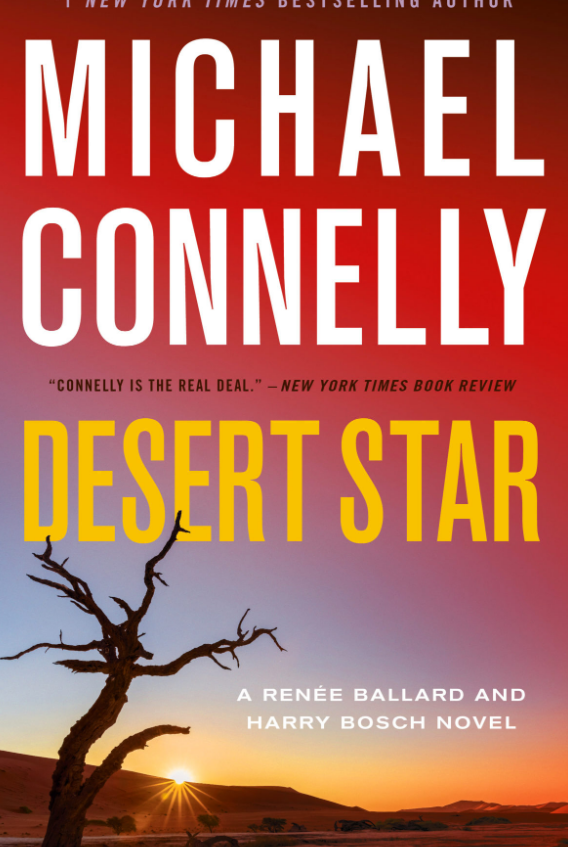 February 5, 2023 Desert Star by Michael Connelly, 2022. This is one I’d been waiting to read. Now retired LAPD homicide investigator Harry Bosch is recruited by Detective Renee Ballard to serve as a volunteer on the open/unsolved “Cold Case” unit she has re-established. They work together to close long unsolved cases, one of which was close to Bosch’s heart. One of the things I respect about the author is he allows his protagonists to grow, change, and age in real-time. In this novel, Bosch is 72 and feeling it. He has serious health issues, and there are hints/red herrings dropped that this is his last case. There are also “cameos” by his daughter, Maddie, who is now an LAPD street cop, and his half-brother, Mickey Haller, the defense attorney also known in another Connolly series as the Lincoln Lawyer.
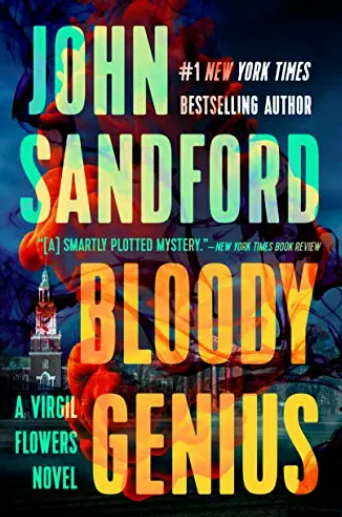 February 5, 2023. Bloody Genius, by John Sandford, 2019. This is the 12th in a series about Virgil Flowers, an investigator with Minnesota’s Bureau of Criminal Apprehension. I will be reading more of these. Flowers wears band t-shirts and jeans and drives a Chevy Tahoe, and lives on a horse farm, and takes on special assignments when a mess needs to be cleaned up. He’s also a part-time writer, and likes to read mystery fiction. In this one, he works his way through a James Lee Burke novel when he’s not hunting the killer of a university professor and medical researcher. Two things I especially liked in this one were Sandford’s deft handling of a point of view behind, but not in Virgil’s head, and the way he used conversations between Virgil and other characters to reveal the detective’s thought process in searching for the killer. Less appealing in the book was the sometimes gratuitous use of profanity, in places that didn’t require it for drama or character revelation.
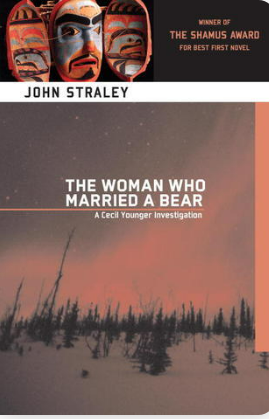 February 10, 2023 The Woman Who Married a Bear (1992). This mystery novel by the former writer laureate of Alaska, is the first in John Straley’s series about private investigator Cecil Younger. Straley’s descriptions of locale are incredible, and his turns of phrase about characters are compact, nuanced, and very effective. The impression I had was of not so much being told a story as shown one, with me as reader doing some of the work of noticing how elements could connect. I like this approach, and to some degree have attempted it in my own writing. It is a contrast with the “think it through out loud” method, that reminds the reader what needs to be considered, in the solution of the crime. The third to last paragraph of the last chapter, contains a lovely line about the function of myth. The investigator reflects on the folktale that gives the book its title, The Woman Who Married a Bear, which was told to him by the matriarch who hired him to find her son’s killer. He wonders if the old woman told him the story to “ease me along the path of her own suspicions”, but he chose not to ask. He decided, and this is the line I love, “Most old stories don’t have anything to do with facts; they’re the box that all the facts came in.”
  February 16, 2023 Holy Ghost by John Sandford. 2018. Eleventh in the Vernon Flowers series, immediately previous to Bloody Genius. I again enjoyed the use of the narrator who told the story from “over the shoulder” of several characters, including at one point, “the shooter”. That was a careful tease that actually contributed to the confusion over their identity. I continue to zlso enjoy the way the protagonist talks out his theories of the crime, or lack of theories, with those in his company. It provides a particular kind of characterization, and avoids lines like “Flowers thought it possible the killer was one of the nuns from Uruguay.” (There are no Uruguayan religious in the book, so that wasn’t a spoiler.)
 March 3, 2023 Babel, by R.F. Kuang. 2022. Rebecca Kuang is a Chinese-American scholar, and fantasy writer. She holds degrees from Georgetown University, Cambridge, Oxford, and she’s currently at Yale working on a PhD in Asian languages. Her familiarity with the higher end of the academic world comes through in this historical fantasy, set in Victorian England. I enjoyed her view of that society, and the rarefied circles of Old Oxford, described from the perspective of people of colour who are recruited to do a special kind of magic that undergirds the industrial progress and colonial expansion of the Empire. The full title: Babel, or the Necessity of Violence is a nod at one of the important themes of the book. The colonial project is both furthered and maintained by systemic violence, racism, classism, and the subjugation of the people of non-white nations, and the threat of military force. To undo, or dismantle this empire would seem to require something like a civil war. She succeeds in making the novel a meditation on the human cost of imperial capitalism. My only criticisms are that her passion for linguistics seems to lead her to some awkward word choices, and that at over 1400 (Kindle) pages, it’s a long read.
 Darrow Woods: Writer of Things